
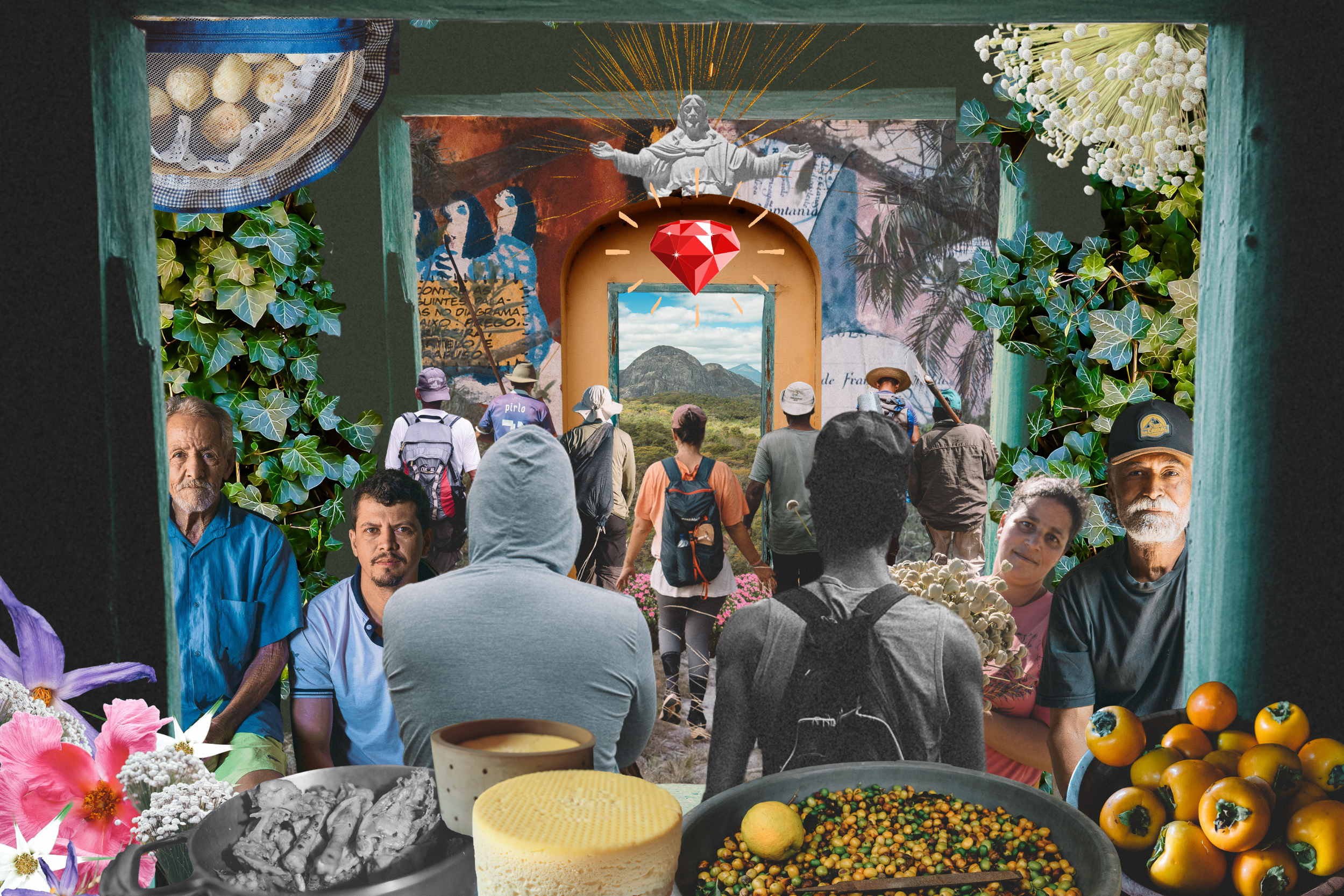
A Diamantine Tale
363 km of little-walked historic trails & winding dirt roads.
22,400 meters of gain & loss.
Waterfalls. Wilderness. A way of life.
Few, if any, others on the trail.
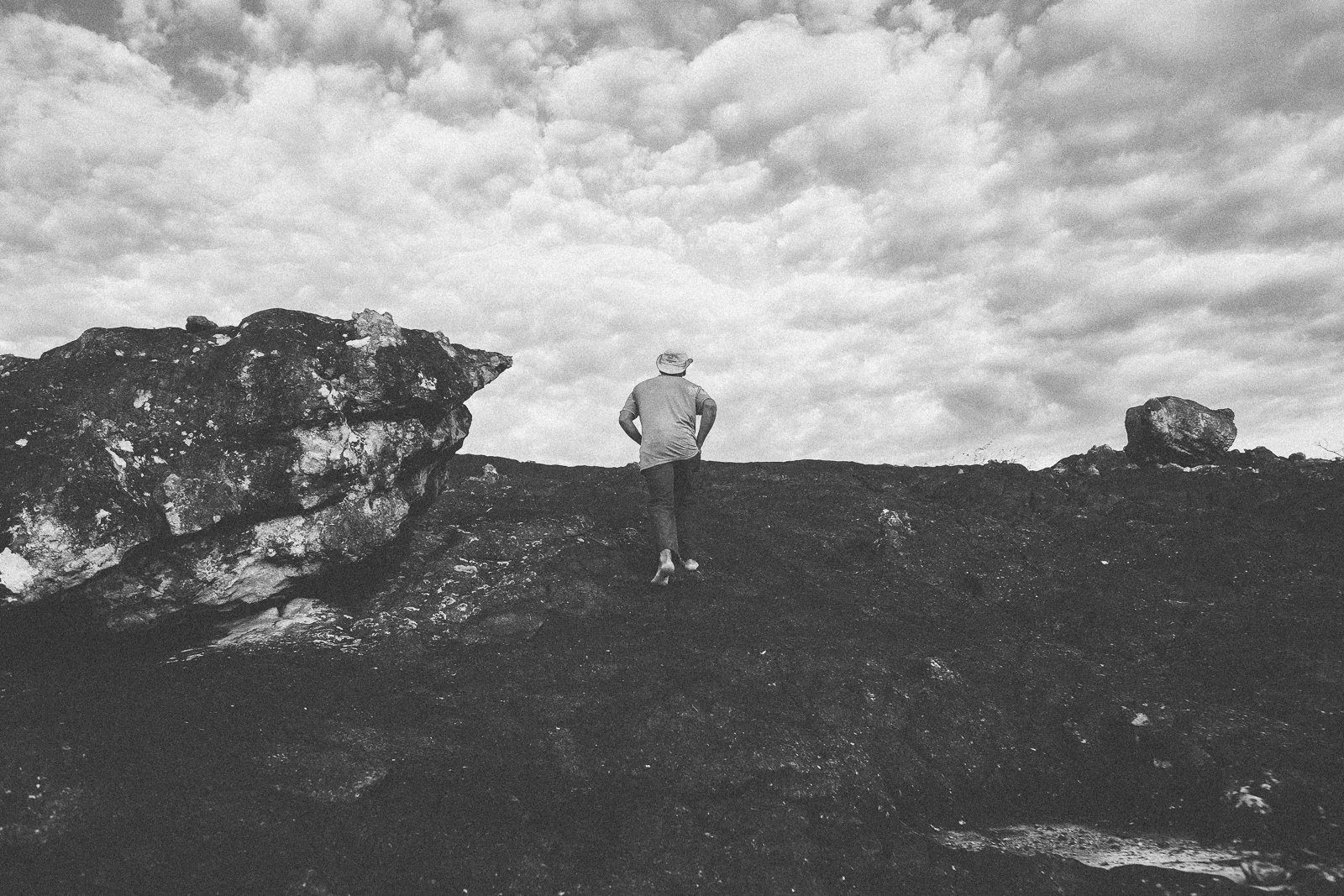
At a Glance
The old ways across the Espinhaço
Duration: 21 days / 20 nights
Group size: Maximum 6 travelers
Departure: May 17–June 6, 2027
Price per traveler: US$16,995
-
A layered trek across the Espinhaço and into its intimate human geography. Over 19 days, we’ll follow little-walked historic paths and the occasional dirt road from the eastern highlands to the western lowlands, with former mining villages, quiet quilombola communities, remote homesteads, and the wide-open flower-picking country of Sempre Vivas National Park in between.
A Diamantine Tale is our trekker’s trek. Expect long climbs, cold rivers and waterfalls, and days on end when we’ll likely have the trail to ourselves. Some nights we’ll sleep in cave shelters by the fire. Others we’ll spend around a family table, piecing together over supper how the people and places we’ve come to know along the trail are connected.
It’s more than 350 kilometers from Diamantina back to Diamantina this way. In our opinion, there’s no better way to understand the range.
-
Backpacker towns. World-famous peaks. Nightly Wi-Fi.
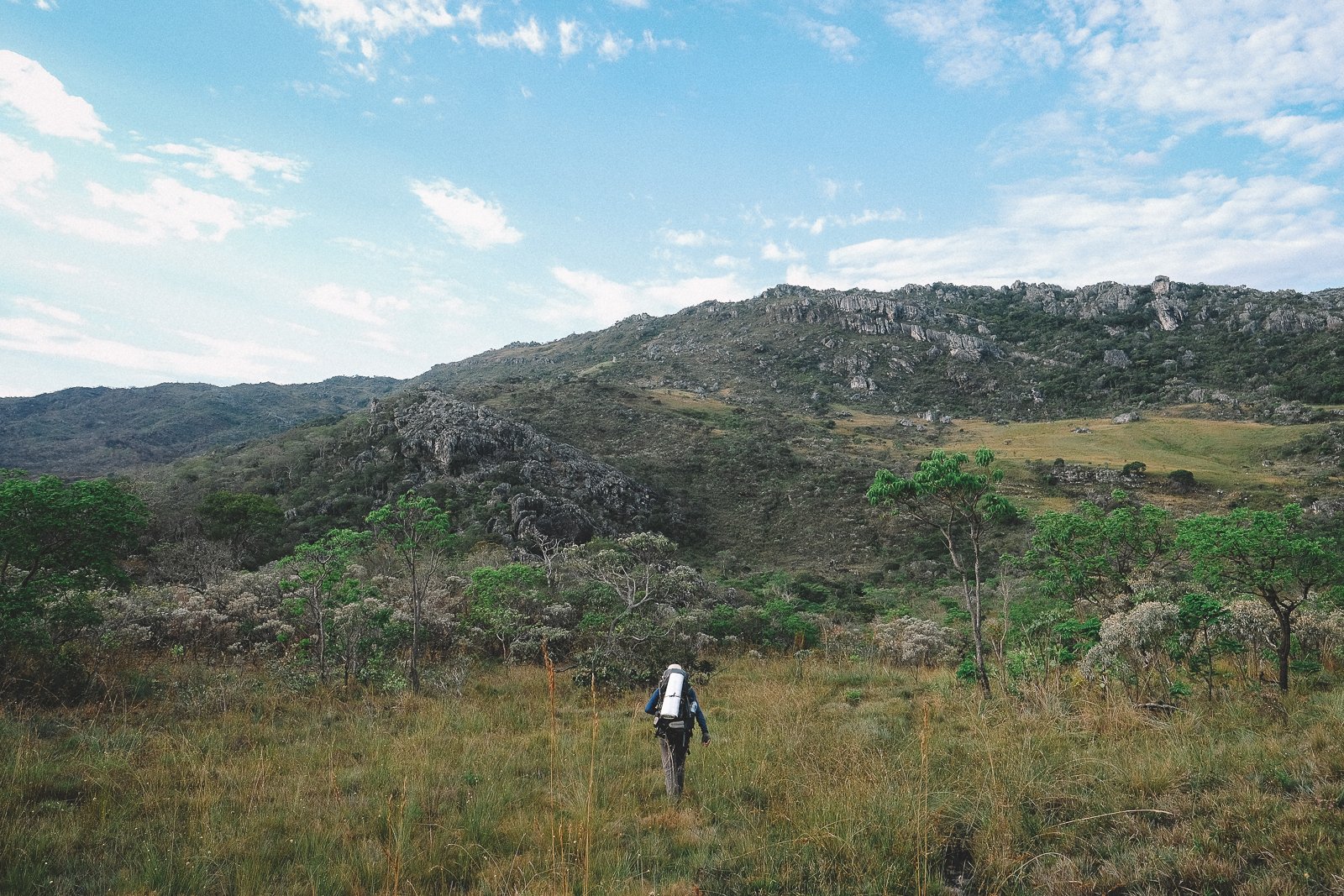
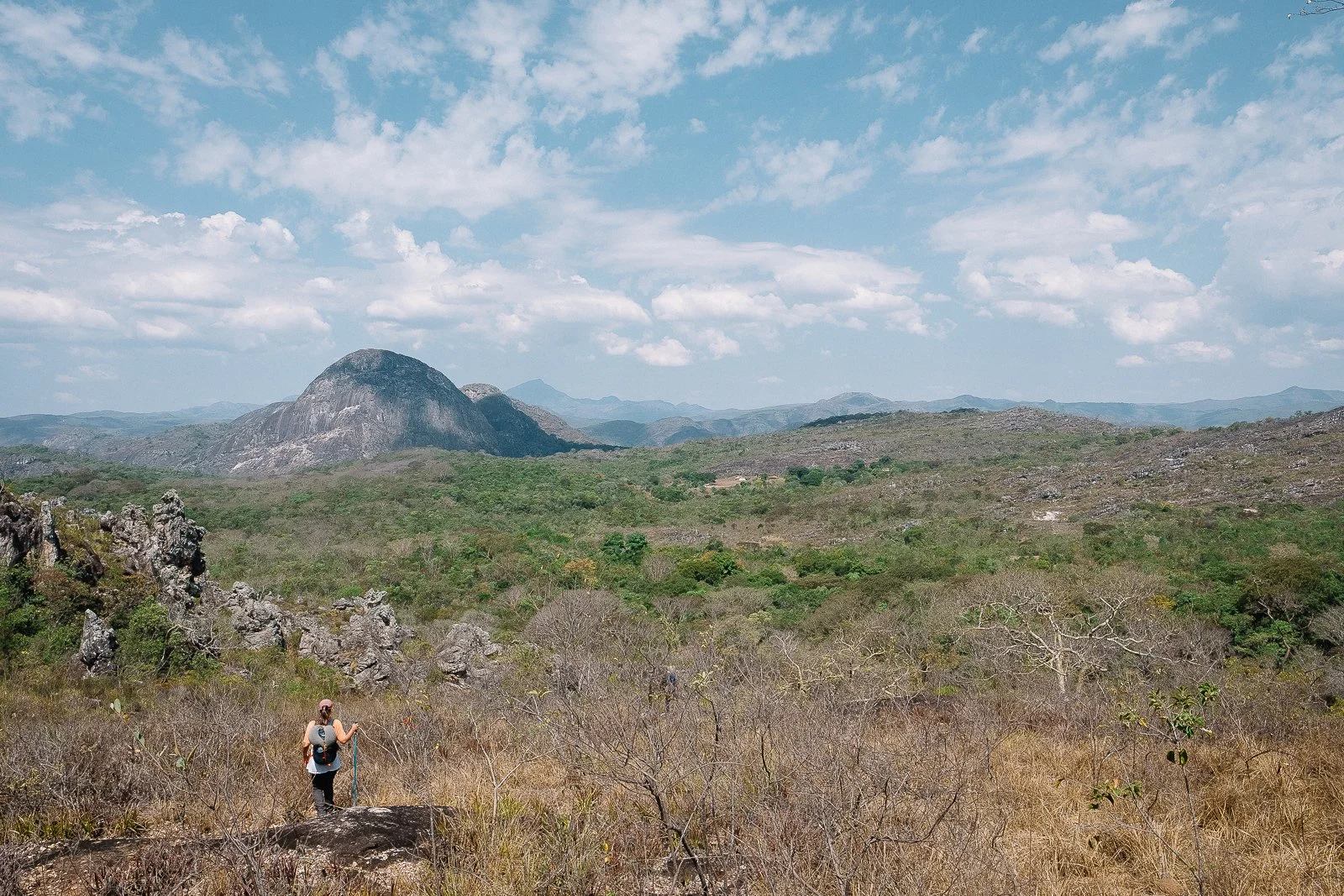
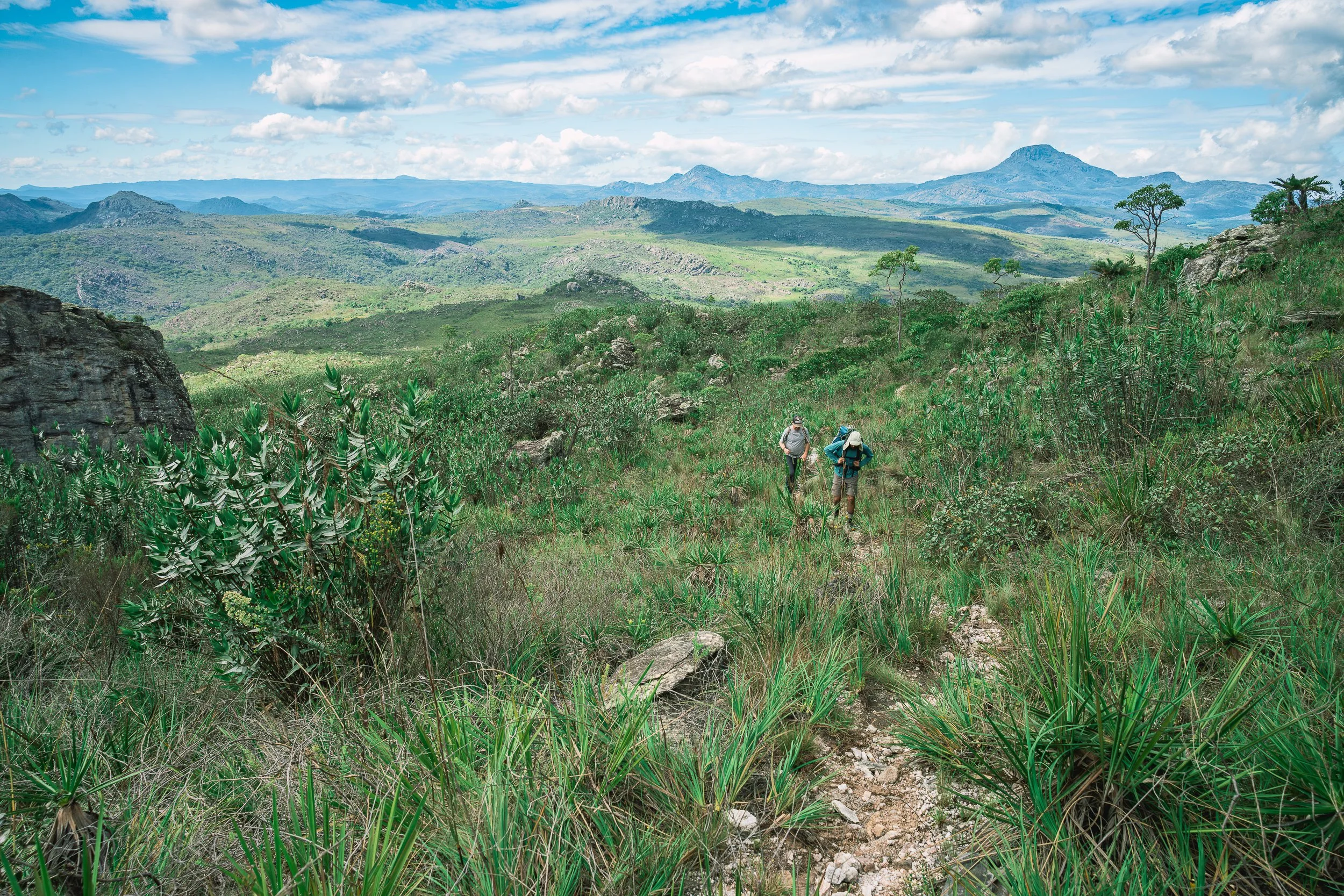
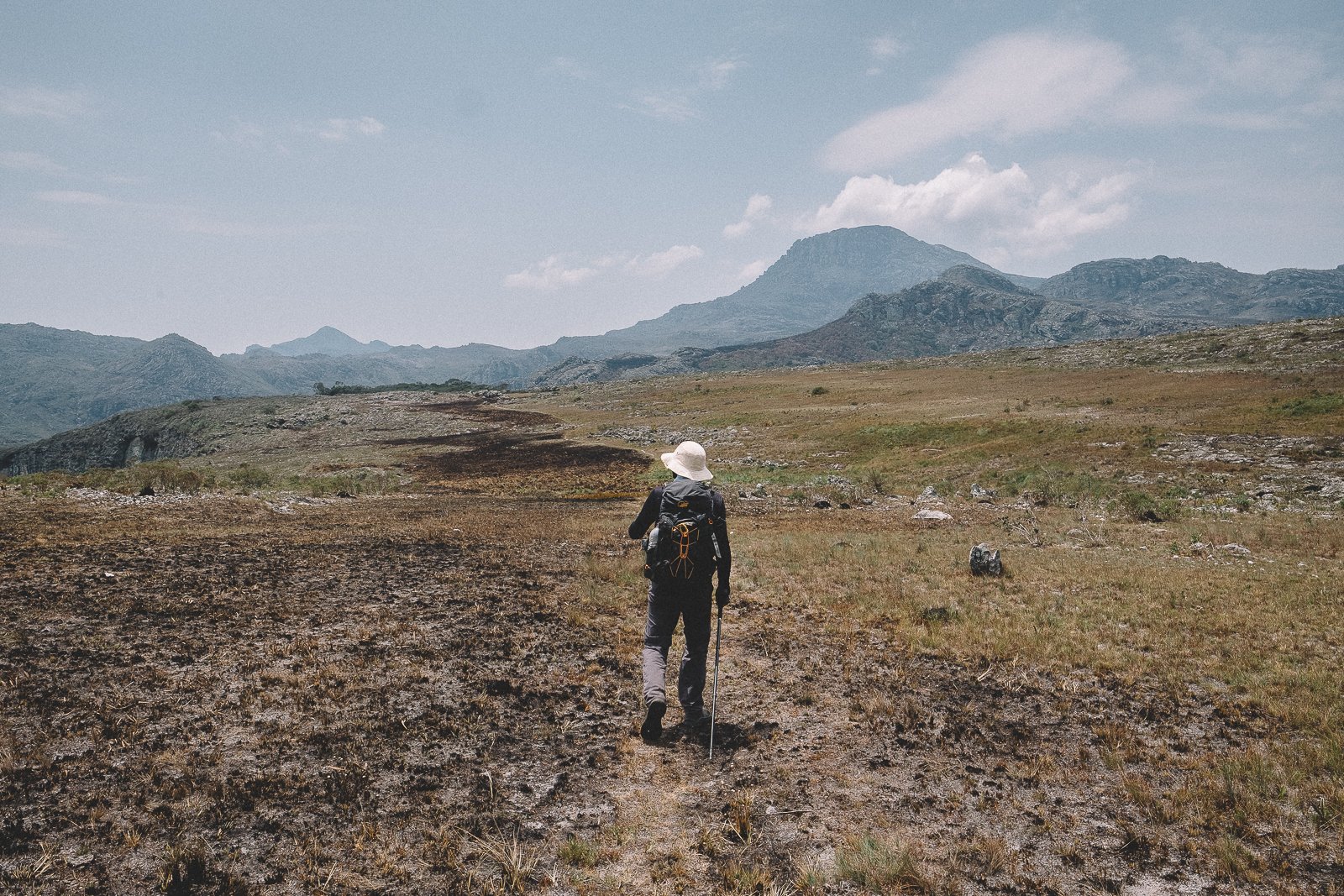
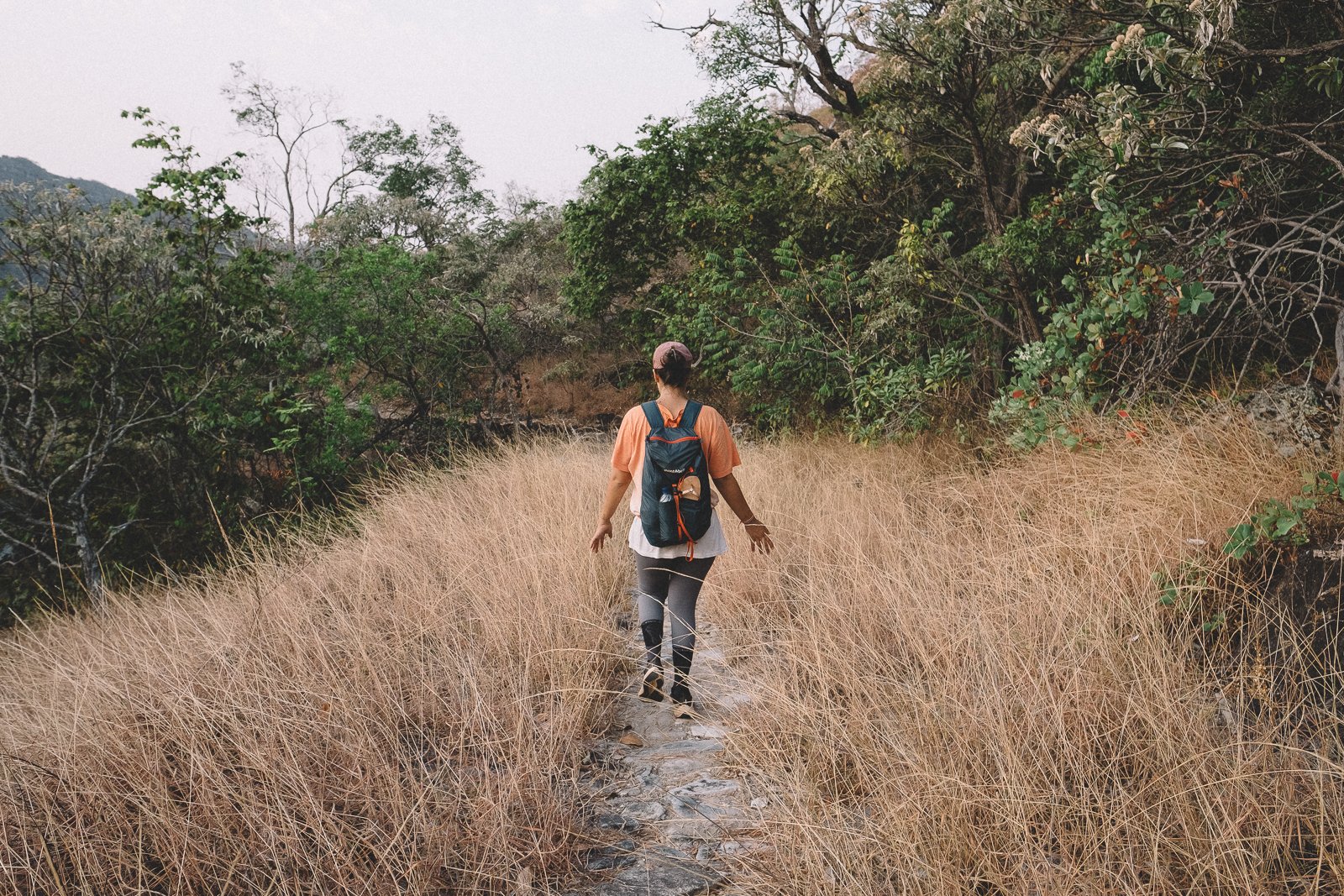
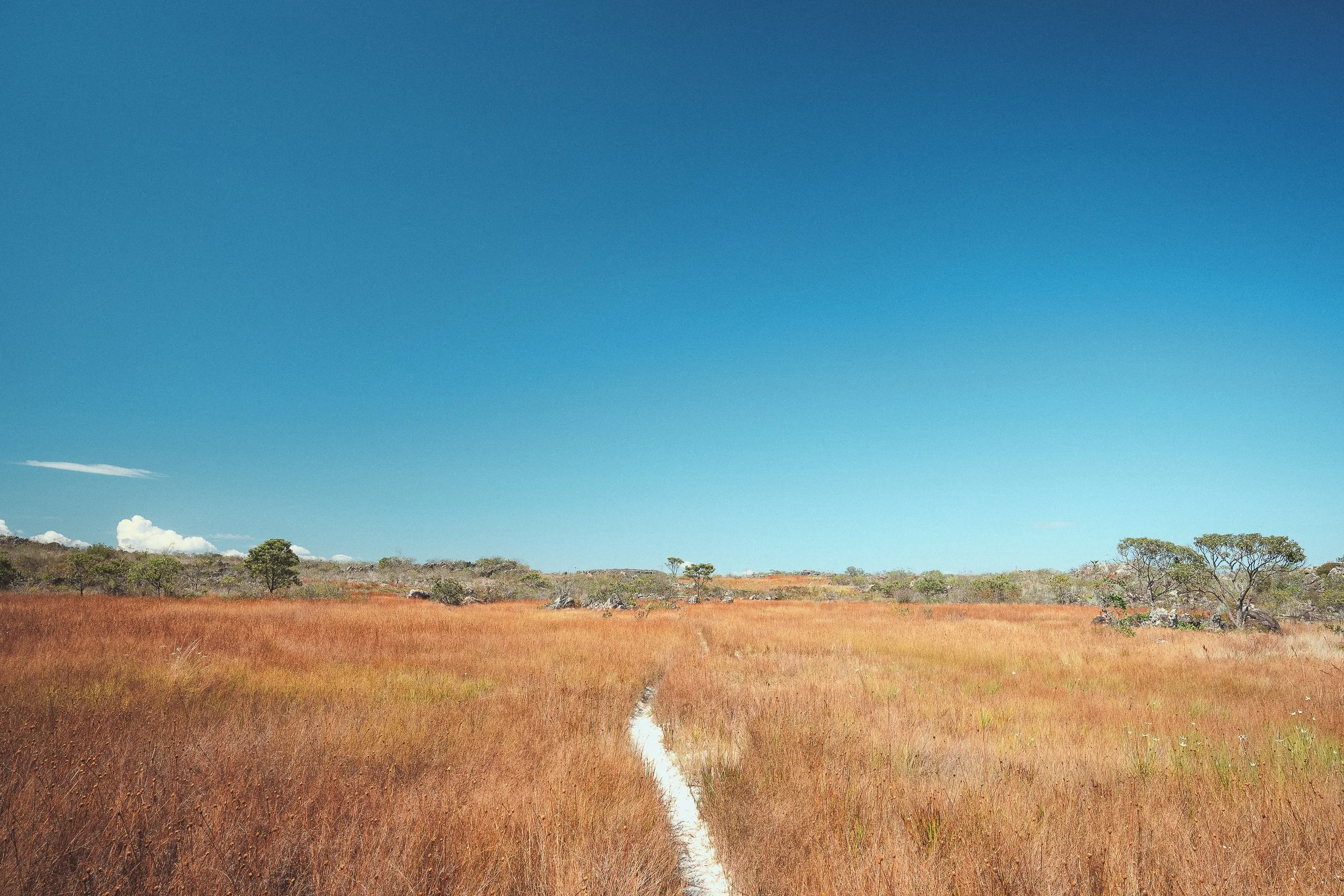
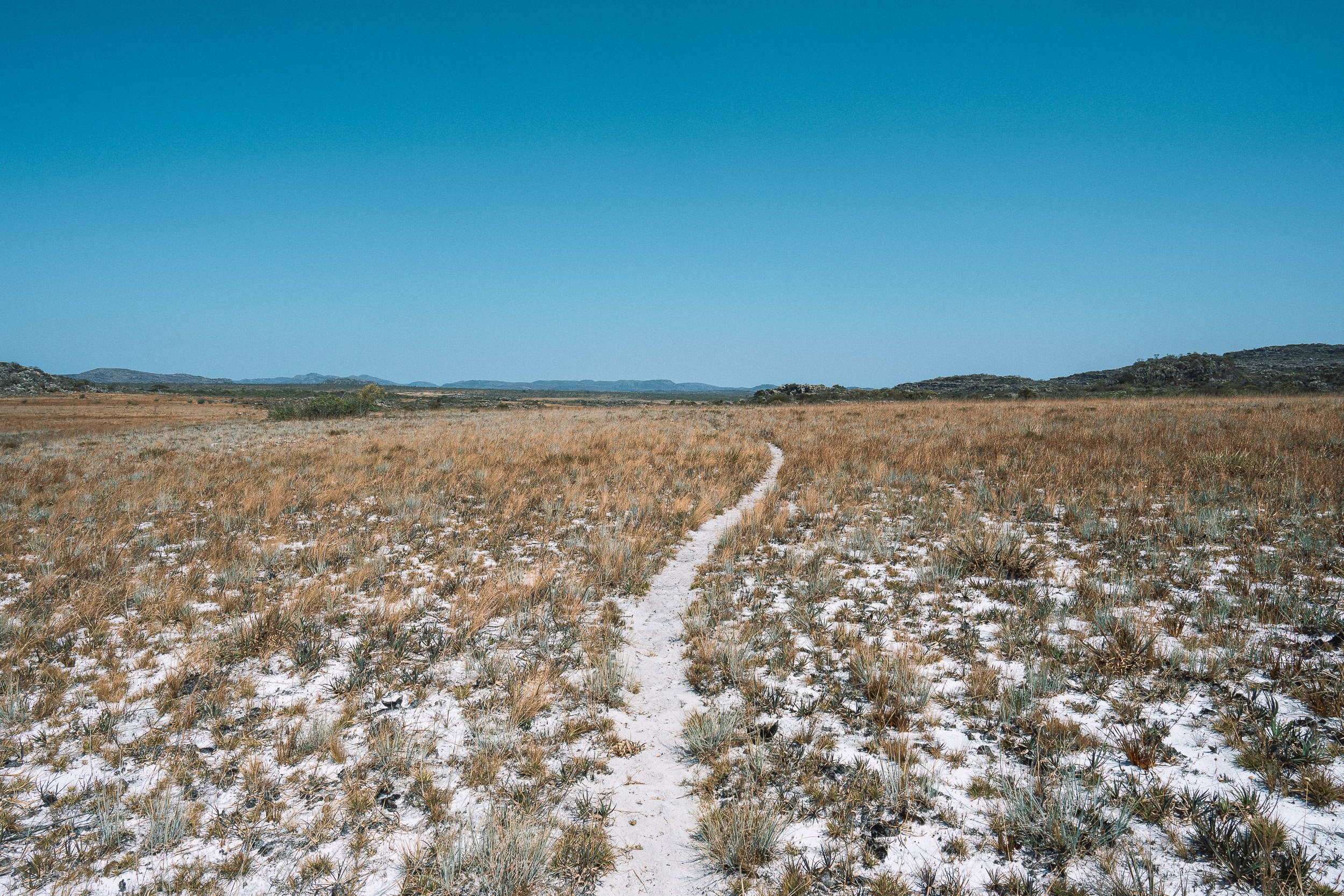
It’s normal to go days without seeing another trekker in the Espinhaço. In the high campos of Sempre Vivas, even the trail itself occasionally disappears into the grass. It’s a good place to be walking with people who know the way.
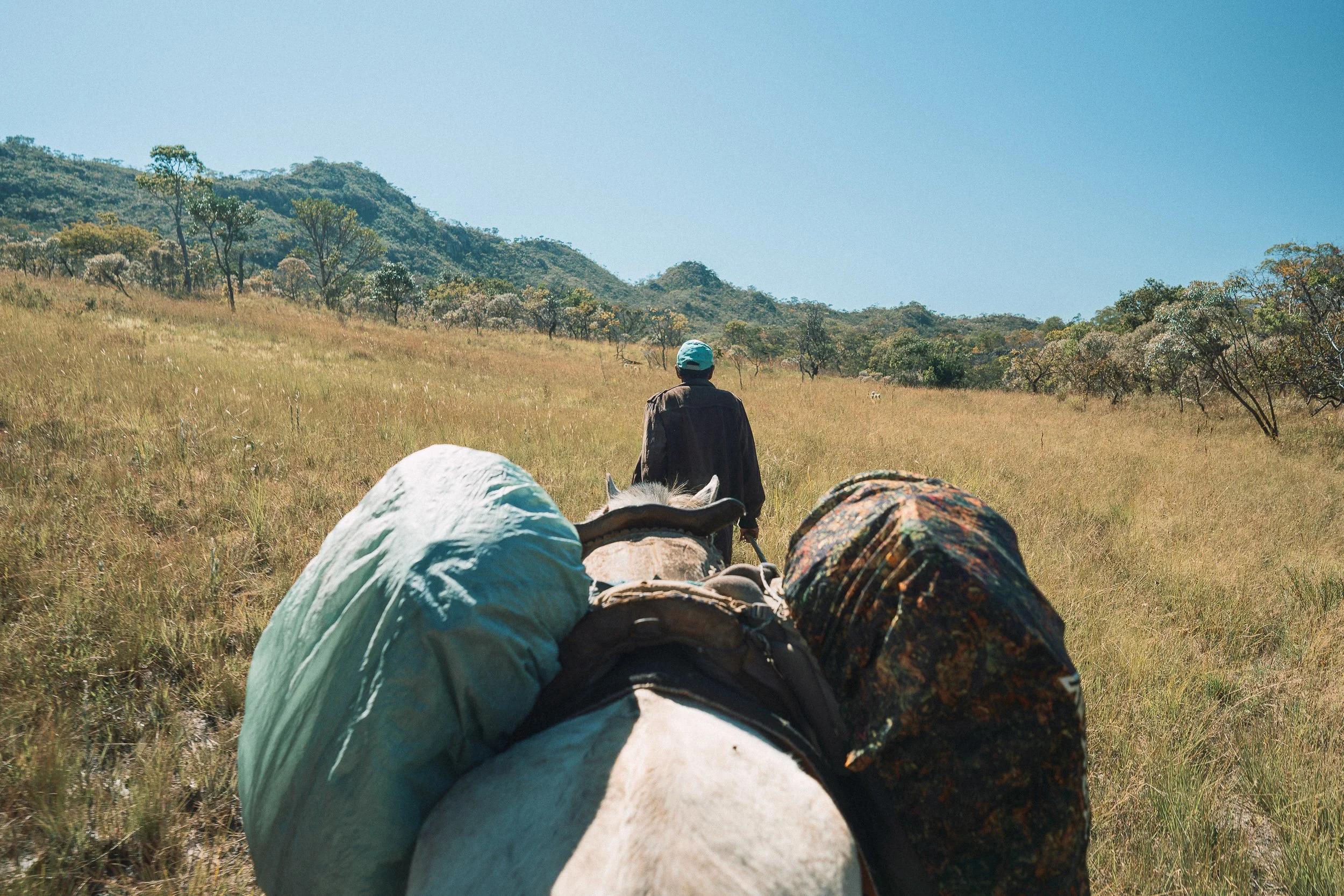
Signal and Wi-Fi come and go throughout the trek. In the front country, 4G and 5G are quite common, even on the trail while Wi-Fi is often present in town and at homestays. During wilderness stretches, our crew carries radios and satellite devices to stay in touch.
English is rarely spoken in the Espinhaço, and Portuguese is the official language of the supper table. Elisa and I are there to translate, of course, but if you have Portuguese—even a little—we recommend you bring it. A well-timed que delicia! usually earns a smile.
-
Very High. We’ll cover more than 350 kilometers on foot, with roughly 22,000 meters of combined ascent and descent. Several of the longer stages run to 25–30 kilometers, though we’ve also allowed ourselves two shorter days in the middle of the trek—an optional five-kilometer walk on Day 11, and just four kilometers to supper on Day 13.
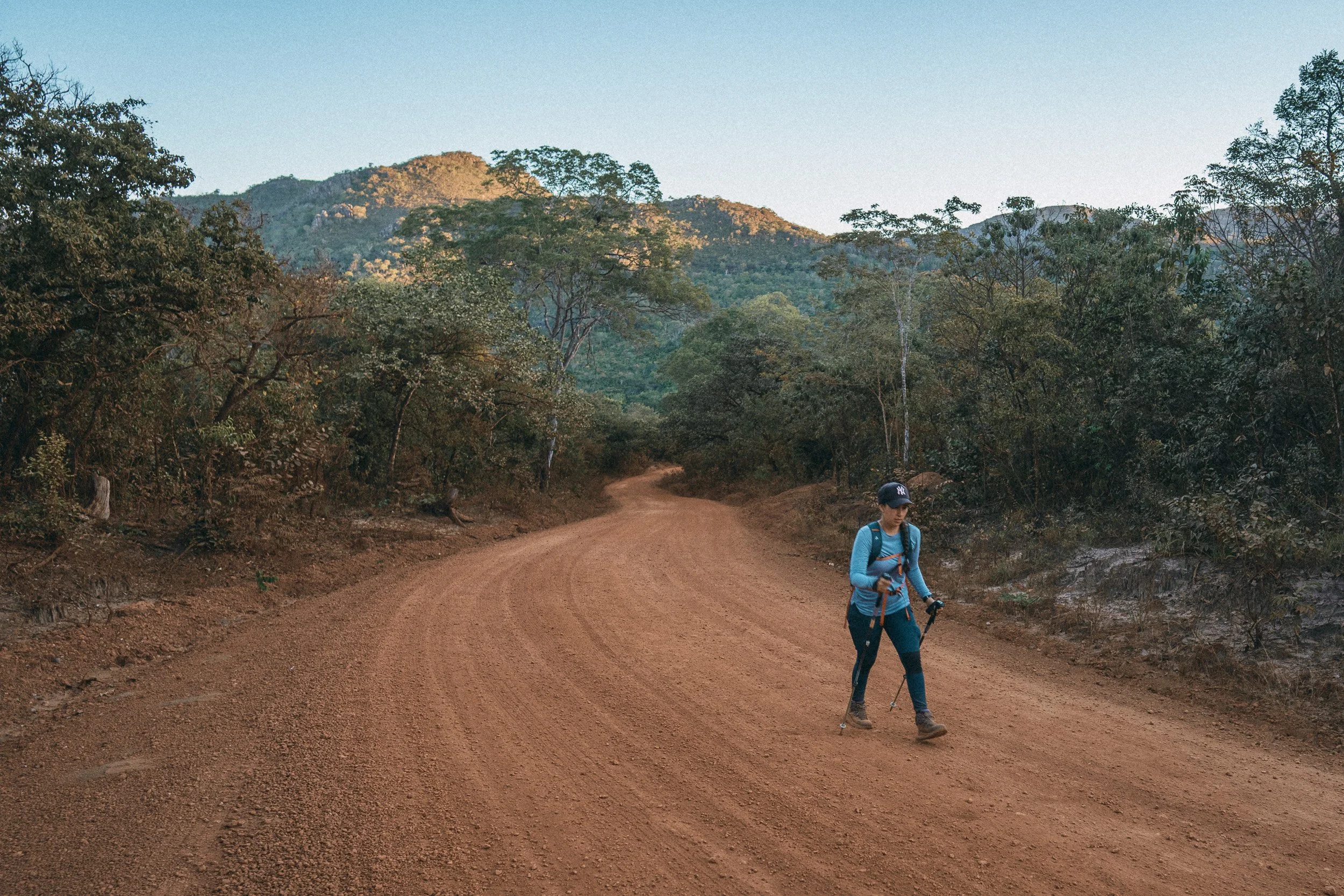
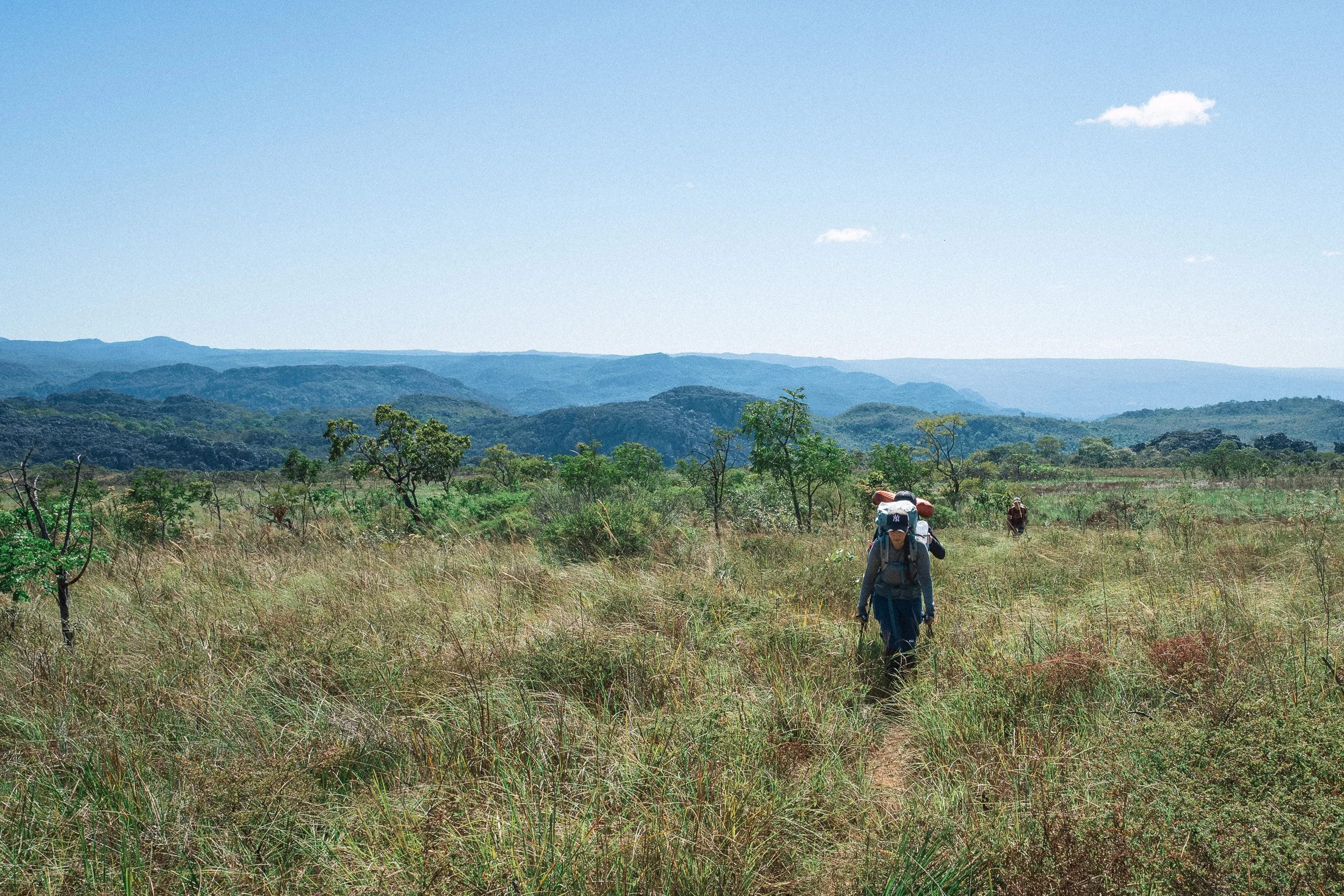
Of course, ask us how long five kilometers takes and we’ll want to know which five. On a dirt road, they can go by in the course of a conversation. In the high campos of Sempre Vivas, the same distance through tall grass and soft ground can keep us busy most of the morning.
Our crew walks with us throughout, and pack animals help carry shared camp gear during wilderness stretches. If you’re fit, used to long days in the mountains, and generally pleased to hear there’s another one tomorrow, you should do well on ADT.
Wondering how it compares with a trek you’ve done? We’d be happy to talk it through.
Talk with Eddie → -
Cerrado (Brazilian savannah)
Mata Atlântica (Atlantic Forest)Most of the trek takes us through the Brazilian high savannah, with stretches of transitional Atlantic Forest early in the journey and again on the return toward Diamantina. The overlap between the two biomes shapes both the terrain underfoot and the ways people make a living along the route.
-
Experienced trekkers who relish a long day in the mountains and would happily spend three weeks getting to know Brazil well beyond the tourist circuit.
The Espinhaço’s vast network of historic trails tells part of the country’s story. The flower pickers, farmers, and families who welcome us along the way can tell you a good deal more.
If you’ve ever stood on a ridge, spotted a handful of rooftops in the valley below, and thought, please tell me that’s where we’re spending the night, you’ll be in good company on ADT.
Before you applyPrevious trekking experience is strongly recommended. If this would be your first multi-week trek, we’d be happy to talk through your experience and preparation with you.
Solo applicants must be at least 25, and all applicants must provide signed medical clearance.
If this sounds like your kind of trek, we’re happy to talk it through.
Contents
Empty Trails / Soaring Peaks / Firelit Evenings
19 field notes from the trail →
-
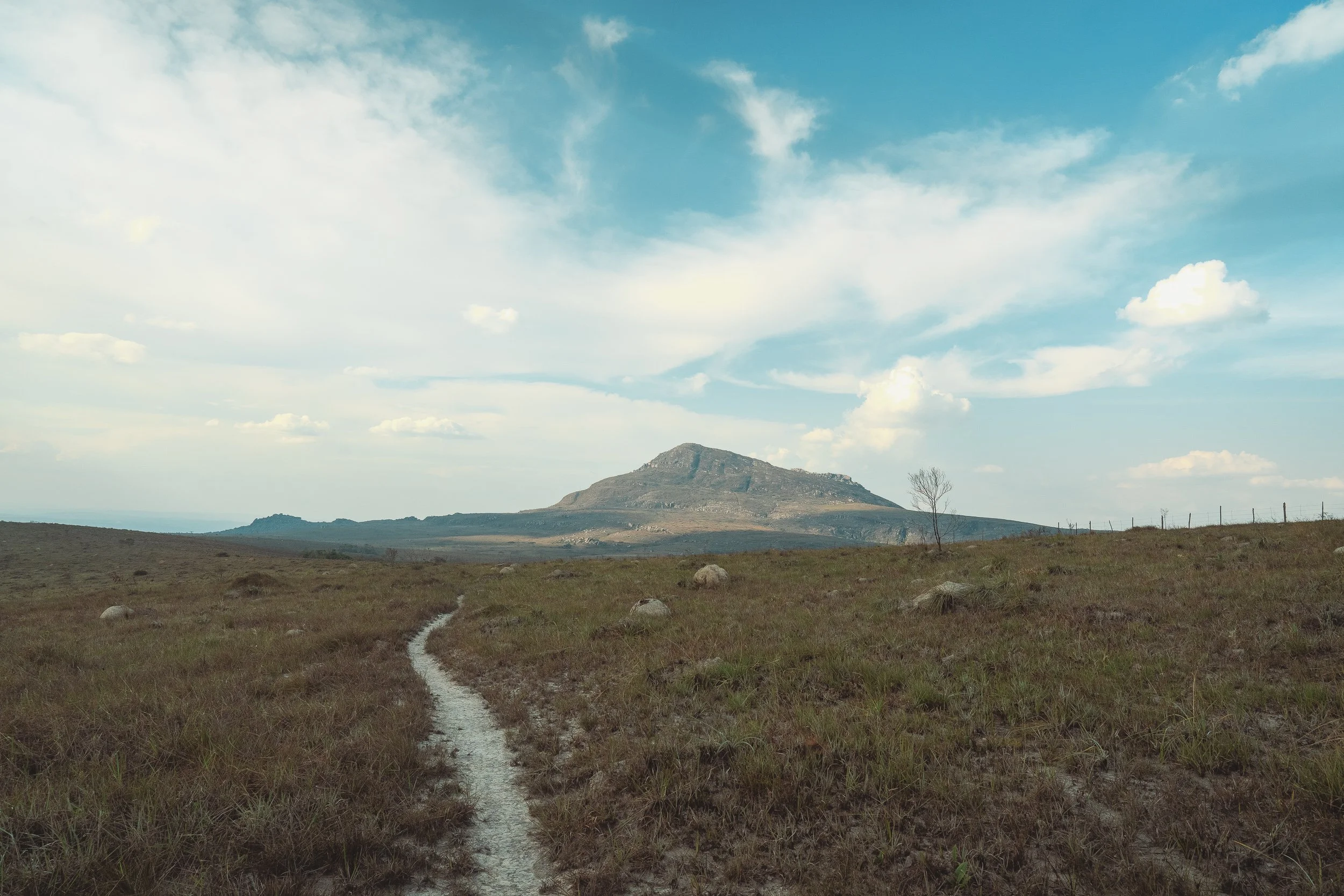
![The trail to Capivari, with Pico do Itambé in the background, Serra do Espinhaço]()
Empty Historic Trails
Diamond roads, mule trails, and the old way to school.
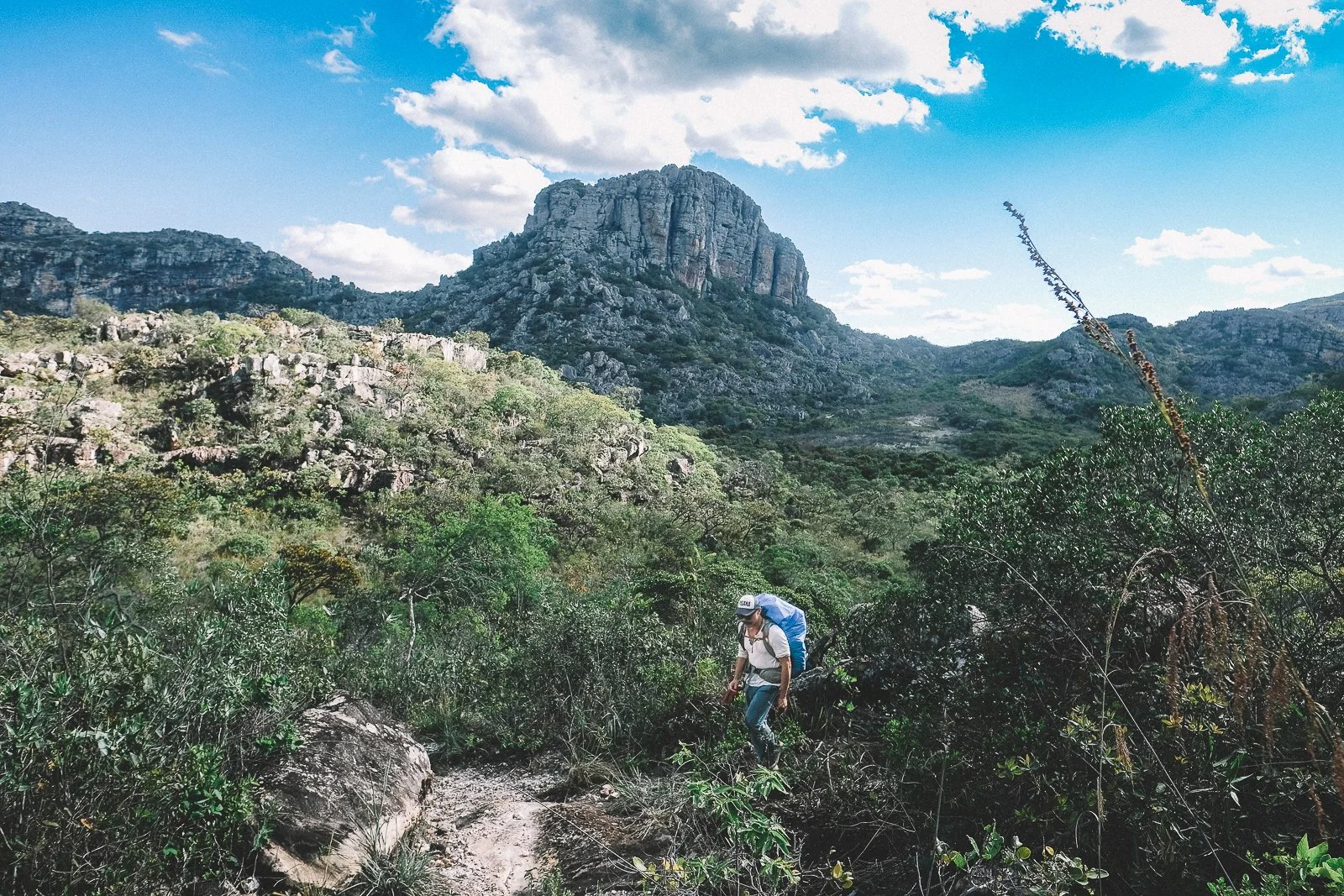
On A Diamantine Tale, the trail itself is often the star of the show. In a mountain range with rocky peaks, extraordinary biodiversity, waterfalls that spill onto white-sand beaches, and ways of life little known beyond the mountains, that’s saying something.
Over the course of 19 days, we’ll cross from the eastern highlands to the western lowlands along paths travelers took for all sorts of reasons. Some were laid in stone by enslaved Africans during the diamond trade. Others lead into the high campos, where families have gathered flowers for generations. Between neighboring villages, getting to school or visiting relatives was often reason enough.
Then there are the old tropeiro trails, which have a way of introducing us to a place well before we arrive. Santo used to drive mules from his home in Bica d’Água to Diamantina. By the time we sit down to supper with him and Dona Maria, we’ll have walked from Diamantina to Bica d’Água ourselves.
Elisa and I have spent years walking and documenting these trails. As much as we’ve enjoyed having them to ourselves, it’s an even greater pleasure to walk them with someone who’s experiencing them for the first time.
-
![On the trail in Campos Tristes, Sempre Vivas National Park]()
The Old Trail to Campos Tristes
A forgotten passage between the mountains.
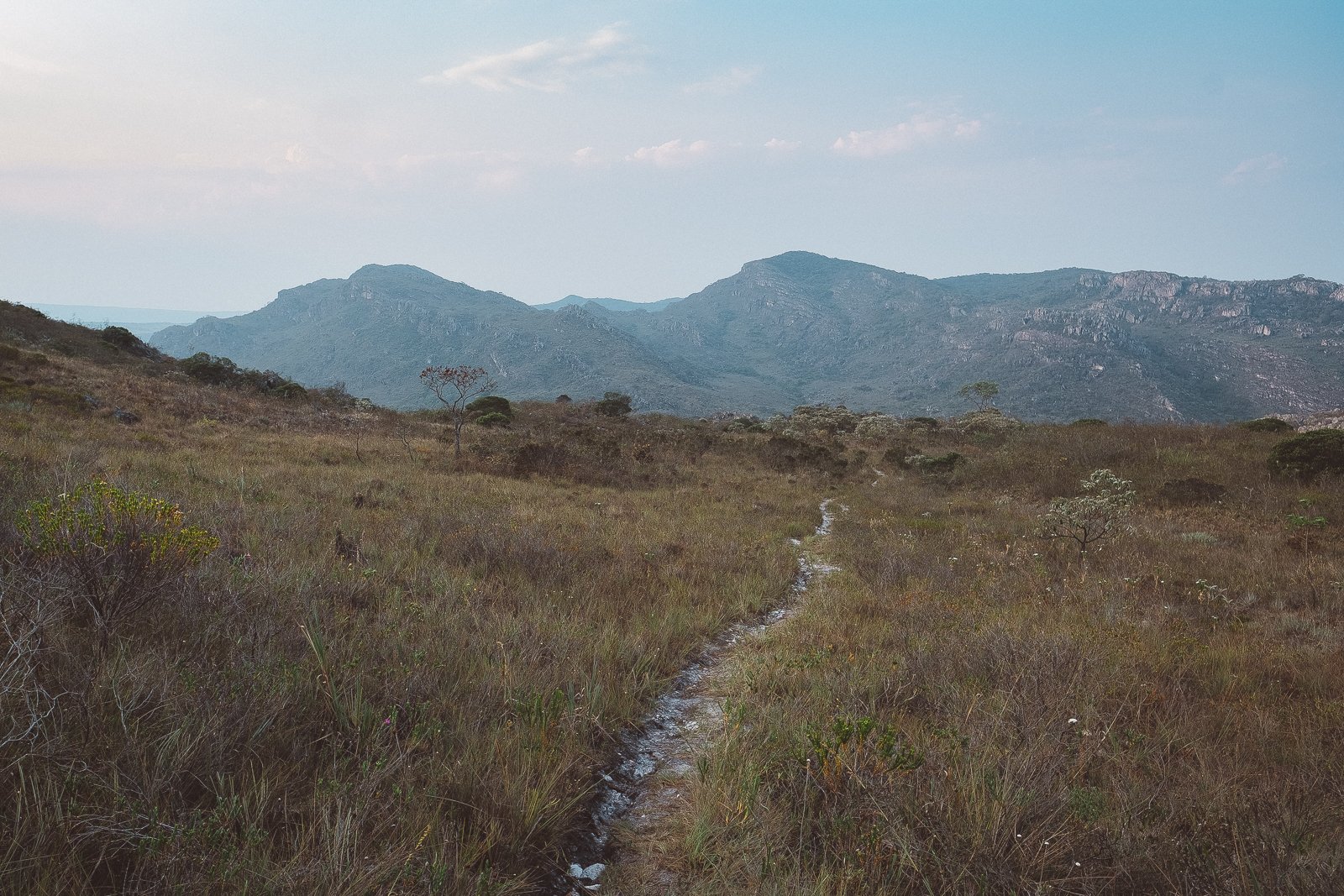
There are little-walked historic trails, and then there are little-walked historic trails.
Before Sempre Vivas became a National Park, the trail from Campos João Alves to Campos Tristes saw plenty of traffic, with local accounts telling of a single mining settlement that was once home to hundreds of people in season.
Today, you could walk past the spot and scarcely know anyone had ever been there at all, let alone an entire community. Even veteran flower pickers have forgotten parts of the way.
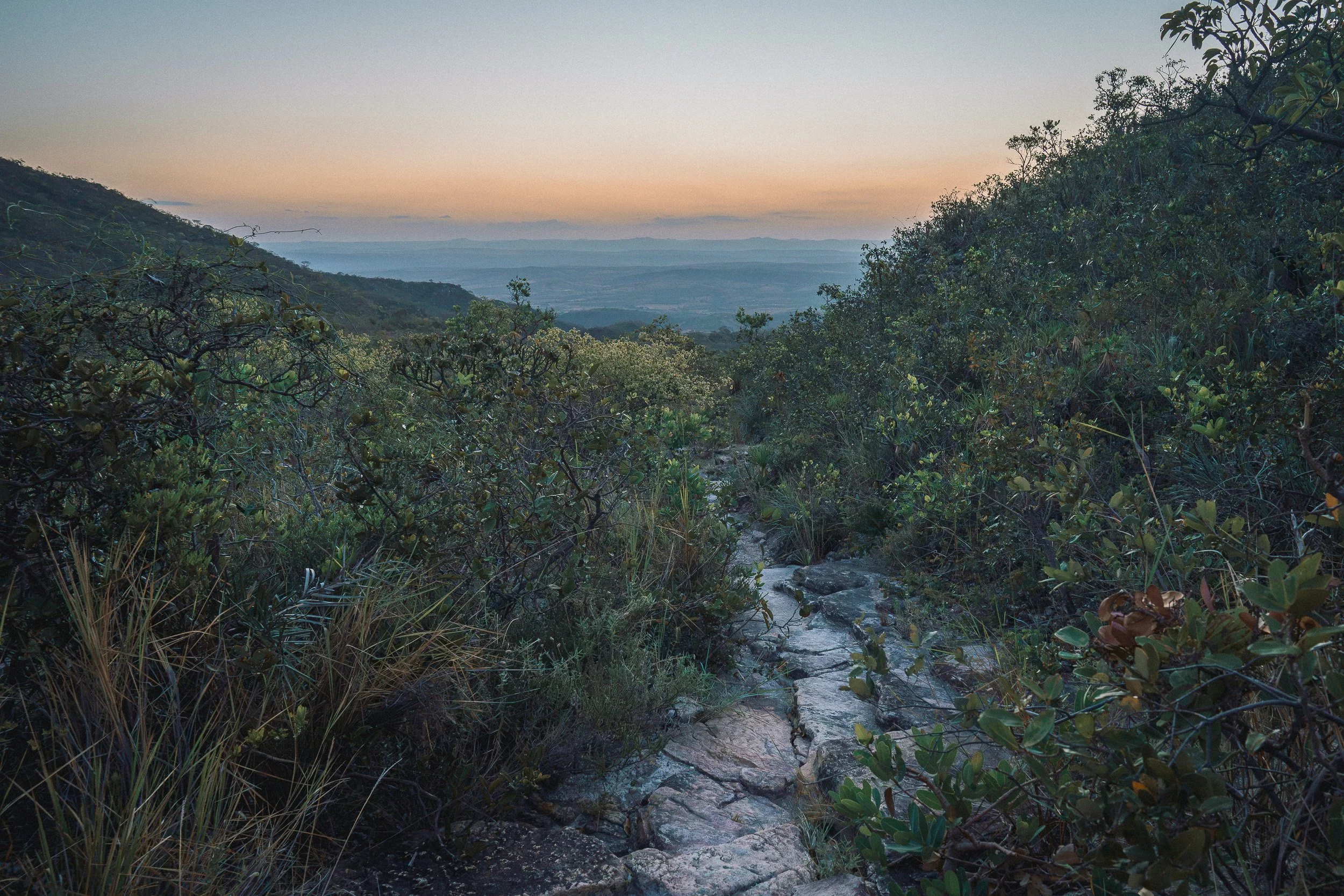
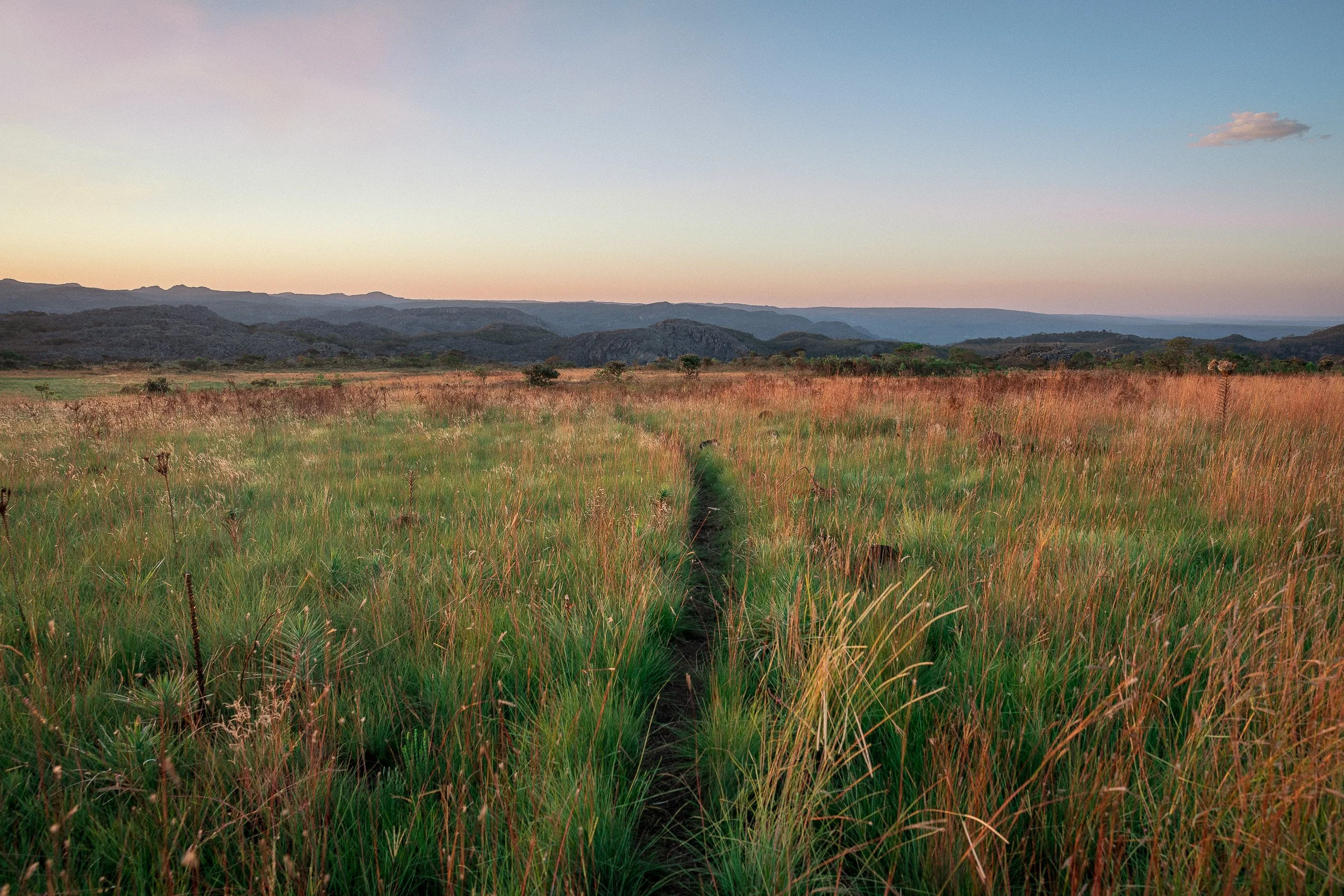
Prickly head-high grasses, palm-studded wetlands, gentle rivers, overgrown forests, and impossibly open campos. During some stretches, the view extends as far as the pack in front of you. At other times, it seems as though you can see all of Minas Gerais.
At the end of it all lies an enormous flower-filled room between mountains. Tonight we’ll make camp at Leandro’s lapa, a series of rock shelters used by flower-pickers for centuries (and known by many other names).
Few travelers have seen the heart of the park. Fewer still have walked the trail.
-
![Cachoeira Santa Rita, Sempre Vivas National Park]()
Her Majesty, Santa Rita
The queen of the western wilds.
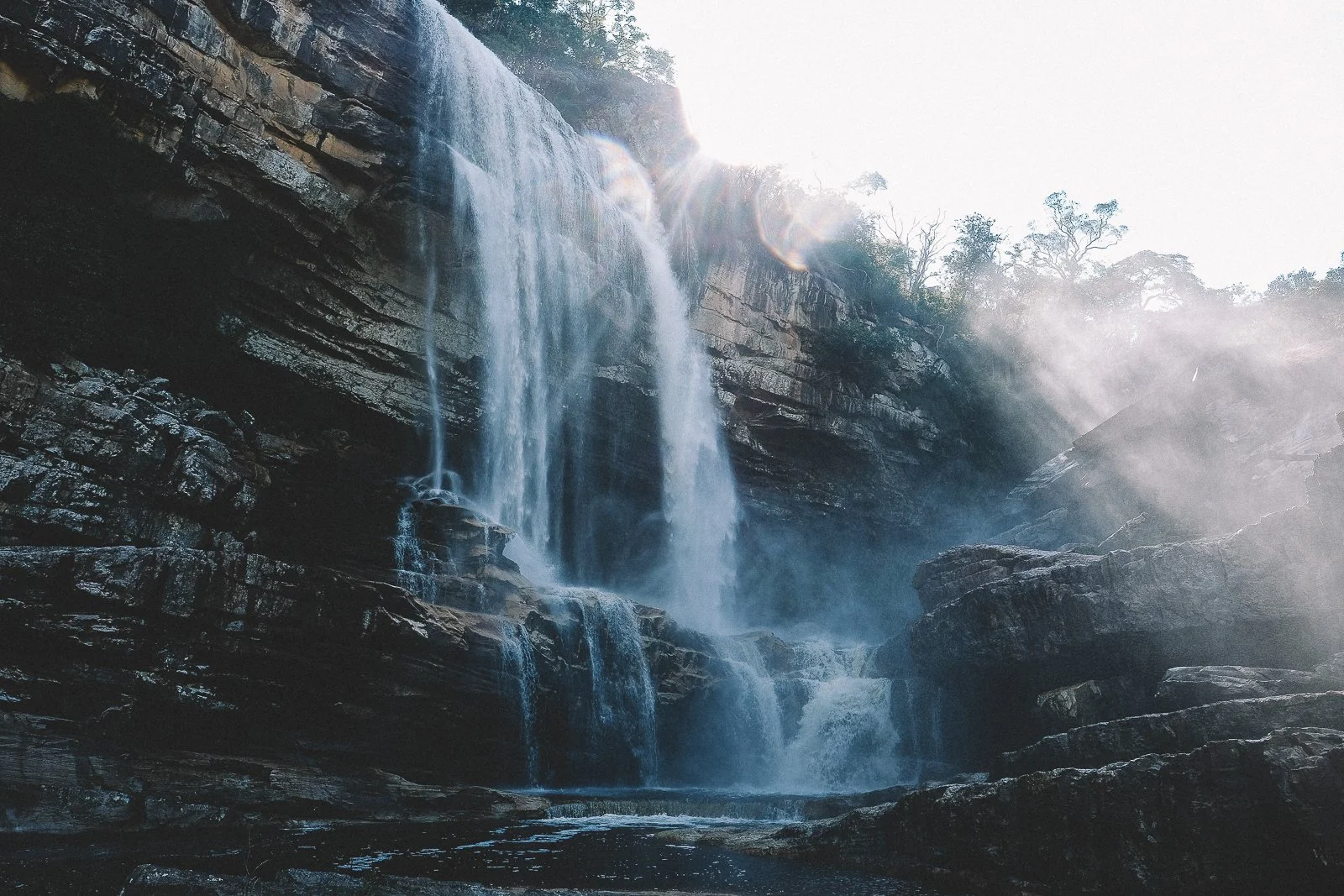
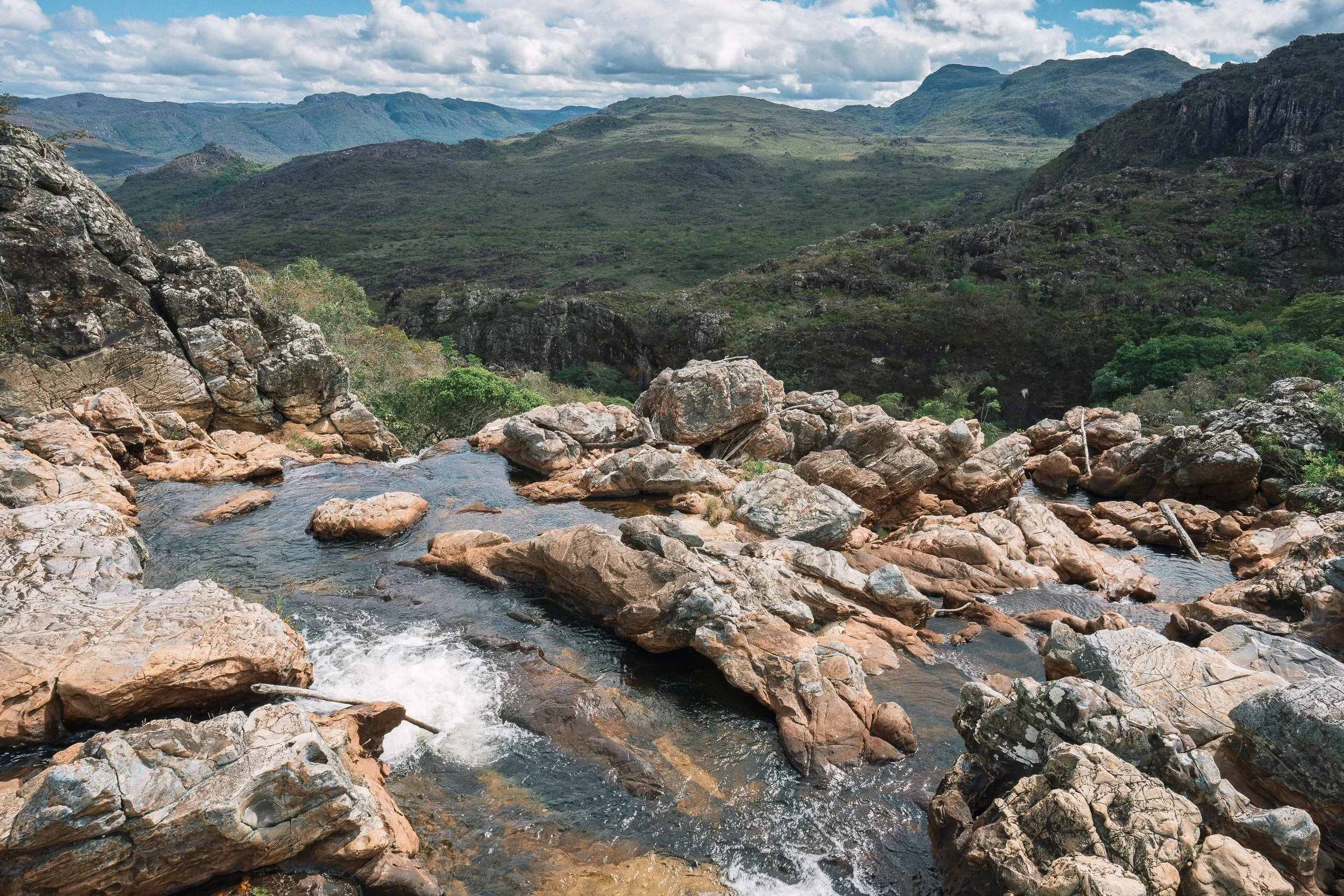
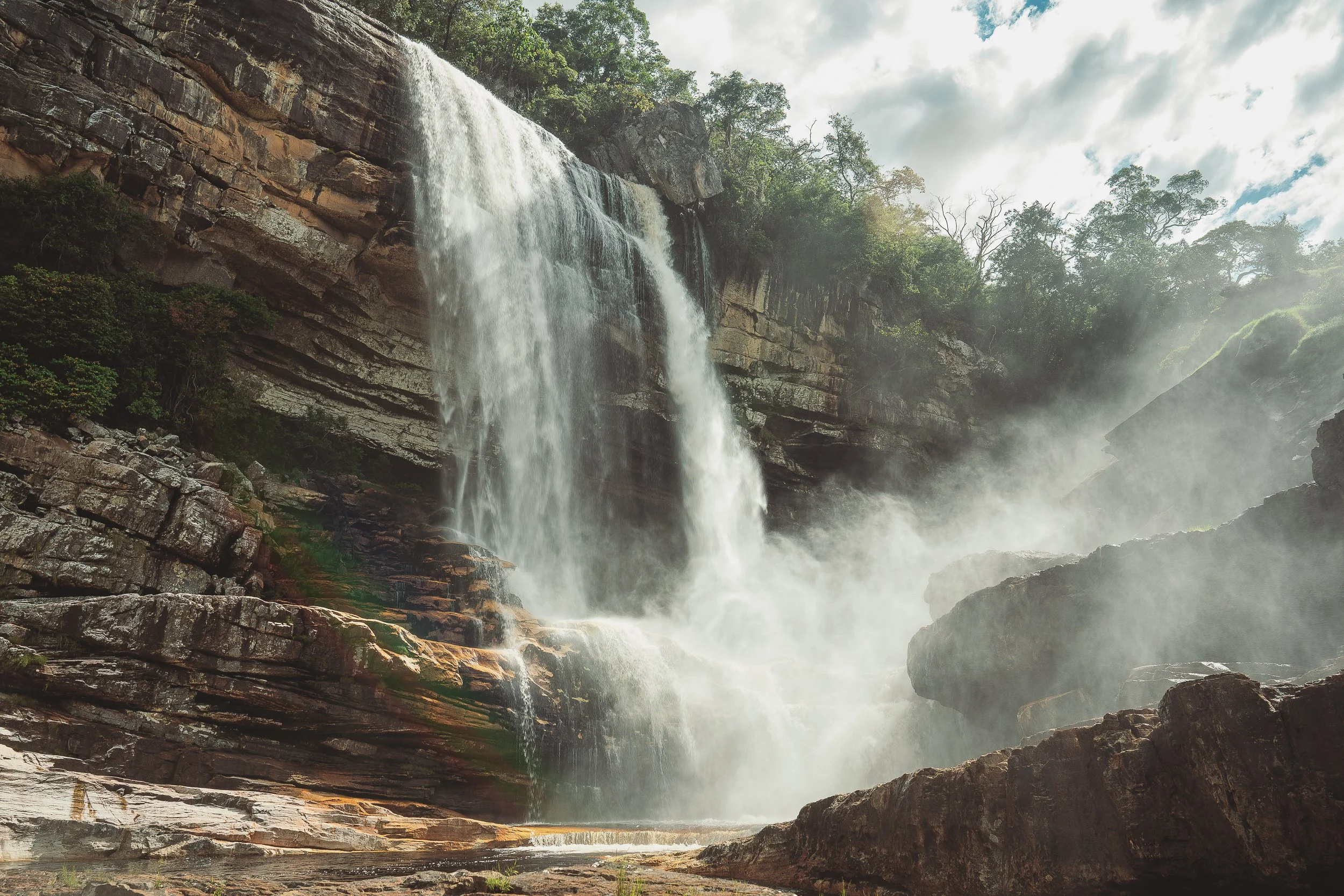
Pristine, majestic, and appropriately difficult to reach, Cachoeira Santa Rita marks our return to Sempre Vivas on Day 17.
Known to the surrounding communities for generations, the falls remained more rumor than attraction to the outside world until recently. Lucky for us, word travels a little more easily than people do—rough roads, no proper trail, and a succession of rather inconvenient climbs have thus far kept the crowds at bay.
And what a reward awaits: a fast-moving river and countless smaller falls culminate in a vast cascade plunging into a deep canyon, framed by steep quartzite walls and some of the wildest scenery anywhere in the range.
The view from above is worth the journey alone. Should conditions permit, a pair of short, optional climbs will take us down to the pool for a swim with the gods.
Vamo que vamo.
-
![A shaded townsquare in São Gonçalo do Rio das Pedras, Minas Gerais]()
Magical São Gonçalo
A place so special we call it home.
Even in a part of Minas with more than its fair share of handsome old mining villages, São Gonçalo do Rio das Pedras manages to feel special.
Cobblestone streets give way to hidden alleyways, highland trails sprout at the edge of town, waterfalls are within walking distance, and Reiki and sushi sit comfortably alongside traditional cerrado medicine and tropeiro.
By the time we walk in from Curralinho after dark on Day 3, dusty and hungry from a long day on the trail, a cold beer and a piping-hot plate of home-cooked comida mineira at the local pub are just what the doctor ordered.
Of all the ways Elisa and I could introduce you to São Gonçalo, this is the one that makes us feel luckiest to call it home.
-
![A flower-picker holds a bouqet of freshly picked sempre-viva wildflowers in Galheiros, Serra do Espinhaço]()
A Way of Life
Harvest time in the high campos.
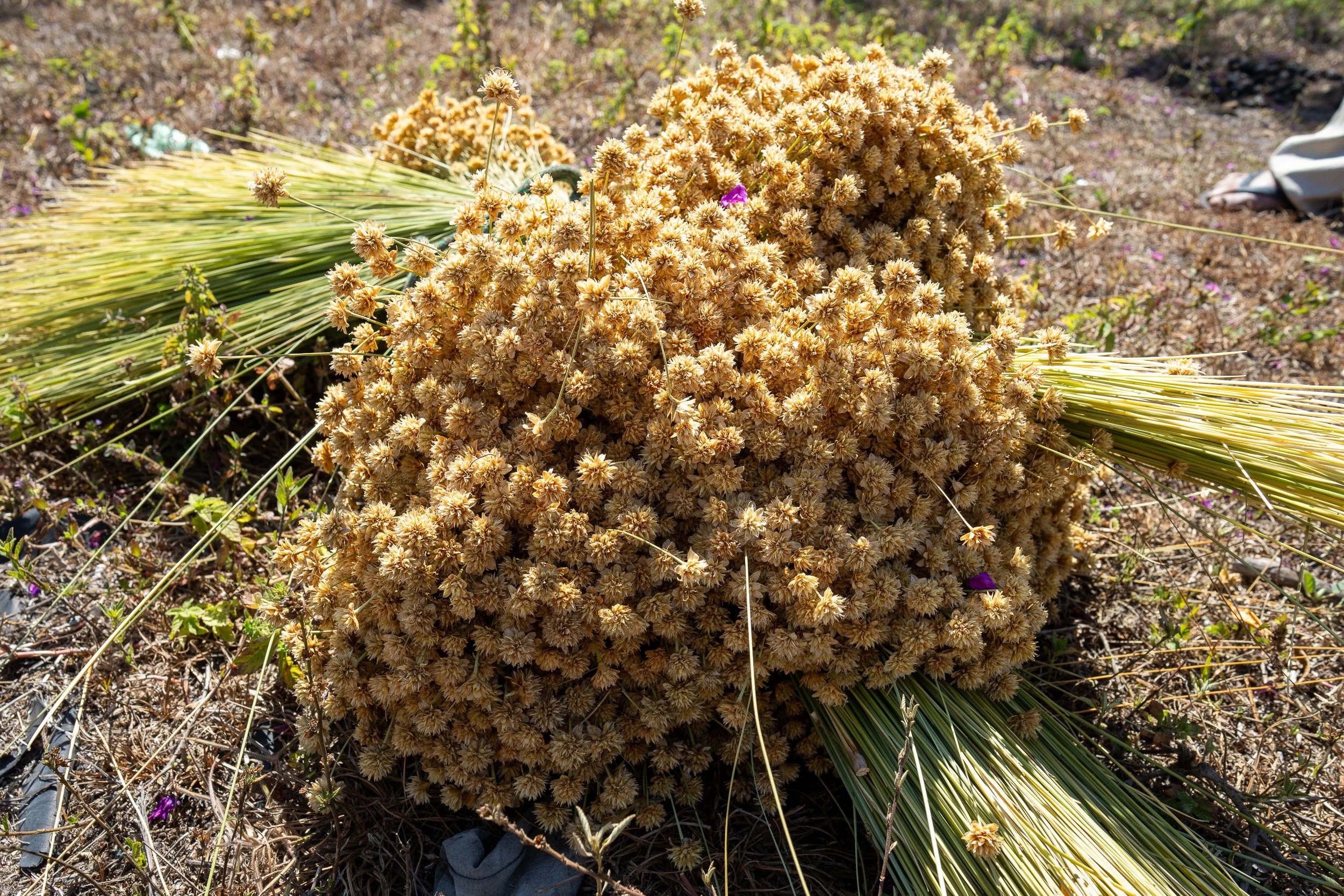
The tiny flowers that give Sempre Vivas National Park its name are deeply woven into the cultural fabric of the Espinhaço, bringing people from across the range together the way diamonds once did.
There’s a lineage to the flower harvest in this part of Brazil. For centuries, pickers have made the long journey by horse and mule from the lowlands into the high fields, tending the grasslands with fire and gathering flowers for months on end alongside neighbors and strangers alike, using rock shelters as kitchens and places to lay their heads. In 2020, the UN recognized this way of living and working the land as a Globally Important Agricultural Heritage System.
We’ll leave the flower-harvesting to those who know it best, but we’ll make plenty of time along the trail to get to know the people who do it.
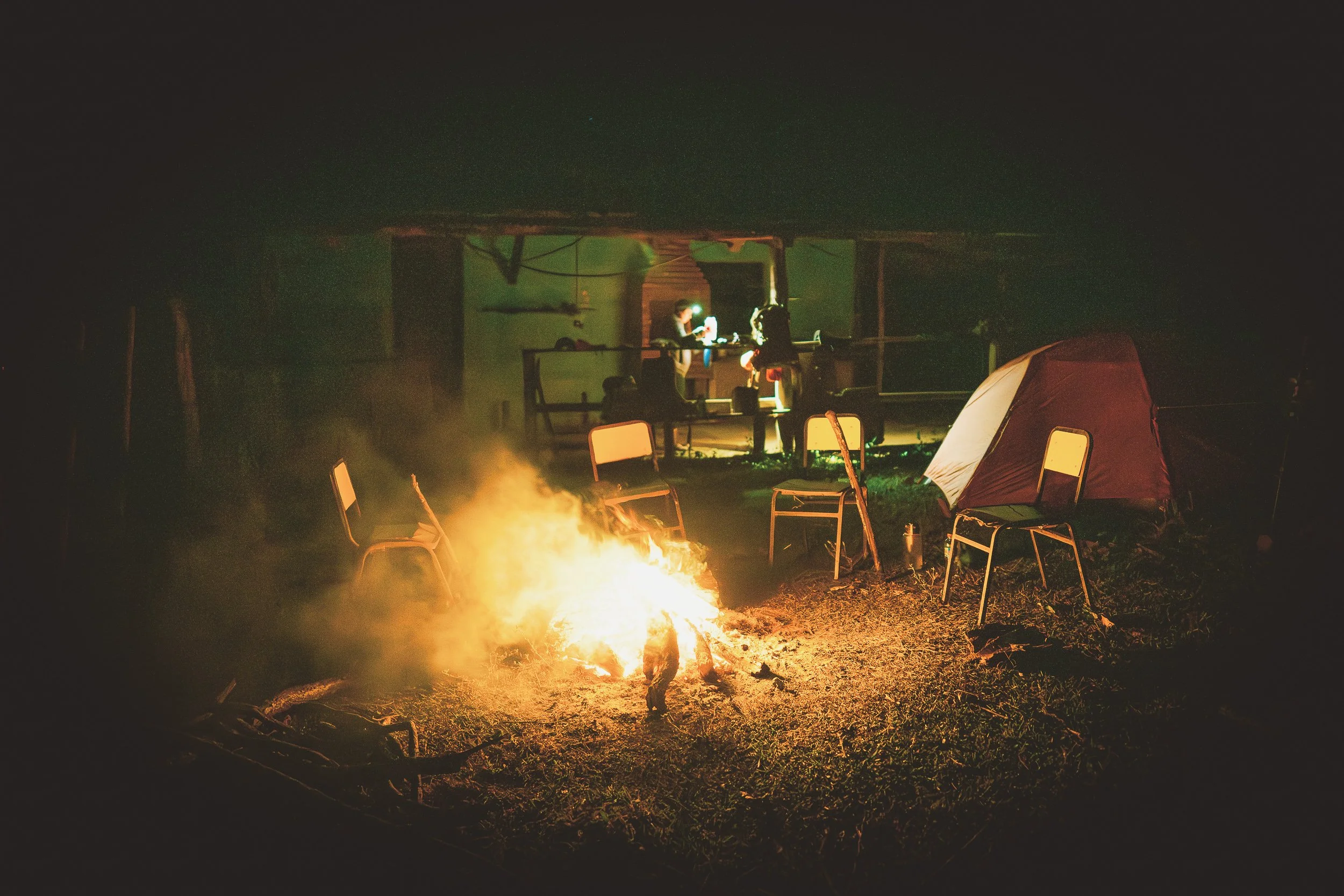
If pitching a tent in a secluded rock shelter, cooking supper on a tabatinga wood-fired stove, and trading stories by kerosene lamp and firelight in the high savannah wilderness speaks to you, you’re on the right path.
-
![Brewing coffee on a wood-fired stove at Folheta in Sempre Vivas National Park]()
Folheta
Neura’s garden.
It doesn’t matter which direction you come from—it’s always a relief to see the banana trees.
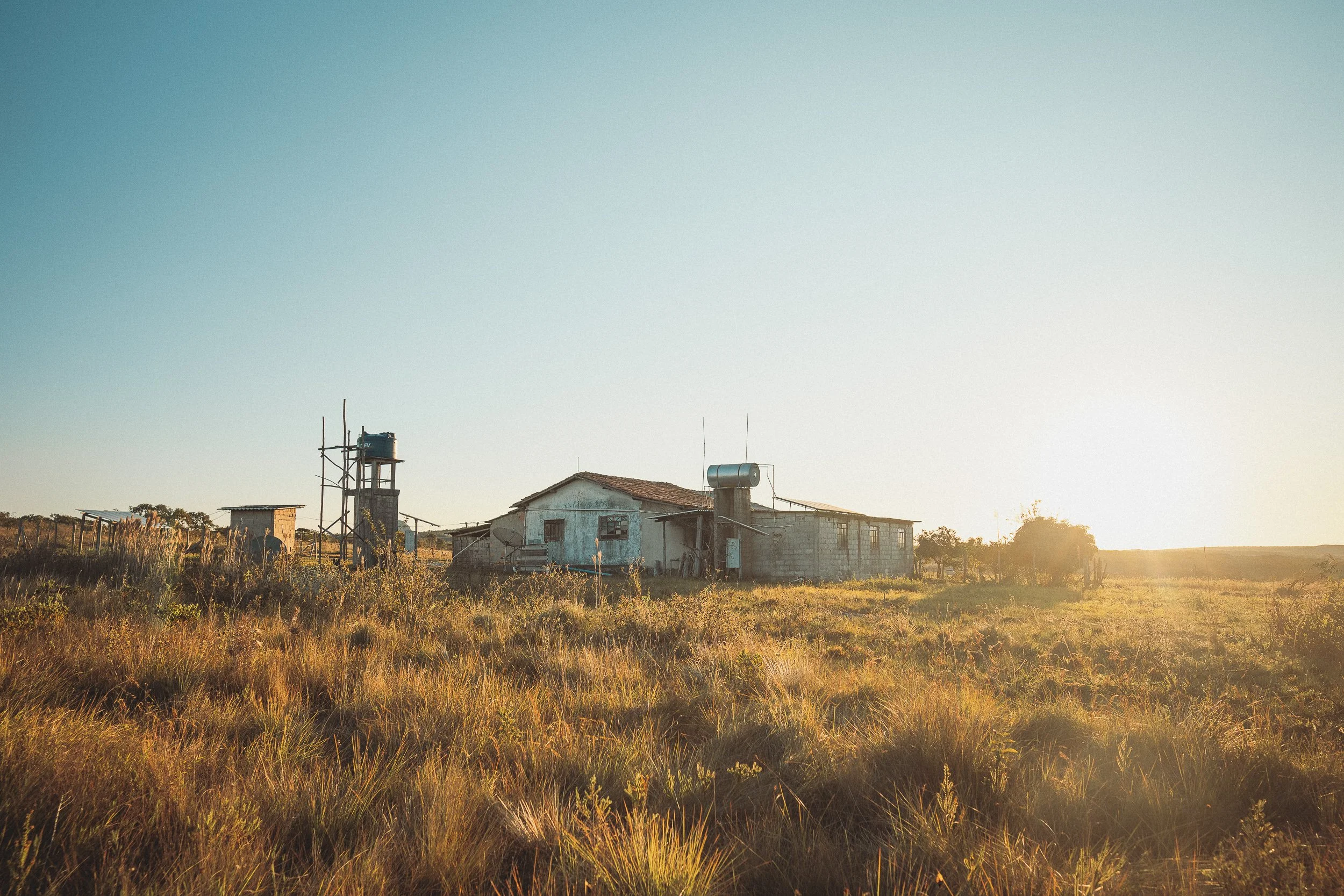
Tucked between serras in Sempre Vivas, the wild valley of Folheta is known to the few who walk it for its tapirs, big cats, and considerable population of snakes. In all the Espinhaço, it’s perhaps the last place you’d expect to find a well-kept garden.
On Day 12, we’ll follow sodden cattle trails through the wetlands of the Inhacicão, then climb through thick forest on a centuries-old footpath to the banana grove. A little farther on, among the mango, papaya, and orange trees, the roof of the old homestead comes into view. It’s truly remarkable how safe a few fruit trees can make you feel.
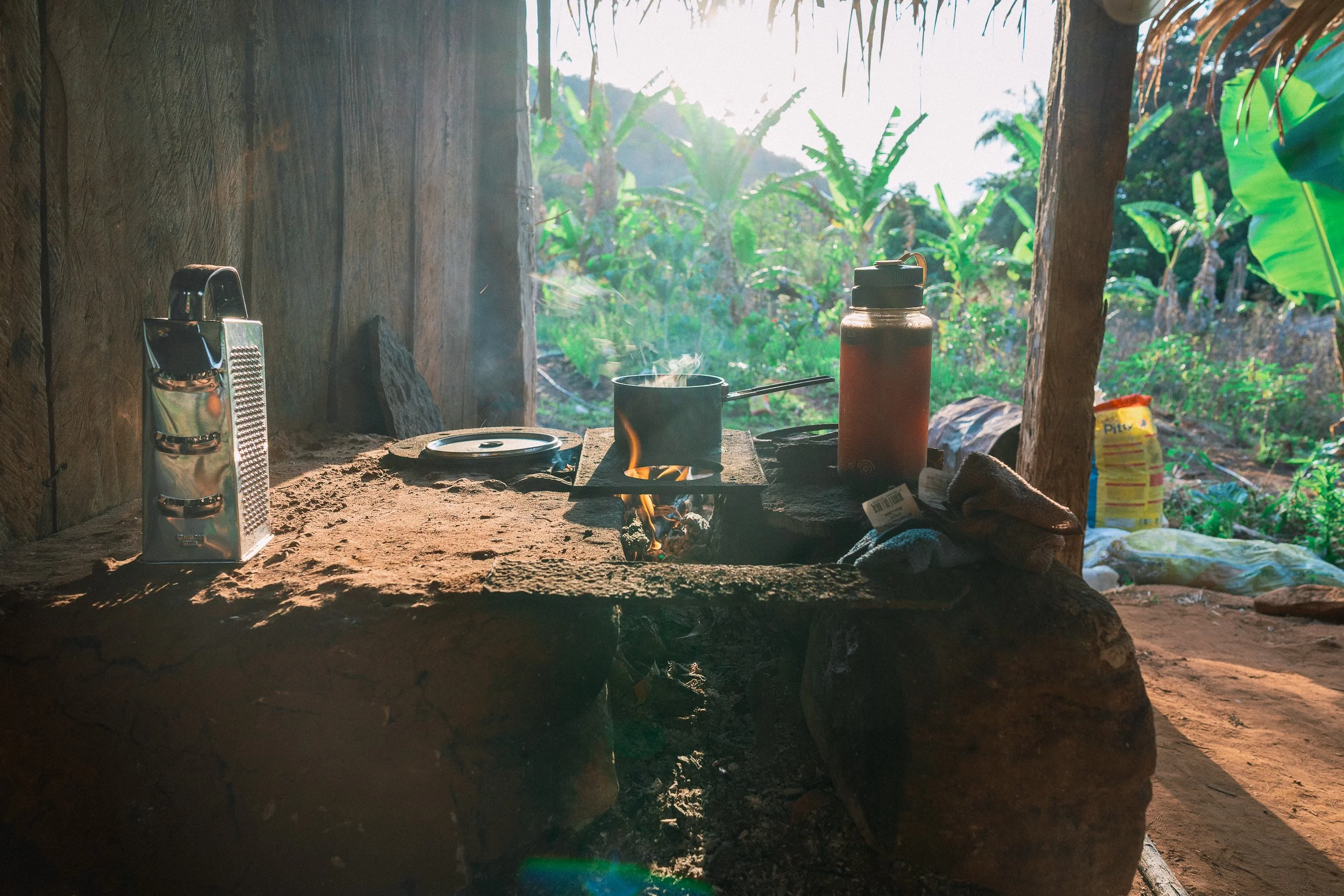
Even in the thick of flower season, Neura comes down from the high fields to tend to her scallions, collard greens, and manioc. The watering takes care of itself, courtesy of a nearby creek (our private bath for the evening) and some rather ingenious plumbing.
We’ll pitch our tents in a small clearing a few paces from the outdoor wood stove. Tomorrow we’ll climb to Campos João Alves, where Neura lives with her family.
It’s a lovely walk… though rather a long way to go to check on the collards.
-
![On the trail in Itambé State Park, with Pico do Itambé in the distance, Serra do Espinhaço]()
Pico do Itambé
A mountain. A monument. A milestone.
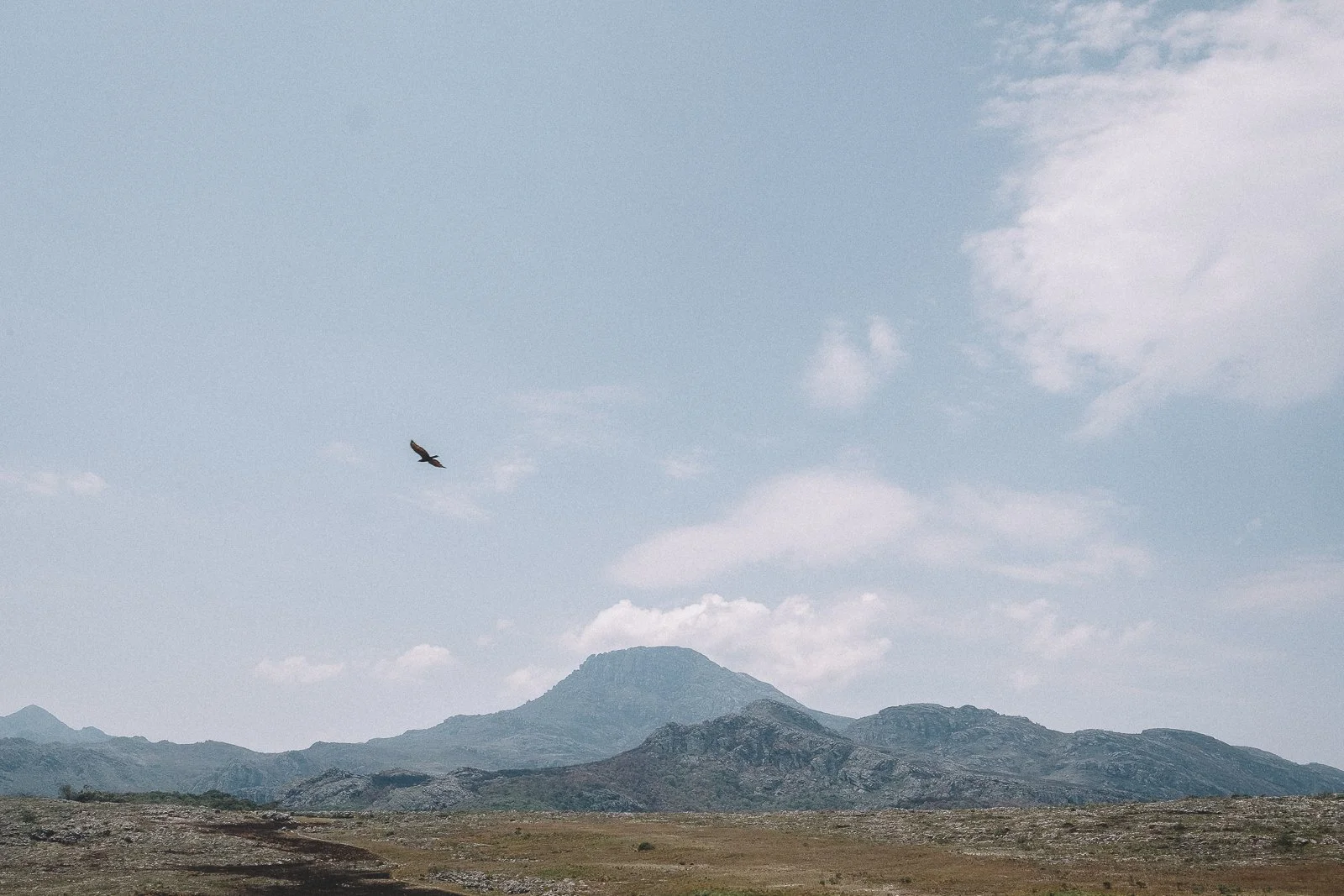
The region’s undisputed icon, Pico do Itambé (2,052 m), watches over the range like a citadel, living up to its billing as “the roof of the Espinhaço.”
Rising more than a thousand meters above the surrounding peaks, it marks a hard divide between the Jequitinhonha and Doce river basins, and a softer one between the Atlantic Forest and the Cerrado.
You’ll feel every step of the climb on Day 5.
And then we’ll gently remind you that the day is only half done.
-
![Portrait of Deivid and Geraldo at their home atop Campos João Alves, Sempre Vivas National Park]()
Geraldo, Neura, and Deivid
At home in Campos João Alves.
It’s just four kilometers from Folheta to the home of Geraldo, Neura, and their son Deivid. We’re giving it a full day.
The walk alone on Day 13 could occupy a fair part of the morning—especially if one of us is carrying a camera. The old trail winds uphill through the cerrado, the views opening as we climb, before dipping into a great sweep of grasses and flowers. Just across a stream, perched on a hillside among fruit trees, is the family’s wooden rancho.
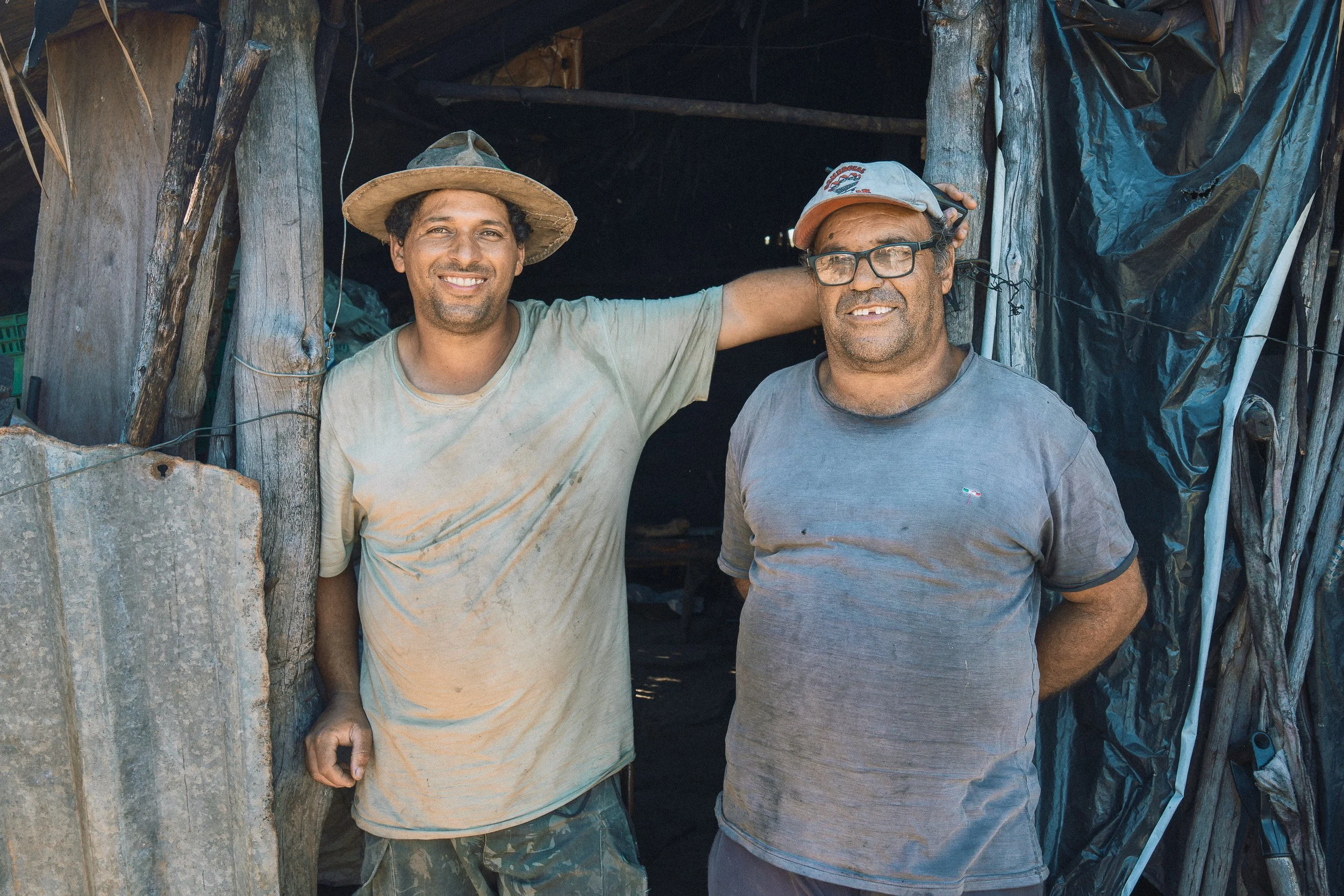
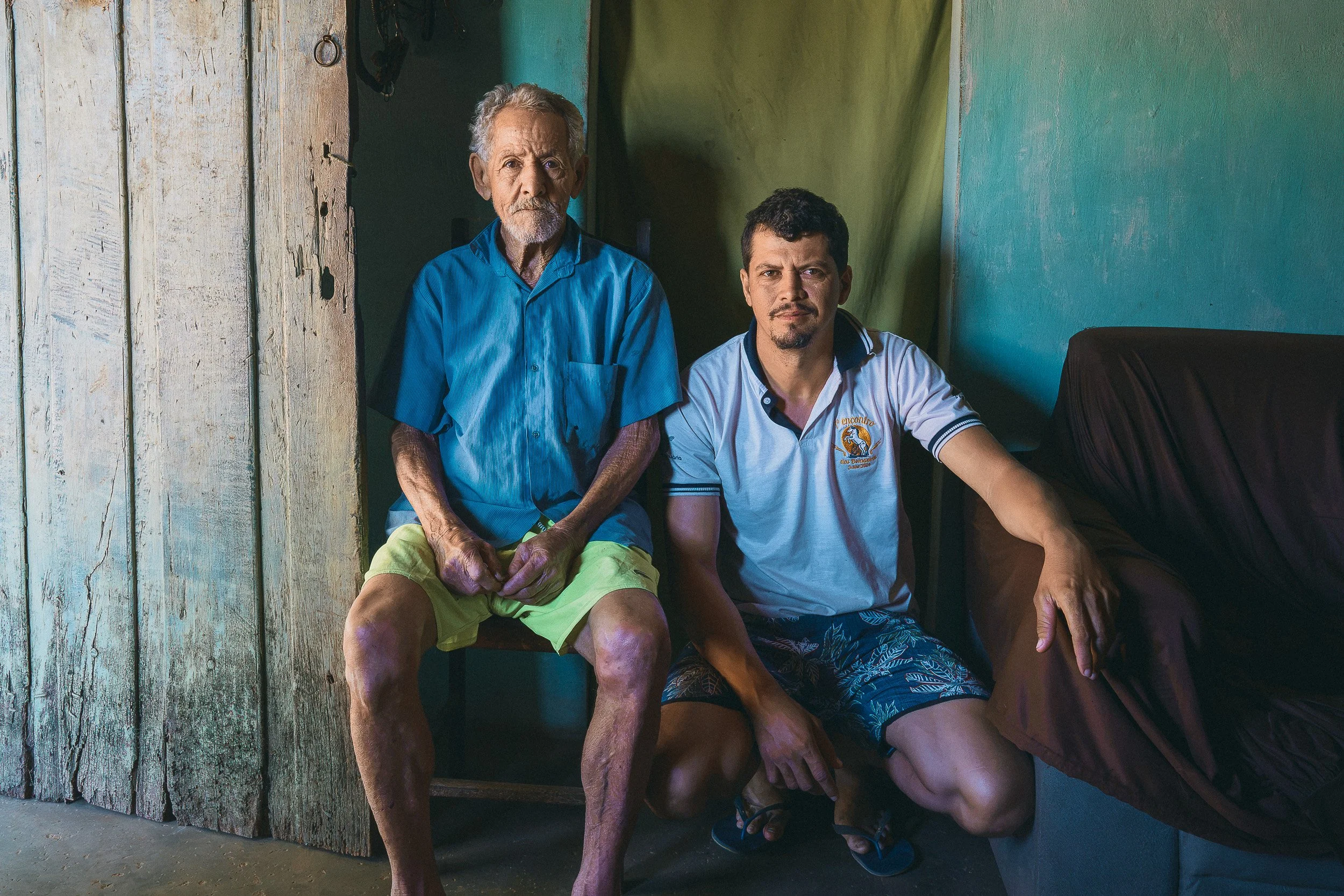
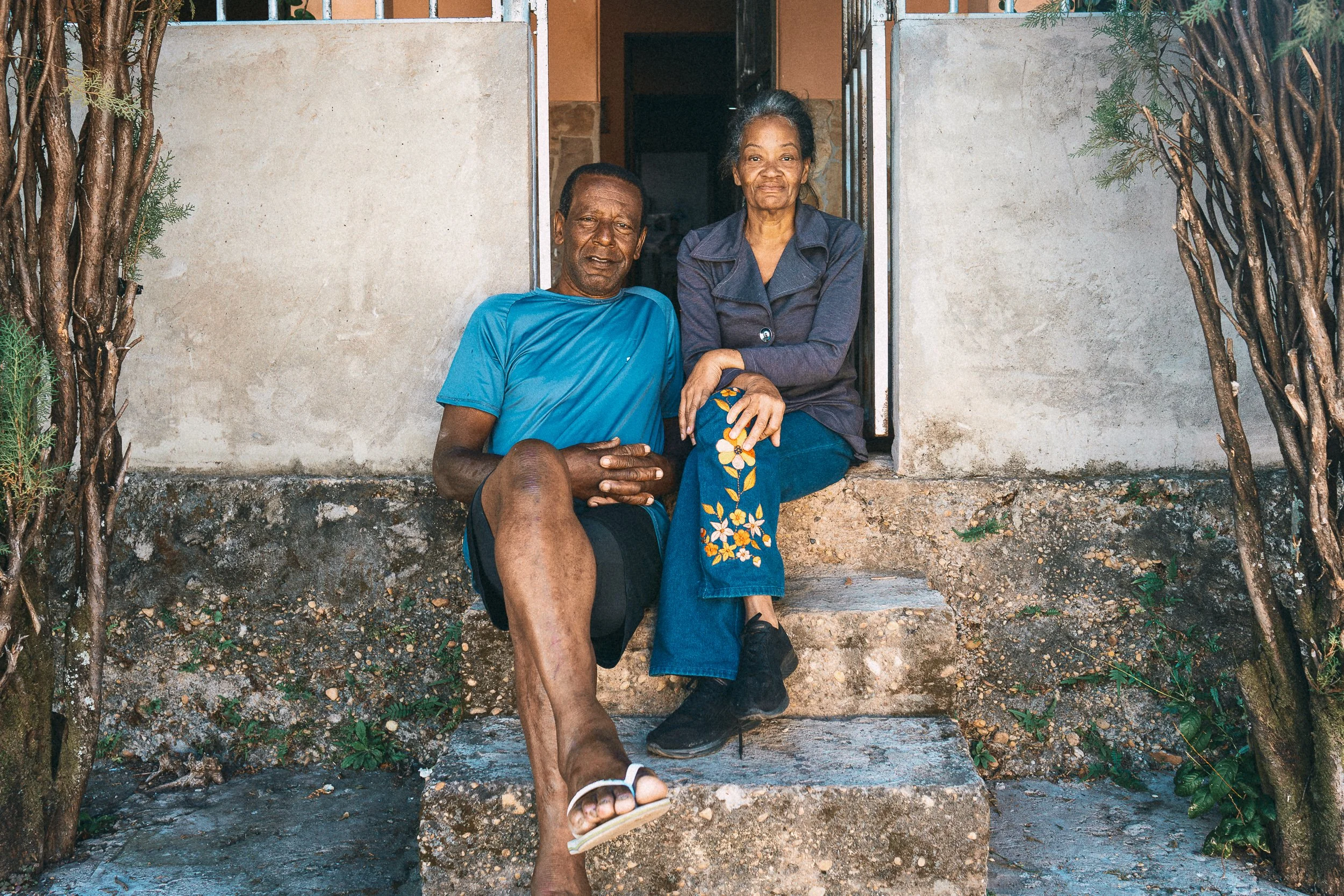
Geraldo grew up in the nearby (depending on whose legs you ask) flower-picking village of Galheiros and knows these high fields as well as anyone. He, Neura, and Deivid are the last family living year-round in Sempre Vivas. A question about a flower we passed on the way up can take us back to the days before the National Park, when pickers came from across the range and the fields bustled in harvest season.
As for what it’s like to raise a family so far from the nearest neighbor, Geraldo and Neura can tell you. Deivid can tell you what it was like to grow up here.
There are few experiences quite like spending an evening with Geraldo, Neura, and Deivid at their home. The seats beside the family’s wood stove are cut from tree trunks.
You’d be surprised how quickly time can go by on one of them.
-
![A traveler showering in front of a waterfall, next to a rainbow, in São Gonçalo do Rio das Pedras, Serra do Espinhaço]()
Waterfalls
The Espinhaço’s answer to sun, sea & sand.
Attempting to count the waterfalls of the Espinhaço is an exercise in futility. So is trying to spend more than a day or two on the trail without bathing in one.
We’ll stop at more than a dozen named falls during the Expedition, from gentle, cola-colored cascades to great falls that spill onto beaches of white sand.
By the time we reach Cachoeira Santa Rita on Day 17, everyone will likely have a favorite (and probably a Top 5). There’s a lot to be said for the little cascade you can hear from your tent, especially when your boots are already off and supper’s still on the fire.
It’d be a shame not to swim in it.
-
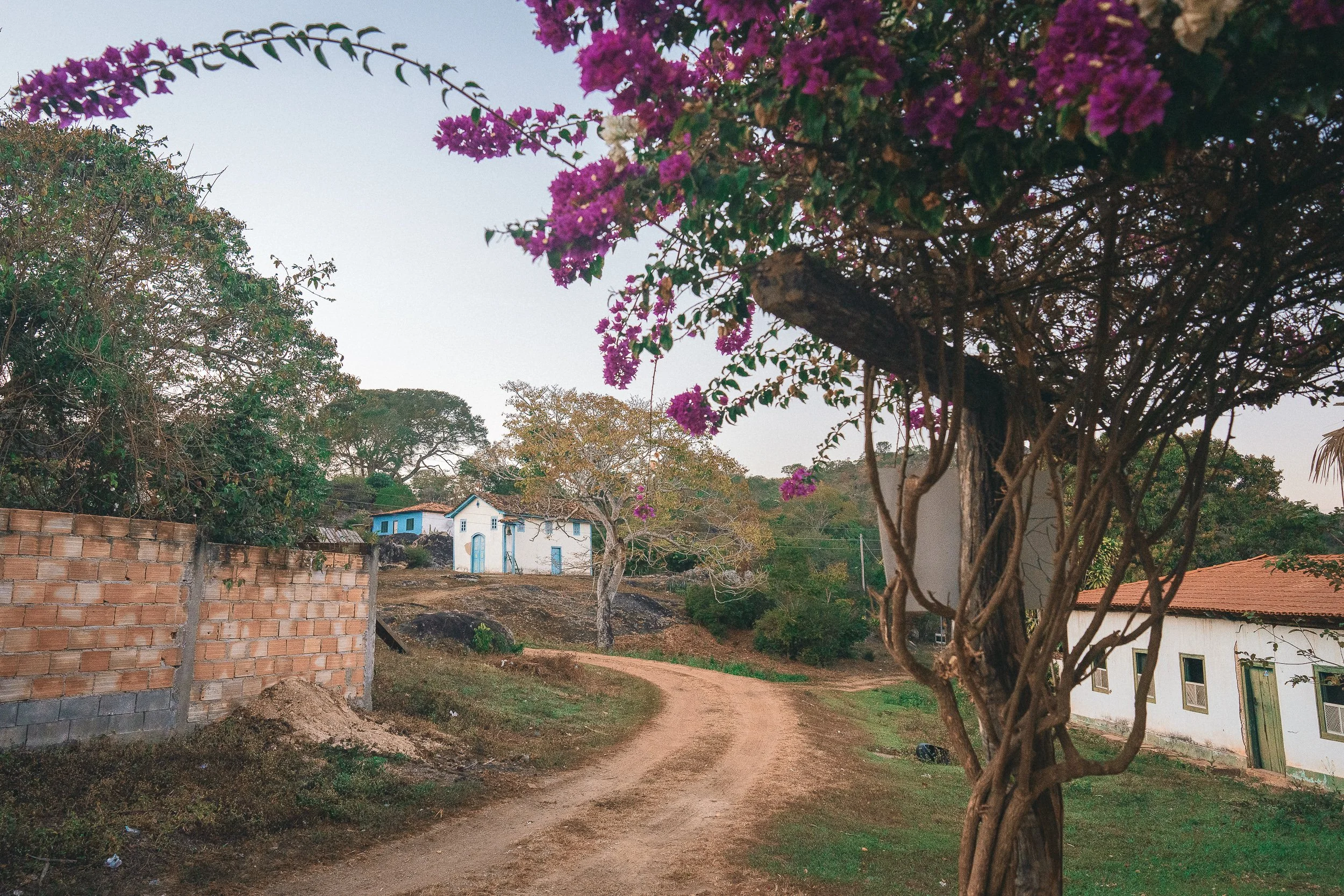
![Quiet street scene in Quartel do Indaiá, Serra do Espinhaço]()
A Hidden Heart
On the far bank of the Caeté-Mirim.
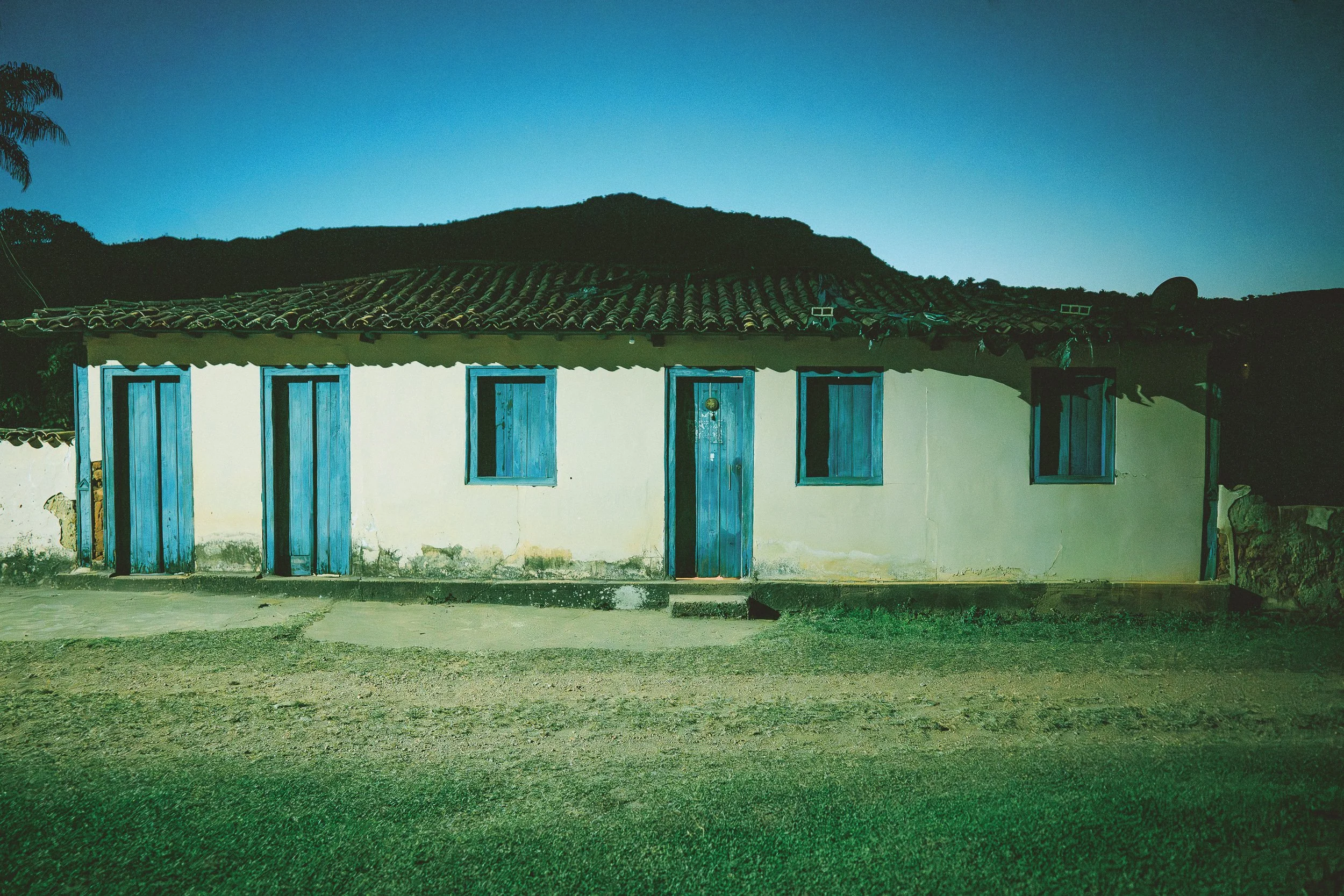
We’ll have the privilege of spending time in a number of quilombola villages during our Expedition, but tiny, secluded Quartel do Indaiá holds a special place in our hearts.
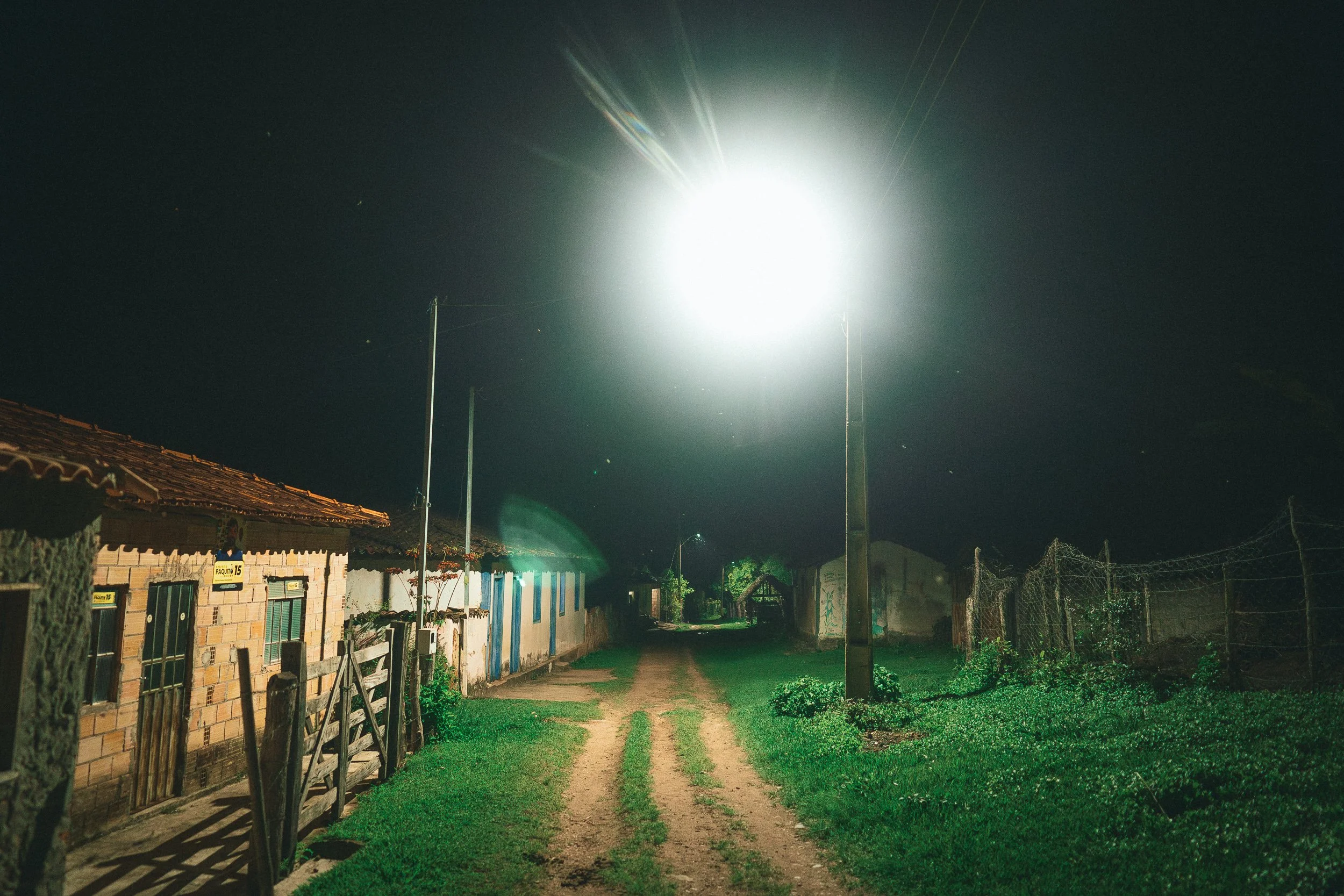
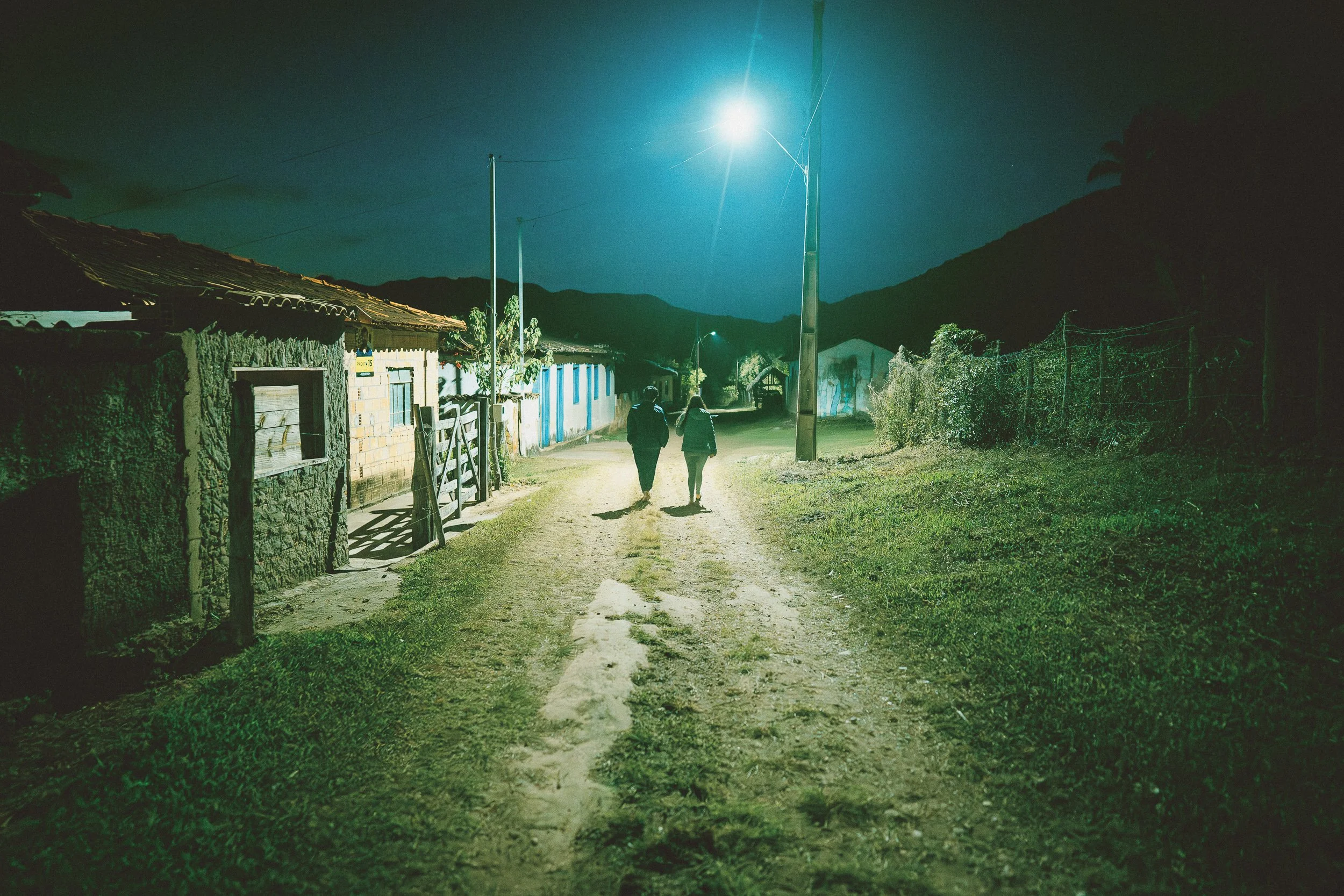
By the time we wade across the Rio Caeté-Mirim on Day 18, we’ll have heard quite a few stories about the families who made their lives along the old diamond trails. Tonight we’ll be guests in one of those communities, with smoke drifting from kitchen chimneys and the village roads softly lit as we walk in.
So much of life in Quartel takes place in the open. Neighbors chat in the street and through open windows, horses graze in front yards, and children of all ages seem to find time both to lend their parents a hand and to run freely around town.
After a long day on foot, a hot shower, a home-cooked dinner at Sinara’s, and a soft bed will be more than enough for some.
For others, there’s still a village to explore, a little buteco to dive into, and a firepit in the orchard, with mountains fading into the darkness beyond.
-
![Santo riding a horse atop the Chapada do Couto in Rio Preto State Park, with Pico Dois Irmãos in the distance]()
The Chapada do Couto
A high point. And a turning point.
For generations, tropeiros driving mules across the range, miners making for the rivers, and flower pickers heading into the high fields all had business on the Chapada do Couto. The old trails are quiet these days, but they still come in from all directions across what may well be the wildest, most remote stretch of the eastern highlands.
As we climb from the thickly forested valleys of Mata dos Crioulos onto the sweeping grasslands of the chapada (high plateau) on Day 6, it’s hard to believe we’re still in the same mountains. To our eyes, this is the finest campo limpo in the eastern highlands. You can trace the course of a distant creek by the ribbon of trees winding through the grass.
For decades, Mozart welcomed travelers from far and wide at his secluded ranch house on the plateau. With a little luck, we’ll catch the last light on Pico Dois Irmãos and walk the rest of the way to his door by starlight and headlamp. Tomorrow, the expedition turns west. Tonight, peace and silence.
-
![Crossing the Jequitinhonha River on foot, Serra do Espinhaço]()
Crossing the Jequitinhonha
A chance to touch time.
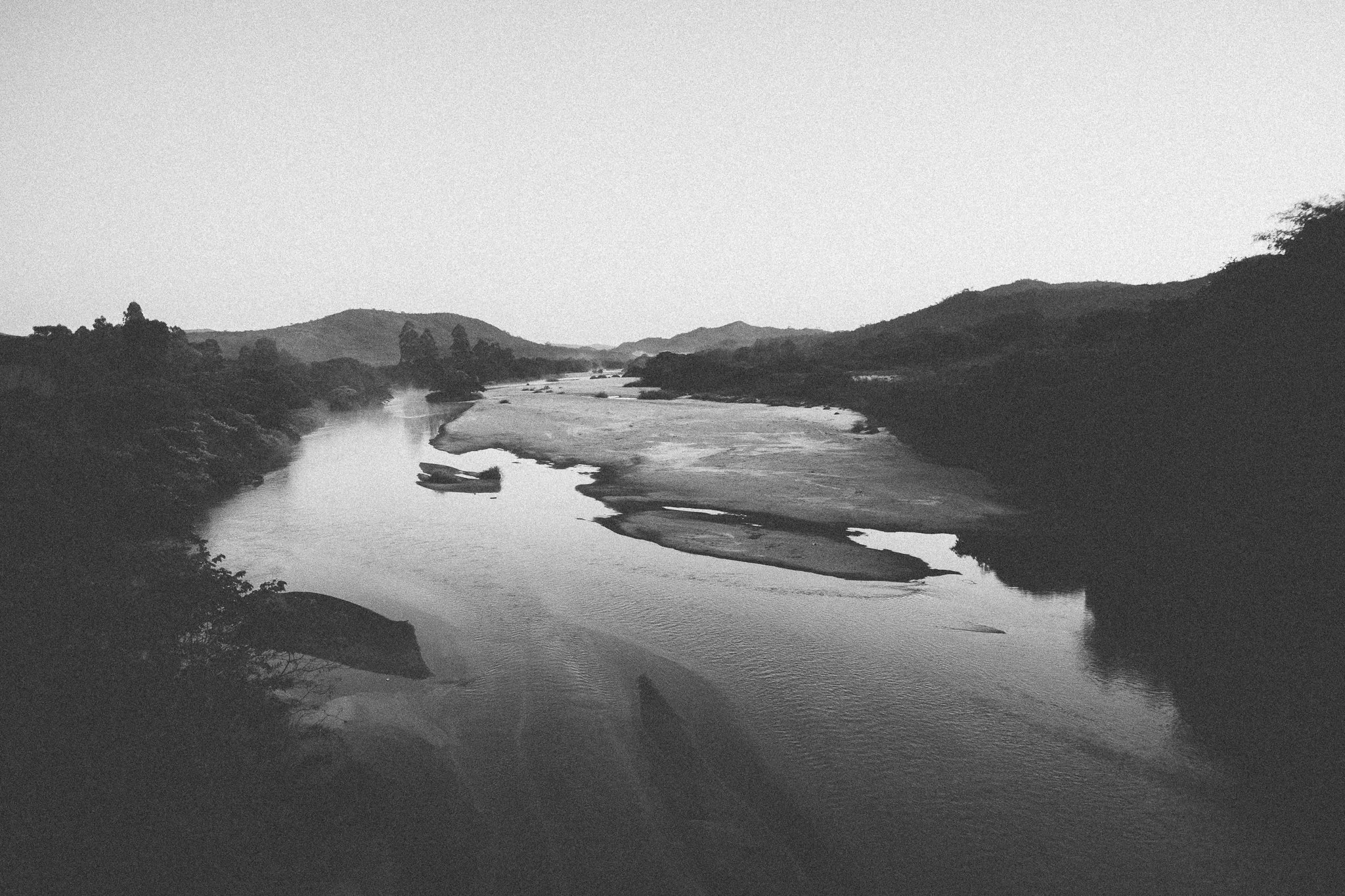
The peaks and parks may get more glory, but few things have shaped this region or its fortunes quite like the rivers that run through it. And none more so than the Jequitinhonha.
Solemn and dignified, even after centuries of extraction and neglect, its diamond-rich waters once ran strong enough to buoy a distant empire and cradle a nation. Even today, families still depend on the river for the fish they eat, the water they drink, and the crops they grow along its banks.
In theory, we’ll cross the river enough times during our trek for the novelty to wear off. There’s something about standing on its banks, though, then stepping into those waters, that feels every bit as special the fourth time as it does the first.
-
![Night scene in the historic city center of Diamantina, Minas Gerais]()
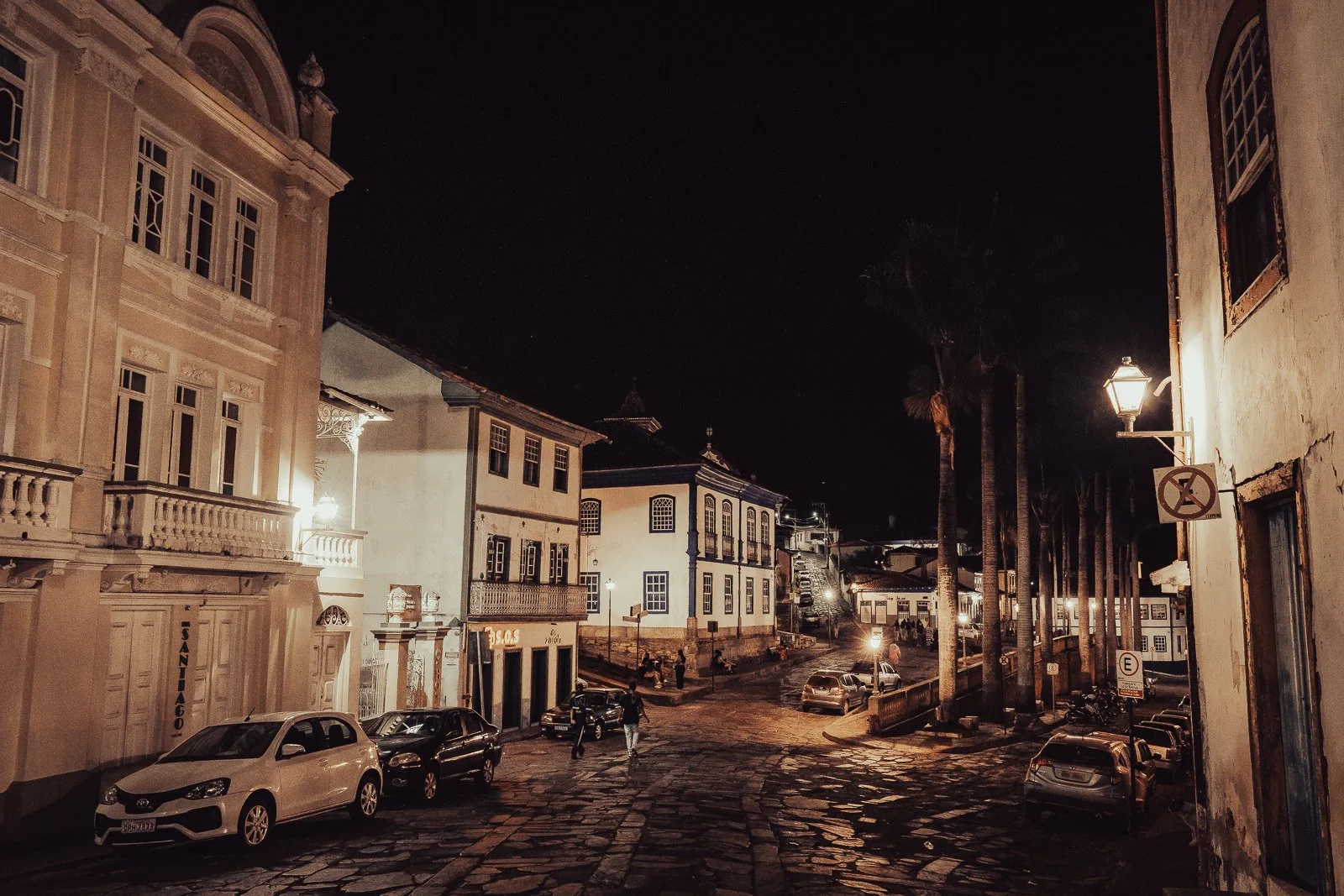
The City of Diamonds
A colonial gem hidden in plain sight
UNESCO World Heritage city. Terminus of the Estrada Real. Former diamond capital of the world.
Diamantina somehow manages to be all of these things at once while remaining largely unvisited, even by Brazilians.
Música Popular Brasileira drifts through stone alleyways, tropeiro fills plates, and the view out the window could pass for something painted two centuries ago.
At times, Diamantina feels strangely untouched for a place of such beauty and history.
We’ll spend our first evening (Day 1) in Diamantina, then walk out of town the following morning. By the time we arrive again on foot on Day 20, we’ll know a good deal more about the country those old roads lead to.
-
![White sand beach and water at Prainha, Sempre Vivas National Park]()
Prainha
A long walk for a little beach.
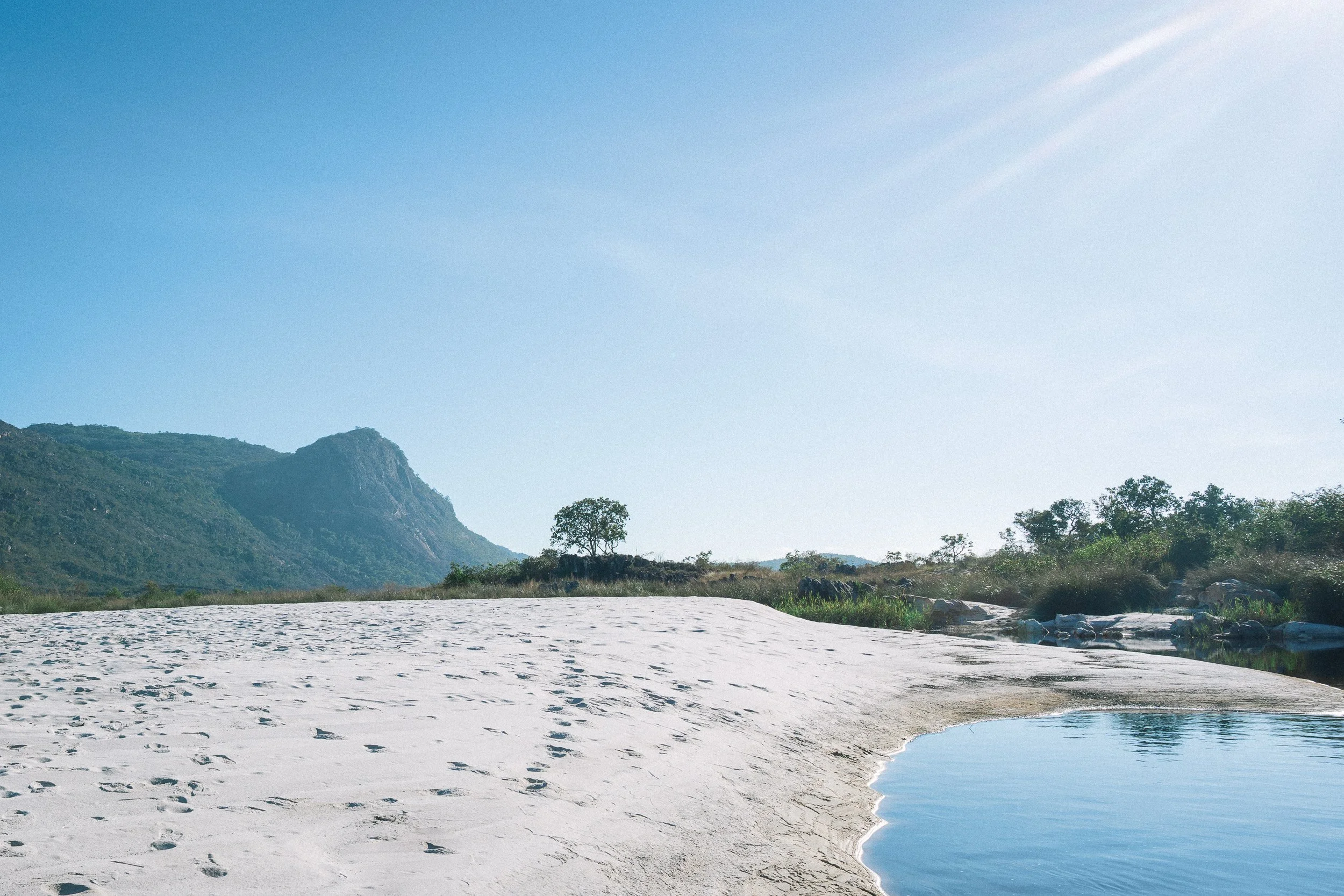
Halfway through a three-week trek across the mountains of Minas Gerais, we’re going to the beach.
And it’s a good one.
Along the eastern edge of Sempre Vivas, the Inhacica Grande runs quietly between banks of white sand, with buriti palms leaning out over the water. Two of our guides, Barbosa and Gomercindo, grew up on neighboring ranches along the river. As places to spend a childhood go, you could do considerably worse.
We’ll walk in from Inhaí on Day 10 and pitch our tents on a patch of powder-white sand beneath the big tree at Prainha, whose name means, simply, “little beach.” A gentle cascade spills into a pool just a stone’s throw from camp, close enough for a long soak while the stars come out and supper cooks over the fire.
On Day 11, we’ll take our coffee down to the river. As for breaking camp, sometime on Day 12 sounds about right.
-
![Trekking through a green valley in Bica d'Agua, Serra do Espinhaço]()
The Mosaic
A vast protected landscape, and the stage for everything to come
The Serra do Espinhaço Meridional harbors a vast patchwork of protected land: 19 conservation units and buffer zones spanning nearly five million acres of Cerrado and Atlantic Forest.
Collectively they form the Mosaic of the Espinhaço, home to one of the highest concentrations of plant endemism on Earth and one of Brazil’s least-visited protected landscapes.
For travelers drawn to vast wilderness, questionable roads, unfiltered culture, and the rare pleasure of moving through a place where visitors are still treated as guests, there’s nothing quite like it.
-
![On the trail in the Vale do Rio Preto, Sempre Vivas National Park]()
Crossing the Vale do Rio Preto
A hard place to hurry through.
In a land of a thousand trails, few bring together as much of what we love about the Espinhaço as the lost highway through the Vale do Rio Preto.
For generations of cattle-driving sertanejos, this was the main thoroughfare from the western lowlands to Diamantina. Today it feels more like a general way through the wilderness.
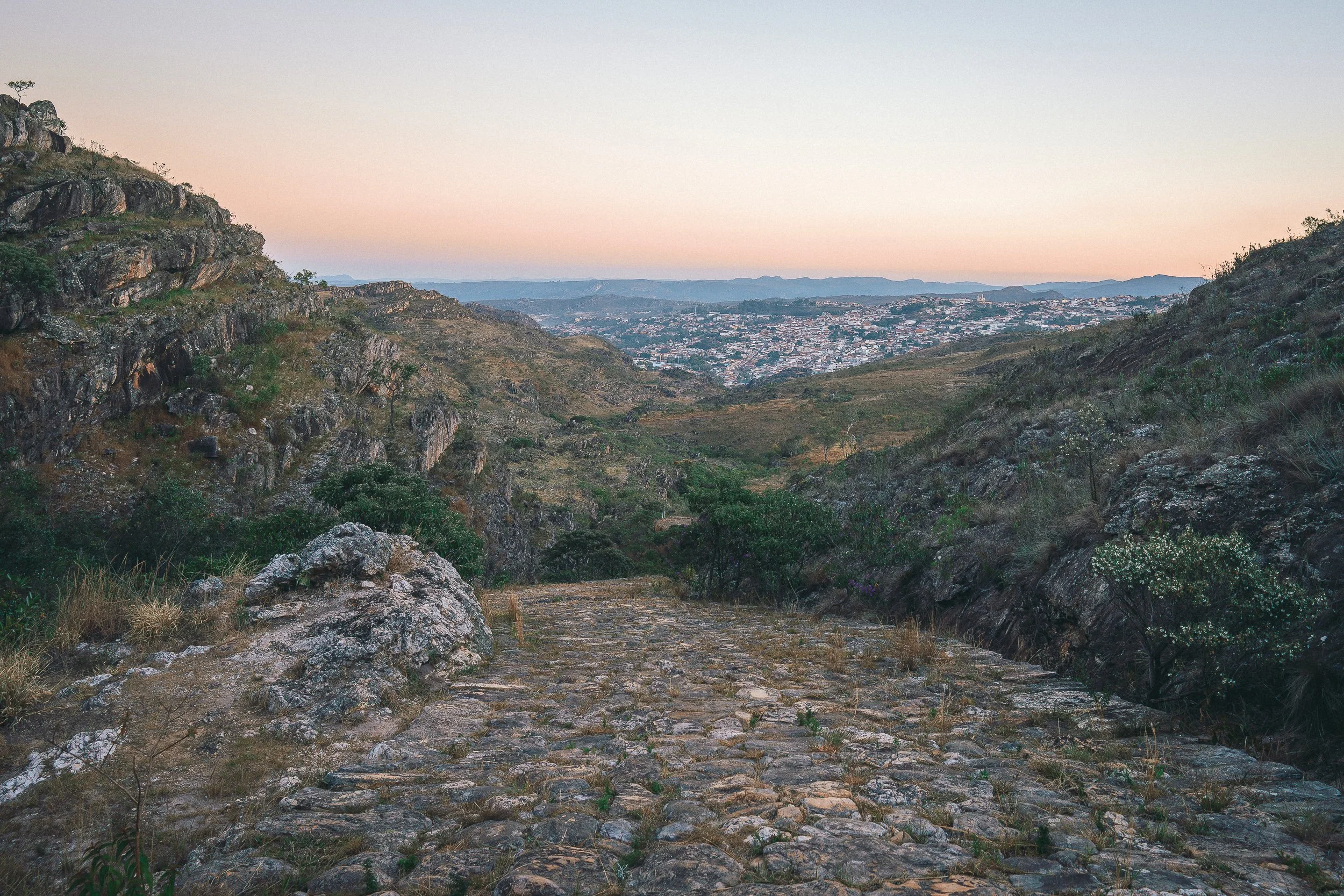
A handful of scattered seasonal ranches make it easy enough to picture a herd moving through open pasture. In places where following the Estrada Real involves a little bushwhacking, it takes more imagination to picture the traffic this way once saw. We’ll have two days to try.
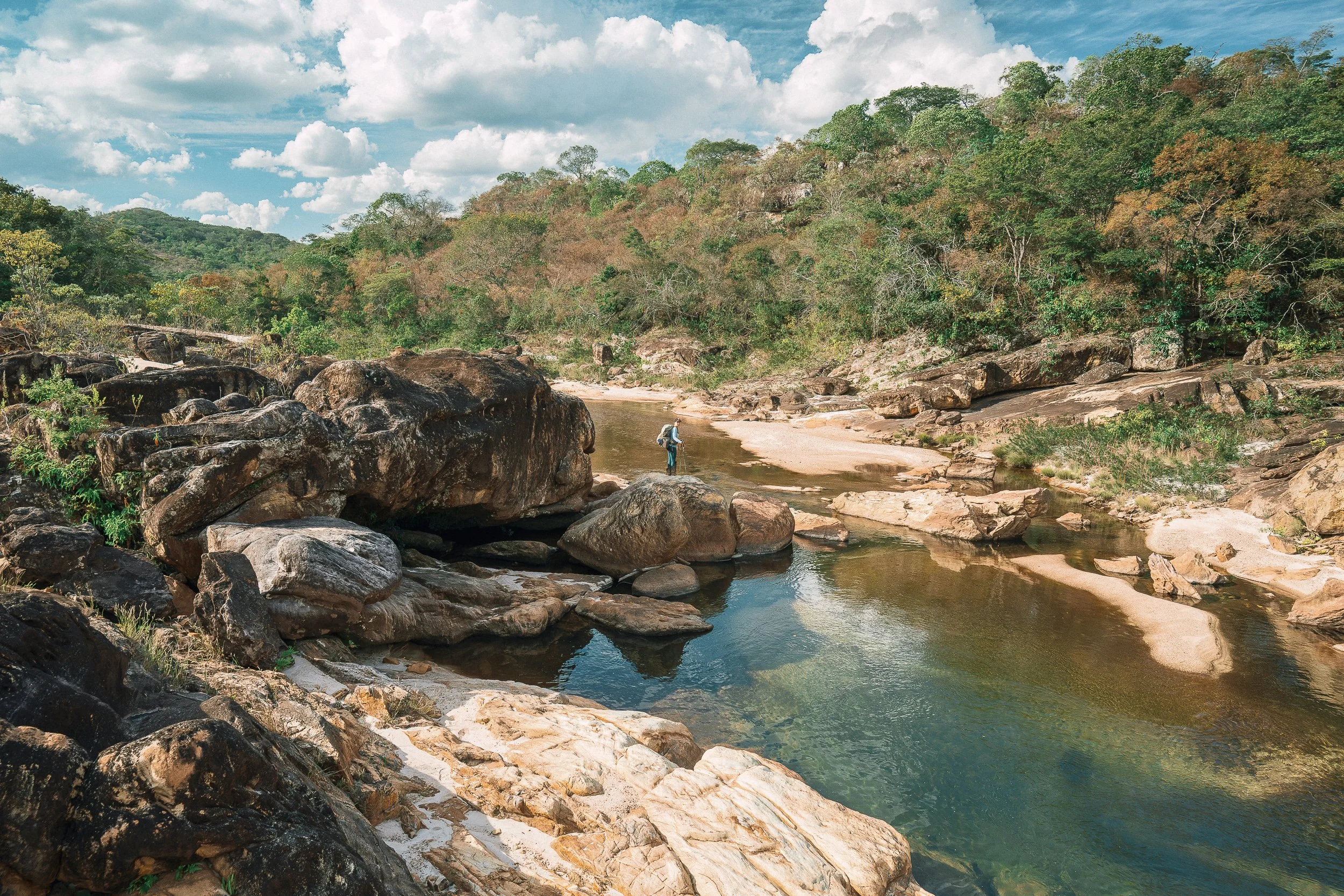
We’ll enter the valley near Cachoeira Santa Rita on Day 17 and emerge atop the high campos late on Day 18, having crossed a wild carousel of high savannah landscapes in between. Messy peat bogs and campos sujos, cactus groves and shady riverside forests, a dozen waters to cross and white-sand banks where you could sit for hours with nobody else for miles.
We’ll spend the night with Zekinha and his sons at their historic rancho, the only year-round home this deep in the valley. There’s a particular kind of happiness in waking up under a friend’s roof and remembering that half the valley is still ahead.
-
![A woman riding a horse past an old, weathered house under a blue sky in Curimataí, Minas Gerais]()
Curimataí, Heartbreaker
Peace, pillows, porch swings. And one very hard goodbye.
Nestled against the green western slopes of the Espinhaço, between gentle river bends and sun-kissed waterfalls, unassuming Curimataí is the kind of place that barely registers on an itinerary—then promptly refuses to leave your mind.
We’ll walk into town from nearby Pé de Serra on Day 16, by which point a soft pillow, a cold drink, and the prospect of Gilma’s cooking will all have considerable appeal.
There’s something immensely satisfying about sitting on a porch, watching the world go by, and realizing that for the first time in days, there's absolutely nowhere else you need to be.
We’ll have one long evening here before shouldering our packs and heading back up into Sempre Vivas.
Few places do “arrival” like Curimataí.
Fewer still are harder to leave.
-
![The Caminho dos Escravos, backdropped by mountains, at Biribiri State Park, Minas Gerais]()
Biribiri
A vila between two worlds
Just outside Diamantina, Biribiri State Park protects more than 42,000 acres of sweeping cerrado around a former textile village. The vila can feel like a quiet highland outpost or a bustling weekend destination, depending on the day and hour you arrive.
Cyclists, weekenders, tour buses from Montes Claros, and Diamantina’s well-dressed gente bonita tend to gather around the waterfalls, roadside bars, and village center, while long stretches of historic trail sit empty just beyond them.
We’ll spend our final evening on the trail in the vila on Day 19, close enough to Diamantina to drive into town for dinner. We’ll happily take the less convenient, considerably more breathtaking way back.
After nearly three weeks on foot, we get to descend the historic Caminho dos Escravos with the rooftops of the old diamond capital spread out below us. If our timing is right, we may even have that whole glorious descent to ourselves.
-
![Night scene of a Vesperata in Diamantina, Minas Gerais, with performers dressed in colorful costumes on stage, and audience members seated at tables, in a lively, festive atmosphere]()
A Night for the Ages
To life in the Espinhaço
From diamonds and stately architecture to former presidents and legendary Carnaval celebrations, Diamantina has no shortage of claims to fame.
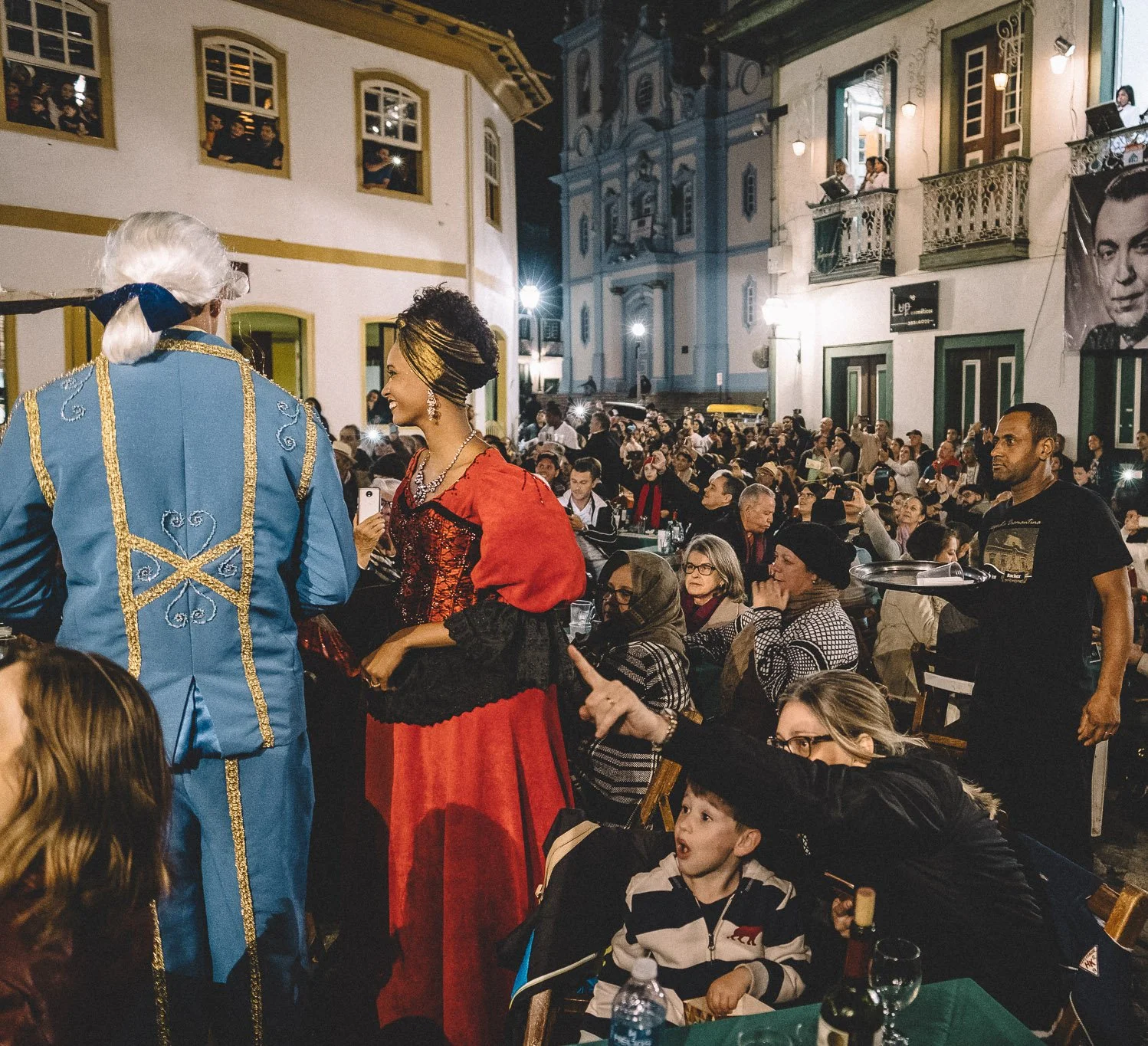
It’s a bit ironic—and perhaps endearing—then, that one of its most beloved traditions is also one of its simplest: the Vesperata, a festive nighttime concert where musicians perform from balconies and windows while the audience gathers in the cobblestone streets below.
A Vesperata is scheduled for Saturday, June 5, the very evening (Day 20) we walk back into Diamantina. Expect a joyful mix of samba, bossa nova, Música Popular Brasileira (MPB), Beatles covers, and the occasional sing-along wedding-rock tune.
There may be more polished orchestras elsewhere. But there isn’t a place on earth where we’d rather celebrate the final night of the expedition together.







Setting
The secret serra
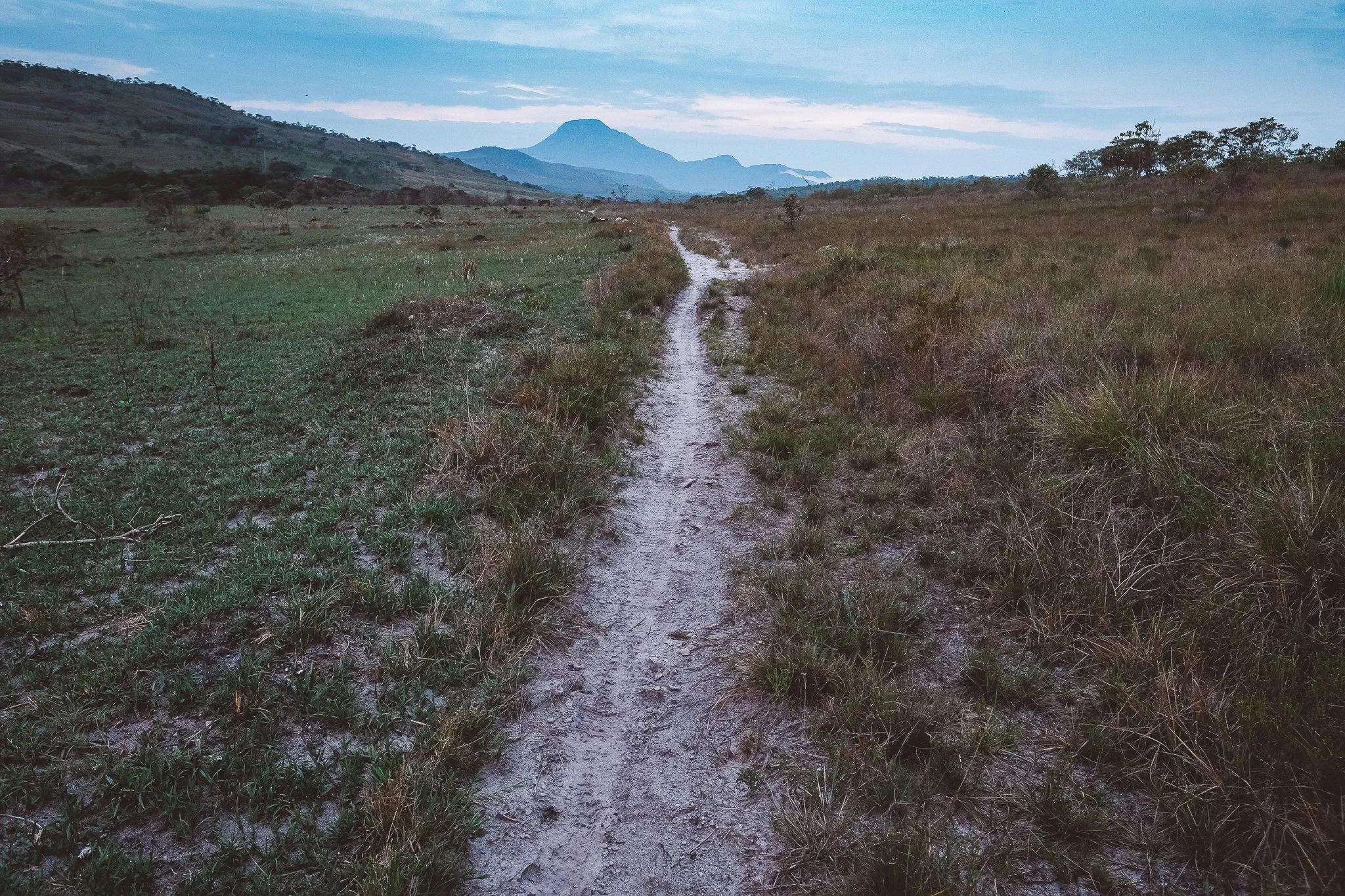
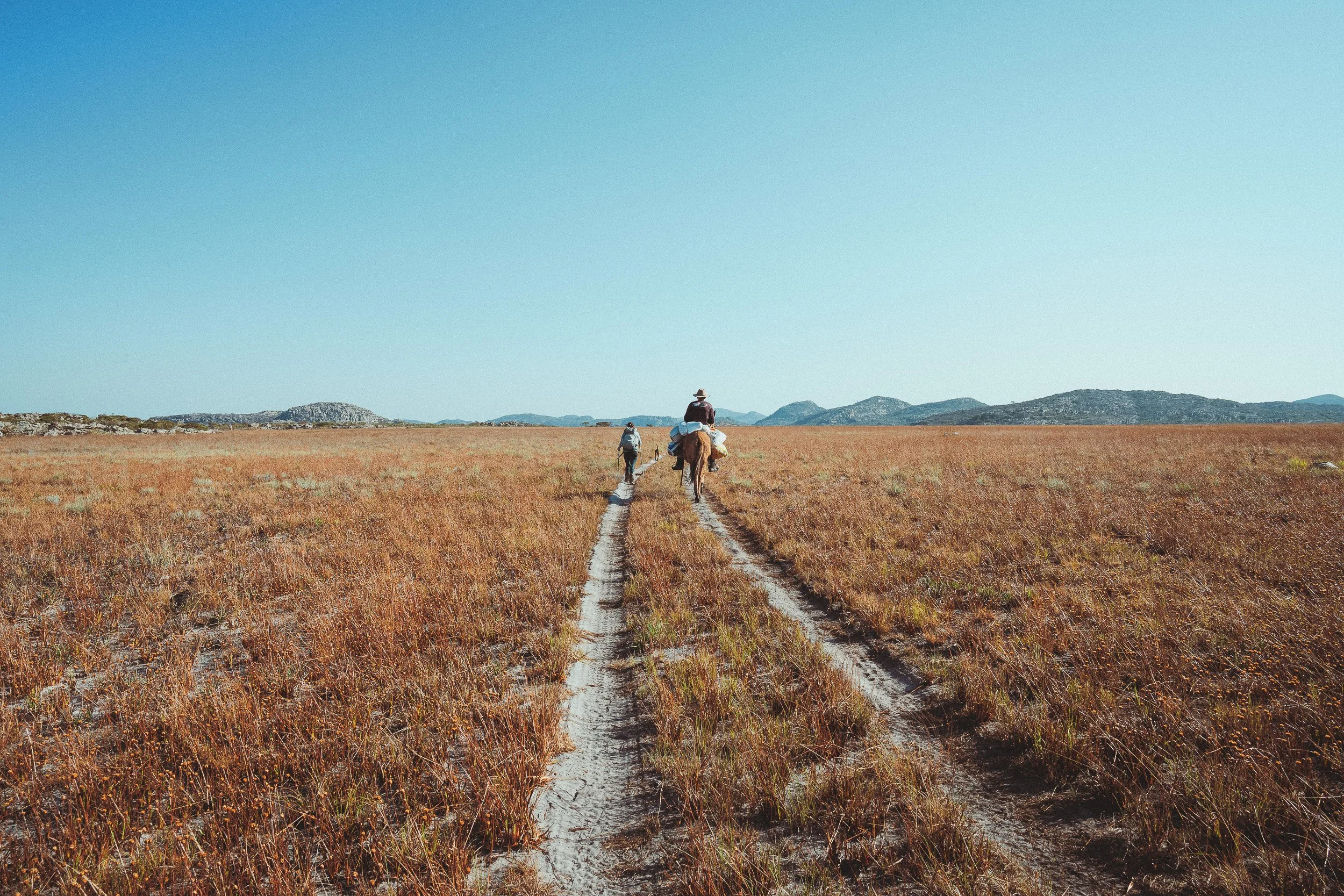
Once the epicenter of the global diamond trade, Brazil’s Serra do Espinhaço Meridional was largely abandoned by the outside world for nearly two centuries.
Today, the rocky mountain range surrounding Diamantina remains one of Brazil’s most spectacular, under-visited, and little-known landscapes.
19 conservation units
2 global biodiversity hotspots
3,000+ plant species recorded across the Espinhaço
UNESCO World Heritage Site Diamantina
UNESCO Biosphere Reserve Serra do Espinhaço
Globally Important Agricultural Heritage System Sempre-viva farming traditions
Route
The Path Ahead
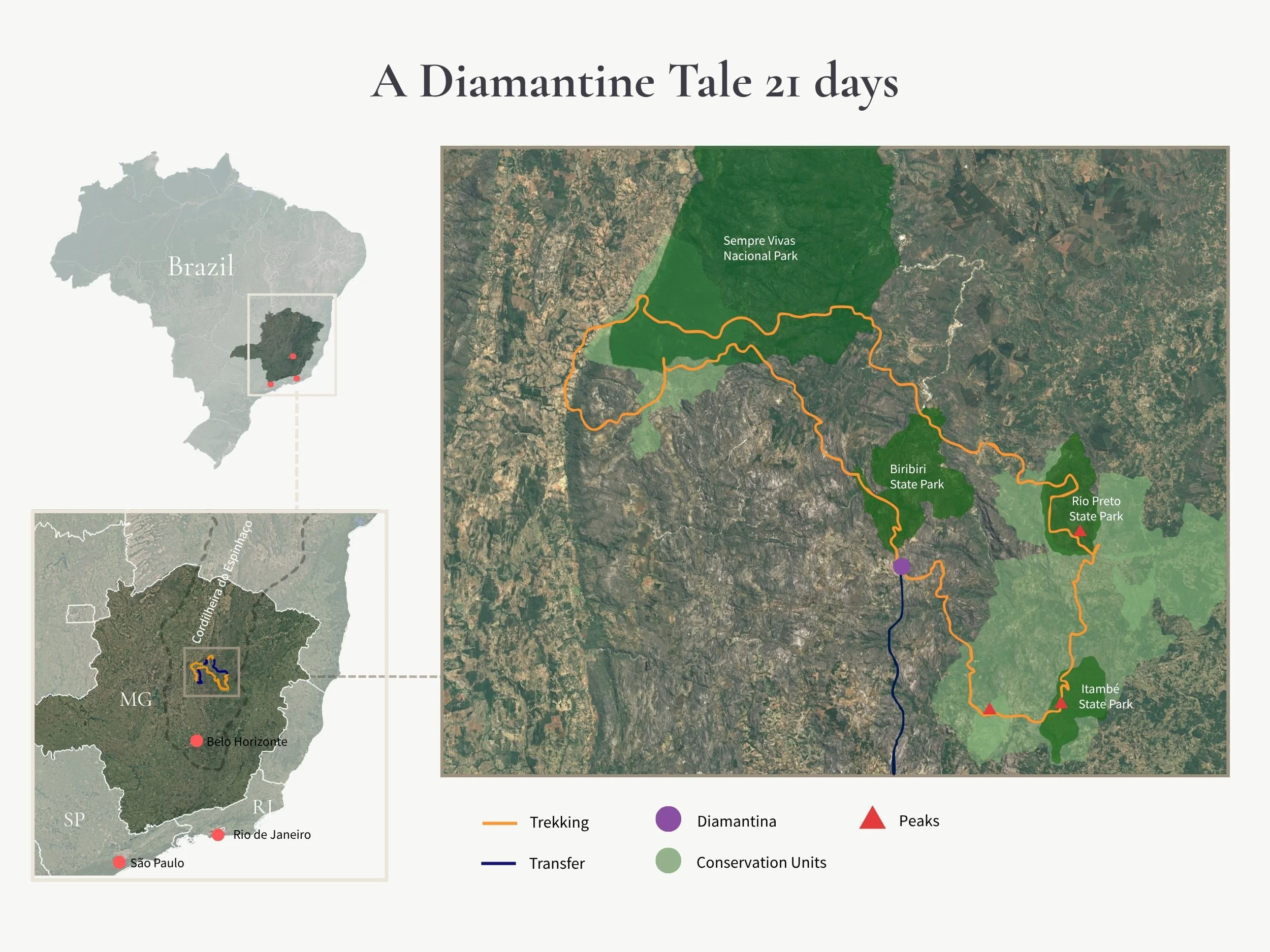
21 days / 19 days on the trail / 2 transfer days
363 km on foot / 4–30 km on walking days
22,400 m of combined ascent and descent
Average across all 19 trail days / 19.1 km / 1,179 m of elevation change
Average across the 17 longer days / 20.8 km / 1,285 m of elevation change
Two of those 19 days are short ones. On Day 11, the trail is optional. On Day 13, it’s just four kilometers to supper.
Our crew walks with us throughout. If you like arriving at the end of a long day with everything you need for the night on your back, you’re in good company. Our 4×4s can also take gear ahead to most overnight stops, a particularly welcome option on the dirt roads of Days 8–10. On wilderness stretches, pack animals help carry our shared camp gear.
The 363 km and the 19-day average both include the optional Day 11 walk.
Itinerary
21 days. 19 on the trail. →
-
![Highway in Northern Minas Gerais, Brazil]()
Day 1
275 km by road
An airport welcome at Confins | highway and dirt roads | north into the mountains of Minas Gerais | a pousada in the historic center | a pre-trail meeting and supper together in Diamantina, the city we’ll walk out of tomorrow
-
![Trekking off-trail near Pindaíba, Serra do Espinhaço]()
Day 2
19.7 km on foot / ↑ 549 m / ↓ 588 m
Out of Diamantina on foot | stone streets give way to old mule trails | first glimpses of campos rupestres | a waterfall with a reputation for healing | a former gathering place for tropeiros | our first night in a village house
-
![On the trail near Capão Maravilha, with Serra da Maravilha and Pico do Itambé in the background, Serra do Espinhaço]()
Day 3
20.8 km on foot / ↑ 934 m / ↓ 998 m
An early test | stories of miners, mule drivers, Burton, and Saint-Hilaire | our first crossing of the Jequitinhonha | cobblestones underfoot after dark | a cold beer, a hot plate, and soft pillows in the village we call home
-
![Trekking to Pico do Raio near São Gonçalo do Rio das Pedras, Serra do Espinhaço]()
Day 4
13.4 km on foot / ↑ 446 m / ↓ 369 m
The old footpath to school | an approachable peak | white sand and local cascades | our first quilombola village | a wood-fired supper at Noêmia’s
-
![On the trail to Pico do Itambé, Serra do Espinhaço]()
Day 5
23.4 km on foot / ↑ 1,249 m / ↓ 1,350 m
A backcountry push | quartzite slopes and the range’s defining summit | a long descent into the Mata Atlântica | a mountain homestead
-
![A mountain trail cuts through campos limpos in Rio Preto State Park, with Pico Dois Irmãos in the background]()
Day 6
29.2 km on foot / ↑ 1,285 m / ↓ 1,009 m
A sustained climb through a quilombola valley | forest opens onto windswept campos limpos | the last high summit of the eastern Serra | a dusk descent to a mountain refuge | shared rooms and a tropeiro feast
-
![Valdir brewing coffee on the wood-fired stove at Fazenda Santa Cruz do Gavião, Serra do Espinhaço]()
Day 7
16.8 km on foot / ↑ 430 m / ↓ 679 m
Morning at Mozart’s | west from the high plateau | a long descent into water | flower pickers’ trails | a little-known waterfall | a secluded ranch | supper on the wood-fired stove and stories around it
-
![View from the trail at the top of Cachoeira do Portal, Serra do Espinhaço]()
Day 8
29.5 km on foot / ↑ 579 m / ↓ 981 m
A long descent along the Jequitinhonha | cattle trails, footpaths, and backroads | a little-visited masterpiece | an old diamond district | supper at Drica’s | a lovely village home, with hot baths and soft beds
-
![Elisa trekking on the dirt road between Mendanha and Inhaí, Serra do Espinhaço]()
Day 9
29.9 km on foot / ↑ 662 m / ↓ 604 m
A long stretch of backroad through mining country | another bridge, another crossing | Diamantina’s oldest district | friendly faces, cold drinks, comida mineira | a historic home on the praça, all to ourselves
-
![On the trail between palm trees in Fazenda Burití, Sempre Vivas National Park]()
Day 10
22.6 km on foot / ↑ 322 m / ↓ 438 m
A long breakfast followed by dirt roads and footpaths | a quiet quilombola village | palm-studded veredas | white sand under the big tree | water, fire, stars, serra | tents up for two nights
-
![Cachoeira do Fundão, Sempre Vivas National Park]()
Day 11
4.9 km walk (optional) / ↑ 96 m / ↓ 96 m
A day of rest | water, sky, and serra weave together | a pristine tributary | a little-seen waterfall | a second night of white sand, firelight and river sound
-
![On the trail near Campos João Alves, Sempre Vivas National Park]()
Day 12
13.2 km on foot / ↑ 498 m / ↓ 188 m
Sodden cattle trails through tall grass | a centuries-old footpath climbing through thick forest | stories become warnings | the first banana trees | Neura’s garden | camp a few paces from the outdoor stove
-
![Trekking to Campos João Alves, Sempre Vivas National Park]()
Day 13
4 km on foot / ↑ 283 m / ↓ 68 m
A footbridge at the bottom of the valley | a steady climb through the cerrado with views north and west | a short walk across the flower fields | a family’s wooden rancho | a wood-fired meal with friends
-
![On the trail in Taquaral, Sempre Vivas National Park]()
Day 14
15.3 km on foot / ↑ 448 m / ↓ 339 m
A forgotten way between fields | forest thick enough to hide the trail | stone paths and palm-studded wetlands | a room between the mountains | a night at a hidden rock shelter
-
![The old stone trail leading from Larga to Pé de Serra in Sempre Vivas National Park]()
Day 15
20 km on foot / ↑ 269 m / ↓ 901 m
White sand underfoot in the high fields | stone paths, meadows, and prainhas | the western sertão spread out below | a long, rocky descent into cowboy country | dinner and shelter with friends at the foot of the serra
-
![Trekking along the dirt road between Pé de Serra and Curimataí, Serra do Espinhaço]()
Day 16
14 km on foot / ↑ 157 m / ↓ 181 m
A gentler walk | green slopes, river bends, and waterfalls | colorful homes and cobblestone streets | a shaded porch on a quiet street corner | a whole evening to eat, rest, and linger
-
![Cachoeira Santa Rita, Serra do Espinhaço]()
Day 17
24.6 km on foot / ↑ 1,016 m / ↓ 518 m
Historic footpaths and sharp vegetation | thunderous falls | an optional descent by ropes and ladders to the pool if conditions allow | a quiet valley | firelight and stories at a secluded rancho that sheltered passing tropeiros for decades
-
![Sinara's house in Quartel do Indaiá, Serra do Espinhaço]()
Day 18
20.3 km on foot / ↑ 492 m / ↓ 653 m
Morning deep in the valley | tall grass, knee-deep bogs, and one water crossing after another | back into the breeze of the high campos | a wade across the Caeté-Mirim | soft dirt, dim lights | a well-earned supper at Sinara’s on the far bank
-
![Crossing a river near Biribiri State Park, Serra do Espinhaço]()
Day 19
25.6 km on foot / ↑ 870 m / ↓ 823 m
Back up into mining country | fallen bridges, scarred rivers, and thick forests | a tunnel through the cerrado | dirt roads and the first rooftops of the old textile vila | our final evening on the trail
-
![Descending the Caminho dos Escravos to Diamantina at golden hour]()
Day 20
15.5 km on foot / ↑ 615 m / ↓ 413 m
Signs of return | a final serra, a final waterfall | a golden-hour descent over hand-laid quartzite | the rooftops of Diamantina come back into view | clean clothes, dinner, and music from the balconies
-
![On the road to Diamantina, Minas Gerais]()
Day 21
275 km by road
One last breakfast in the Espinhaço | the road south through Minas | mountains to lowlands, cerrado to pasture | farewells at Confins






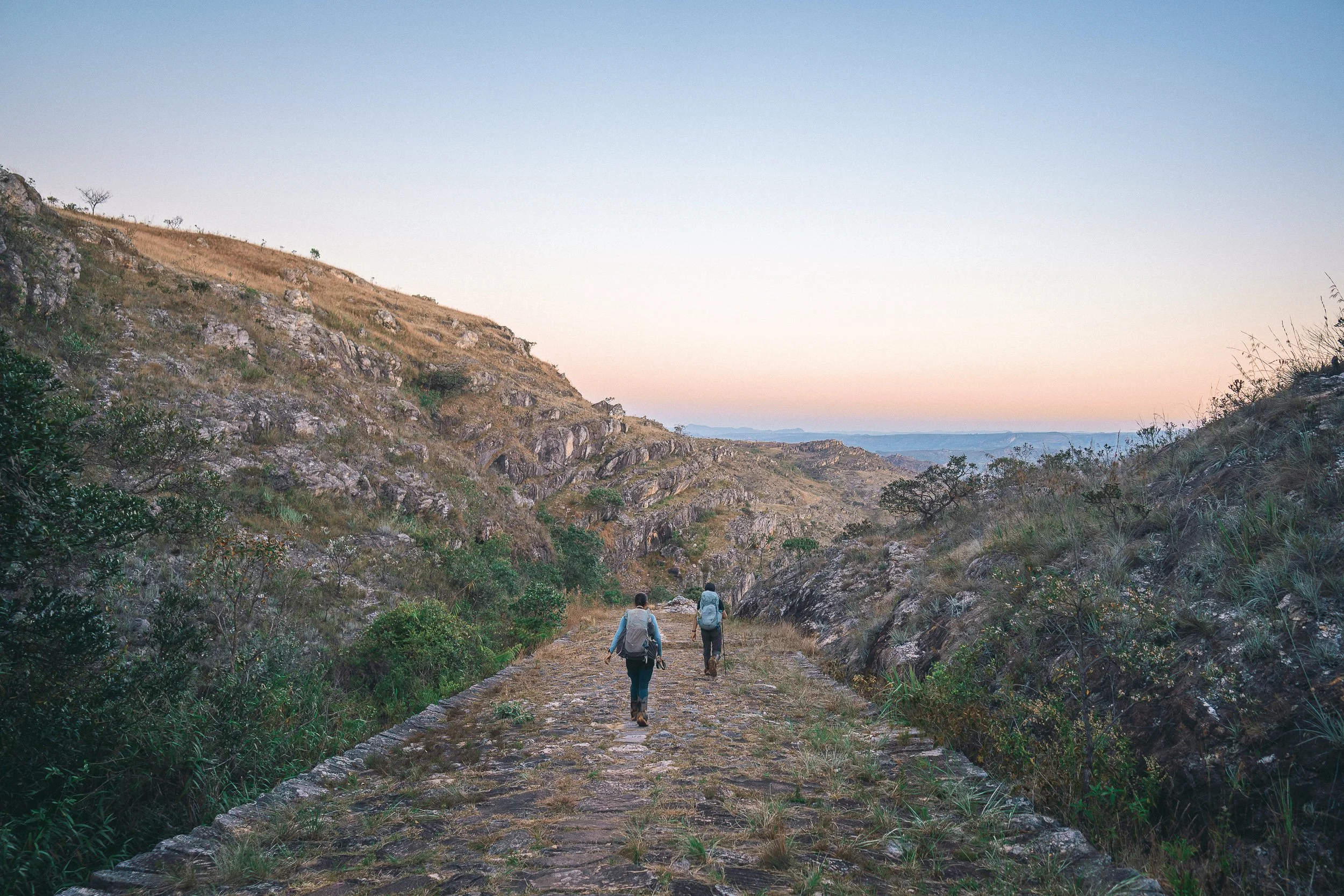

Want to talk through the days on the trail?
Home, for the night →
-
![Santo and Dona Maria at their lovely adobe home in Bica d'Agua, Serra do Espinhaço]()
Homestays (4 nights)
The trails will challenge us, and the peaks and waterfalls will leave us in awe, but in our experience, some of the most memorable hours of a trek through the Espinhaço are the ones we spend breaking bread with the families who welcome us into their homes.
Elisa and I know these families well. Only a handful receive other travelers, and even then, visits are few and far between. Each stay brings income directly to our hosts, several of whom have seen their livelihoods change considerably with the decline in mining and flower harvesting.
After a long day on foot, we generally arrive with the intention of getting to bed early. Then someone at the table remembers a story about the trail we walked in on, another coffee (or a cachacinha) is poured, and, well, there goes that idea.
-
![View of the dining area at the Pousada do Capão in São Gonçalo do Rio das Pedras]()
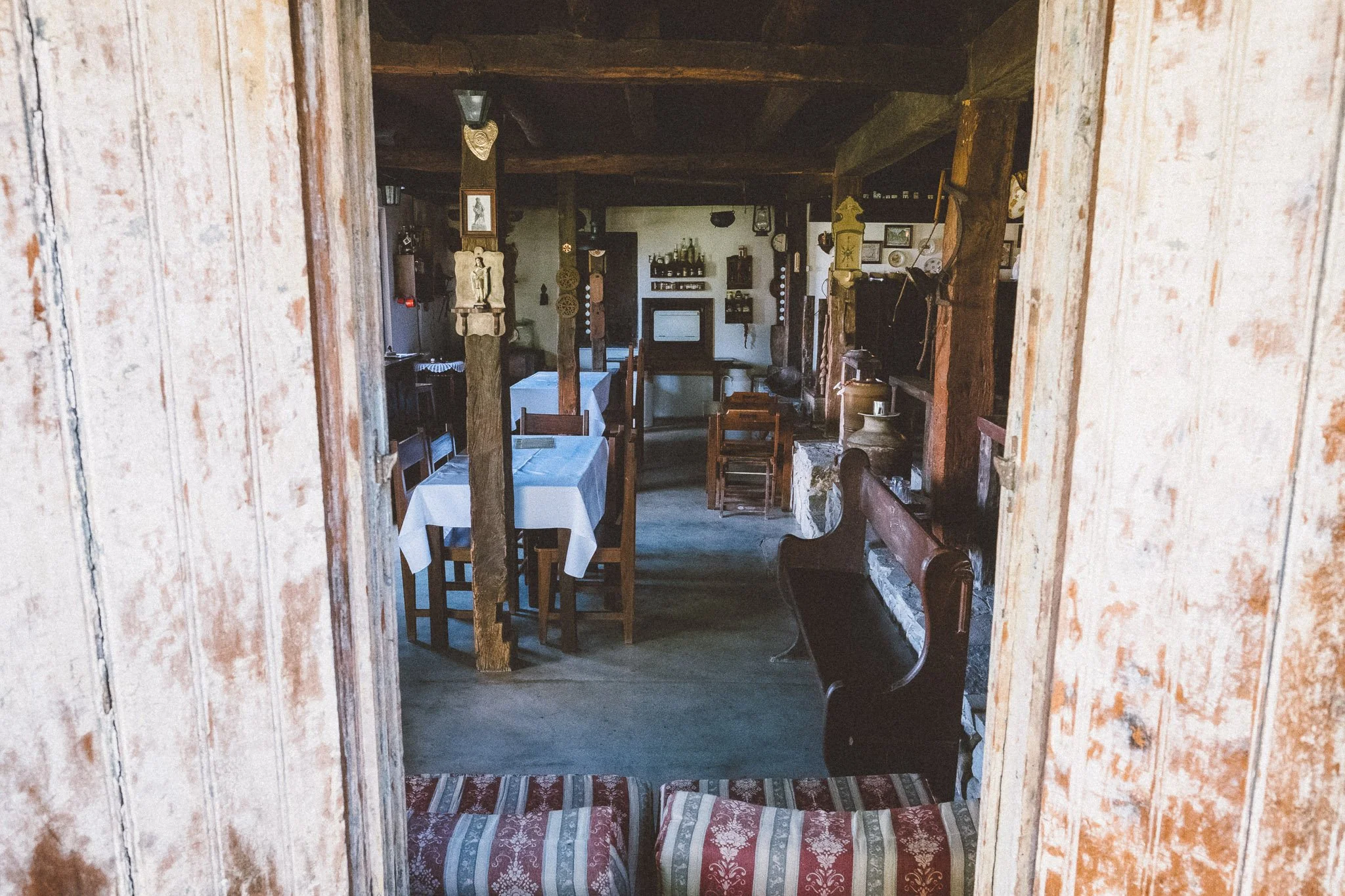
Pousadas (7 nights)
Pousadas are synonymous with travel in Brazil, and affection for a good one cuts across class and generation.
We’ll stay in a few very different ones along the way, from elegant historic inns in Diamantina to low-key country charmers on the trail. These small, family-run inns have a way of taking on the personalities of their owners, for many of whom opening a pousada was the dream of a lifetime.
They’re some of our favorite places to sleep in the Espinhaço and, as you’ll discover over a generous café da manhã, some of our favorite places to eat.
Bom descanso!
-
![Camping in the Vale do Rio Preto, Sempre Vivas National Park]()
Wilderness Camps (5 nights)
It’s not every Expedition that gives us this many nights in the landscape. On this one, we’ll have the luxury of camping for five straight nights in and around Sempre Vivas National Park (Days 10–14).
For sheer memorability (and, let’s be honest, location), it’s hard to beat a night in the backcountry, whether we’re camped on a bank of soft white sand, sleeping beneath the stars in the high campos, or huddled by the fire in a rock shelter where hunters, flower pickers, and miners have laid their heads for centuries.
Few travelers get to experience the Espinhaço like this today. We look forward to these nights all year.
-
![Elisa's lovely guesthouse in Curralinho, Minas Gerais]()
Private Homes (2 nights)
Occasionally, the route gives us a place of our own.
Our first day on the trail (Day 2) ends in Curralinho, at a pair of colorful townhouses near the main praça. Depending on how many of us there are, we’ll settle into one or both for the evening.
When we walk into Quartel do Indaiá on Day 18, we’ll have two small, surprisingly comfortable chalets and a historic house to ourselves. Plenty of room to spread out after a long day on foot.
It’s fun to think that in Curralinho, we’ll still be getting to know one another. By Quartel, we’ll have a pretty good idea who stays up late and how everyone likes their coffee.
-
![Black and white photograph of Mozart's house in Rio Preto State Park, Minas Gerais]()
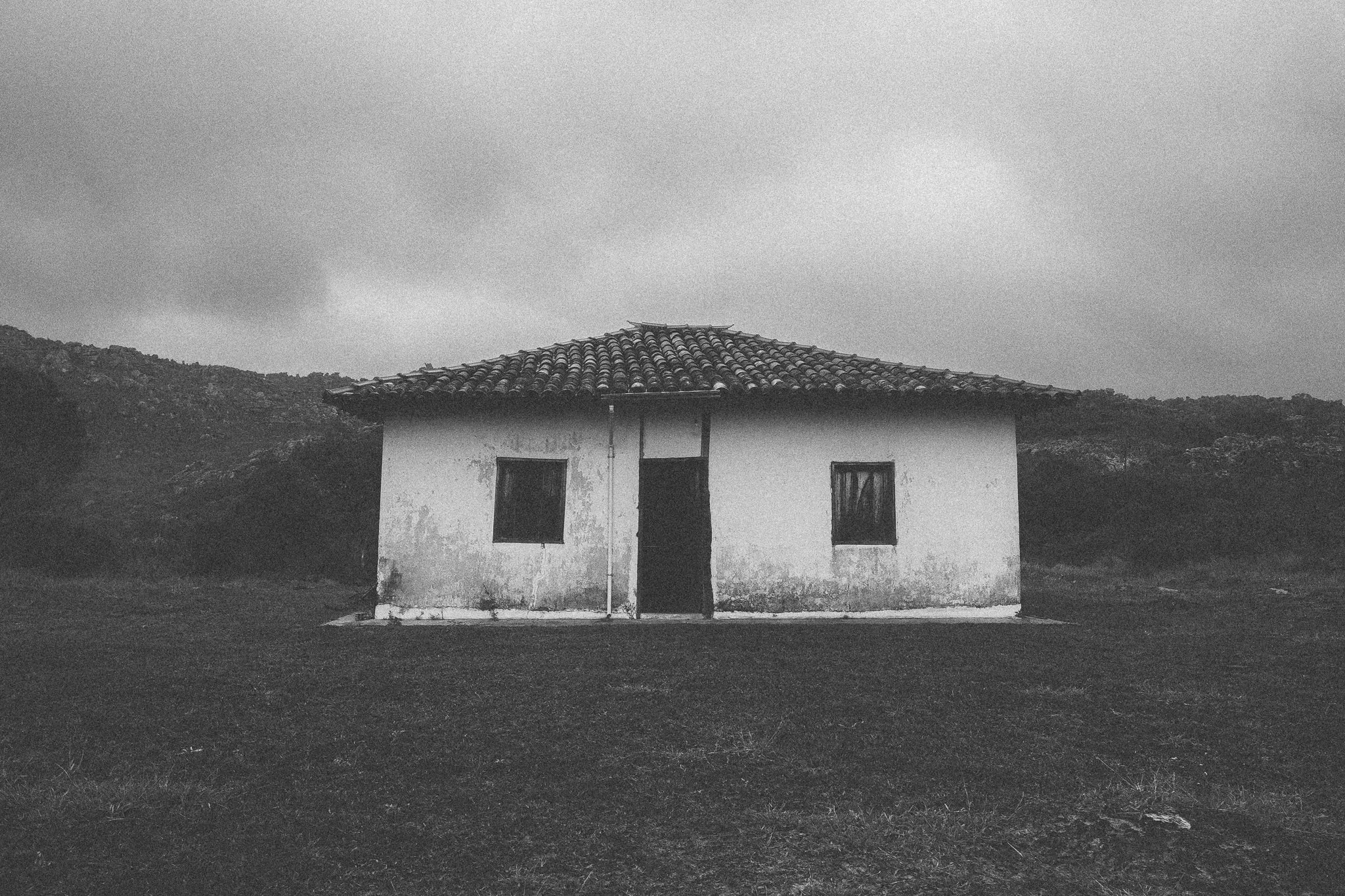
Wilderness Refuge (1 night)
For decades, travelers crossing the Chapada do Couto in need of a roof had exactly one address to try. After the 29-kilometer walk from Bica d’Água on Day 6, we’ll be glad to see Mozart’s front door ourselves.
Tucked between springs and creeks atop the plateau, the former ranch house is about as simple as they come. We’ll share rooms and sit down together to a proper tropeiro supper.
If you prefer your bathwater warm, this is one night to circle in red on the itinerary. On the other hand, if you like your accommodations with stories, soul, and spring-fed water, you’ll love it.
-
![Valdir on the front balcony of Fazenda Santa Cruz do Gavião, Serra do Espinhaço]()
Historic Ranch (1 night)
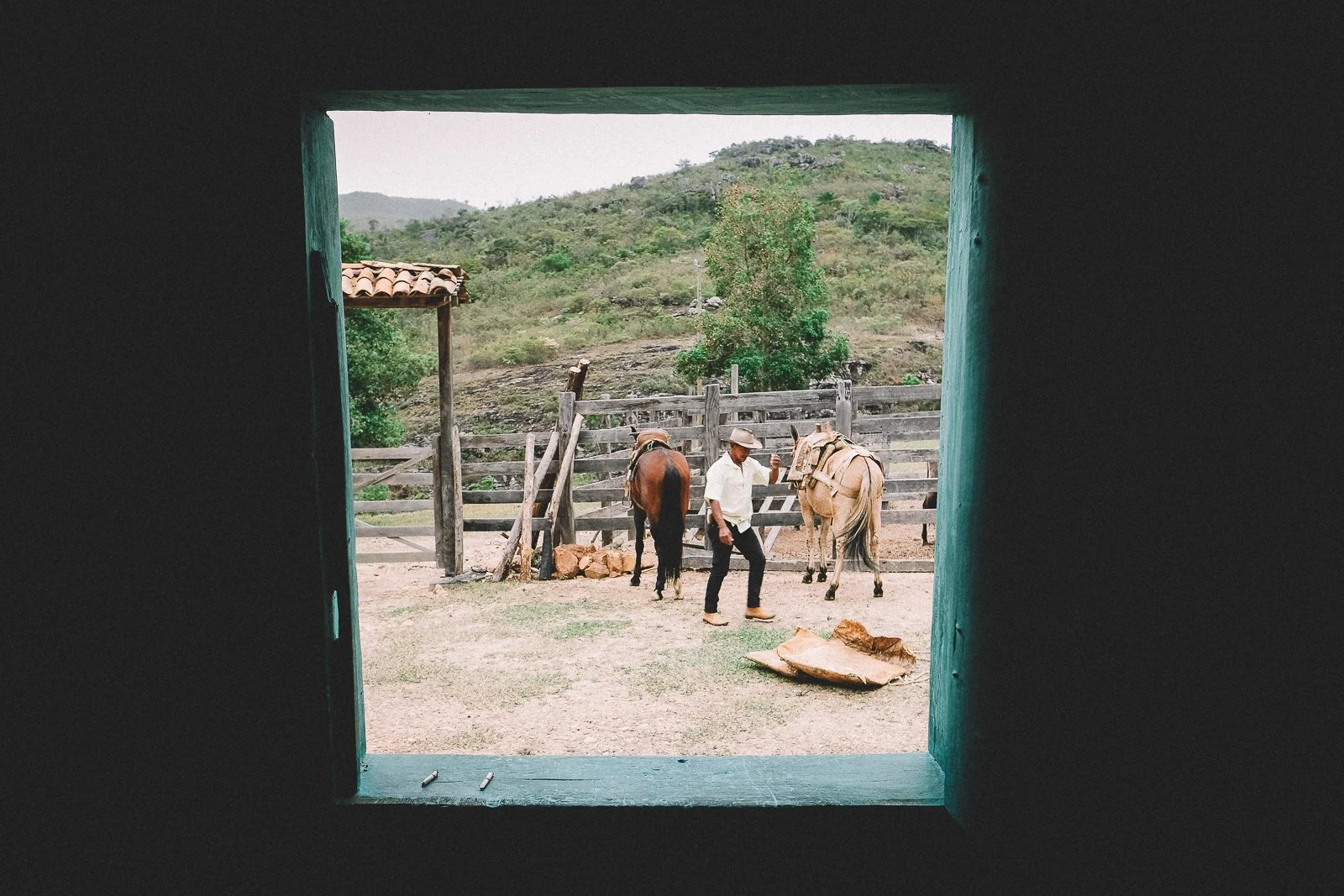
Fazenda Santa Cruz do Gavião sits by itself on a hill high above the Jequitinhonha, surrounded by peaks and pasture. When we come down from the Chapada do Couto on Day 7, Sr. Valdir, the ranch’s longtime caretaker, will be there to receive us.
The old ranch house is unrestored but lovely, with weathered walls, a slight tilt, and creaking wooden floors, but also comfortable beds and a piping-hot shower that ought to go over particularly well after a night at Mozart’s.
We’ll have the whole house to ourselves, though experience suggests we’ll spend most of the evening in the kitchen. We’ll cook our supper on the wood-fired stove, and once the cards come out and Valdir gets to telling stories about the fazenda, there’s very little incentive to go anywhere else.





What We Eat
Food & Fire
Tropeiro. Torresmo. Frango com quiabo.
If you’re unfamiliar with comida mineira, you will be by the end of the trek—and Brazilians everywhere will be jealous.
Breakfast in a good pousada is reason enough to get out of bed, particularly when there’s fresh pão de queijo, local fruits and cheese, and strong coffee on the table. Some evenings, we’ll pull up famished to a wood-fired feast. Other nights, we’ll sit down to a cast-iron pot of tropeiro (a local dish of beans, toasted manioc flour, eggs, and pork cracklings) made by an actual tropeiro (a mule driver from which the dish got its name).
During our five nights in the wilderness of Sempre Vivas National Park, supper becomes a team sport, with a fire to tend, a cook who could use a little more light over the pot, and generally someone willing to take responsibility for passing the cachaça.
By the time we walk back into Diamantina, we’ll be happy to put on a clean shirt and let someone hand us a menu.

Our Crew
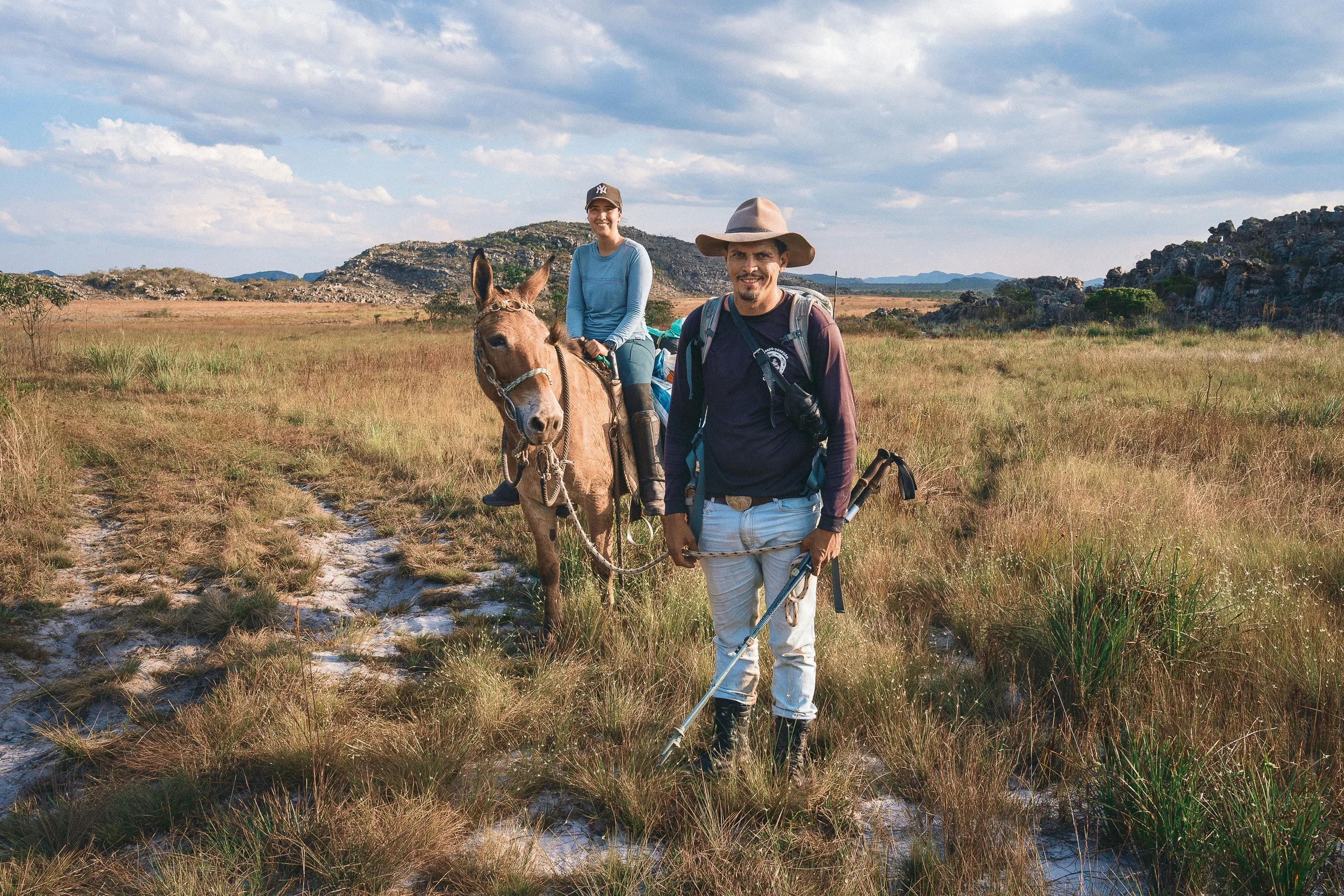
Elisa and I lead the trek ourselves, alongside residents whose lives are tied to the range.
Some of our crew will make the whole crossing with us—either on foot or at the wheel of a 4×4—while others join us on the stretches of trail closest to home. In the high campos of Sempre Vivas, we’ll walk with men and women who’ve been gathering flowers there their whole lives.
Most of our crew had never worked with travelers before joining us, and much of what Elisa and I know about the Espinhaço we learned in their company.
It’s a pleasure we’d like to share with you.
What’s Included
20 nights. Every meal. An original route five years in the making.
-
All 20 nights are included, from our first evening in Diamantina to our last one back in town. Along the way, we’ll stay in pousadas and private homes, spend evenings with local families, sleep at a wilderness refuge and a historic ranch, and camp for five straight nights in and around Sempre Vivas.
-
All meals during the Expedition are included, along with daily trail snacks and non-alcoholic drinks with meals. That goes for supper by the fire and our final dinner in Diamantina, too.
-
We’ll meet you at Confins airport on Day 1 and bring you back on Day 21. Both transfers and all ground and river transportation on the itinerary are included, as are the support 4×4s and pack animals that help move our gear along the route.
-
Elisa and I lead the Expedition ourselves. The price includes our trail crew and the work of the drivers, guides, cooks, and mule handlers who support the crossing.
-
We supply the tents, camp kitchen, water filters, and other shared expedition gear. Before departure, we’ll go through the personal packing list with you, including what you’ll need to carry on the stretches our 4×4s can’t reach.
-
We arrange the permissions to cross private land and take care of all required permits and park entrance fees along the route.
-
Elisa and I are both certified in Wilderness Advanced First Aid. Our crew carries first-aid kits, radios, and satellite communications equipment, and we plan vehicle support and evacuation routes for the different stretches of the trek.
-
Before departure, we’ll send you a detailed expedition dossier and set aside time to talk through the trek together, from getting ready for long days in the mountains to deciding what goes in your pack.
We’ll provide a journal for your own notes along the trail, and once we’re home, we’ll put together a shared archive of any photographs our crew takes along the way.
-
Airfare
Medical and emergency evacuation insurance, which is required to join the Expedition
Trip cancellation and other optional travel insurance
Visas
Meals and activities outside the Expedition itinerary
Alcoholic beverages
Gratuities and community donations
Themes
Beneath the trail
There’s a great deal of Brazil in these mountains, from the wealth and brutality of the diamond trade to the ingenuity of people making a living far from the country’s better-known cities. A stretch of stone trail, a flower field, or a conversation over supper can take us into questions of land, work, and belonging that reach well beyond the next serra.
The range’s extraordinary grasslands and forests are also working landscapes, known intimately by farmers and flower pickers whose livelihoods depend on them. Mining, fire, and conservation are subjects on which the people we meet have plenty to say, especially when decisions about protecting a landscape also determine who can continue working in it.
Tourism brings questions of its own, and we’ll have time to hear different answers—and enough miles together to keep the conversation going.
-
Scientific American — A Flower and a Way of Life in Peril
The Guardian — Life on the rocks in Brazil’s campo rupestre
Sir Richard Francis Burton — Explorations of the Highlands of the Brazil
Gems & Gemology — Brazilian Diamonds: A Historical and Recent Perspective
UNESCO — The Espinhaço Range Biosphere Reserve
FAO — Traditional Agricultural System in the Southern Espinhaço Range

Last Glance
21 days of distance, dust
& memory
An original route, five years in the making
19 trail days / 363 kilometers on foot
22,400 meters of gain & loss
Five nights of wilderness camping
Family tables and wood-fired suppers
More than a dozen waterfalls along the way
Elisa and I, our crew, and six travelers at most
Every bed, every meal, and support throughout
Few, if any, others on the trail
Calendar & Pricing
A Diamantine Tale
May 17–June 6, 2027 | 21 days
One departure in 2027
US$16,995 per person
Includes all crew, lodging, meals, permits, camping and group equipment, vehicle and pack-animal support, and ground and river transportation during the Expedition.
Prefer to talk it through?
Talk with Eddie →
Considering 2028 or beyond?
Talk with Eddie →
Gallery
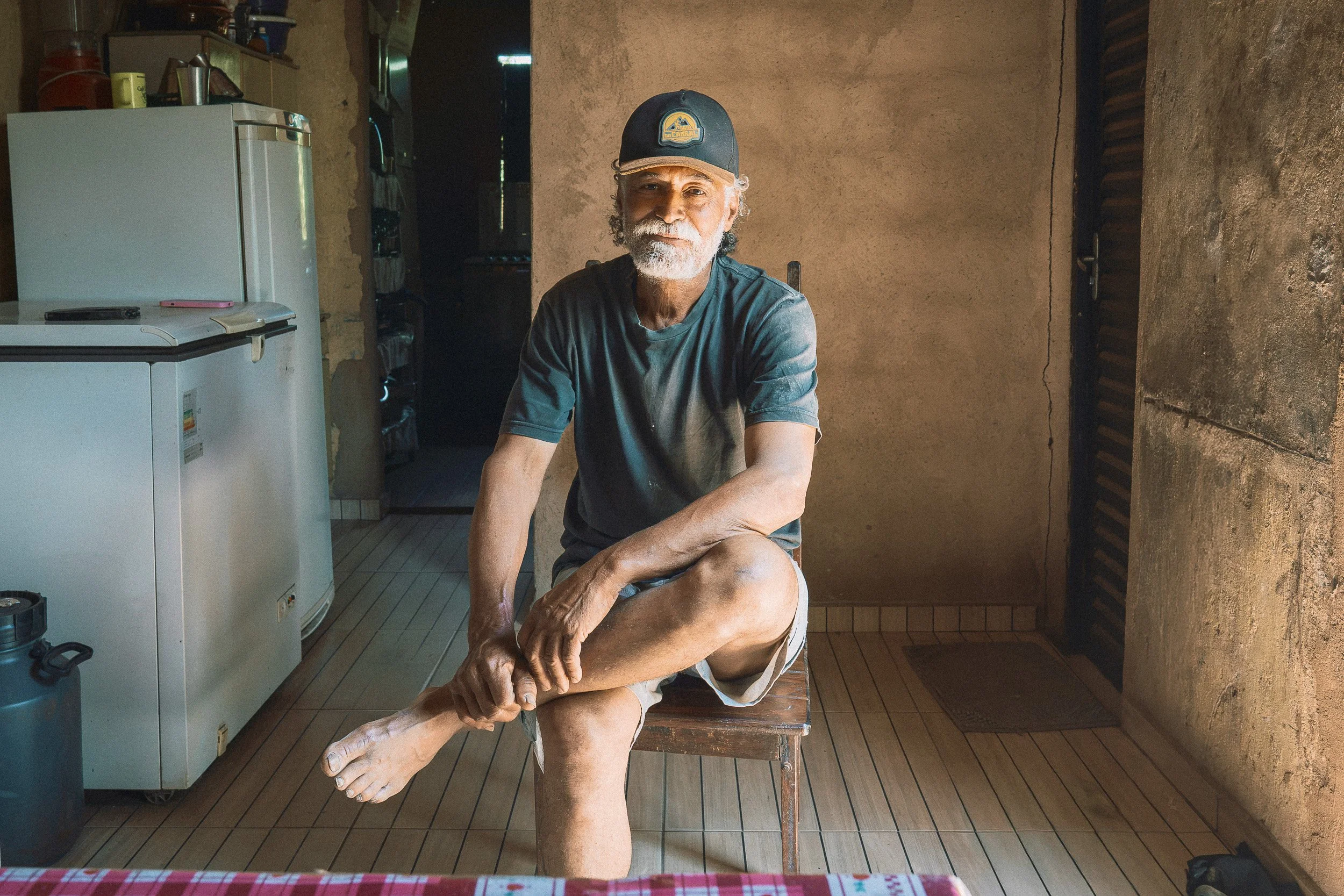
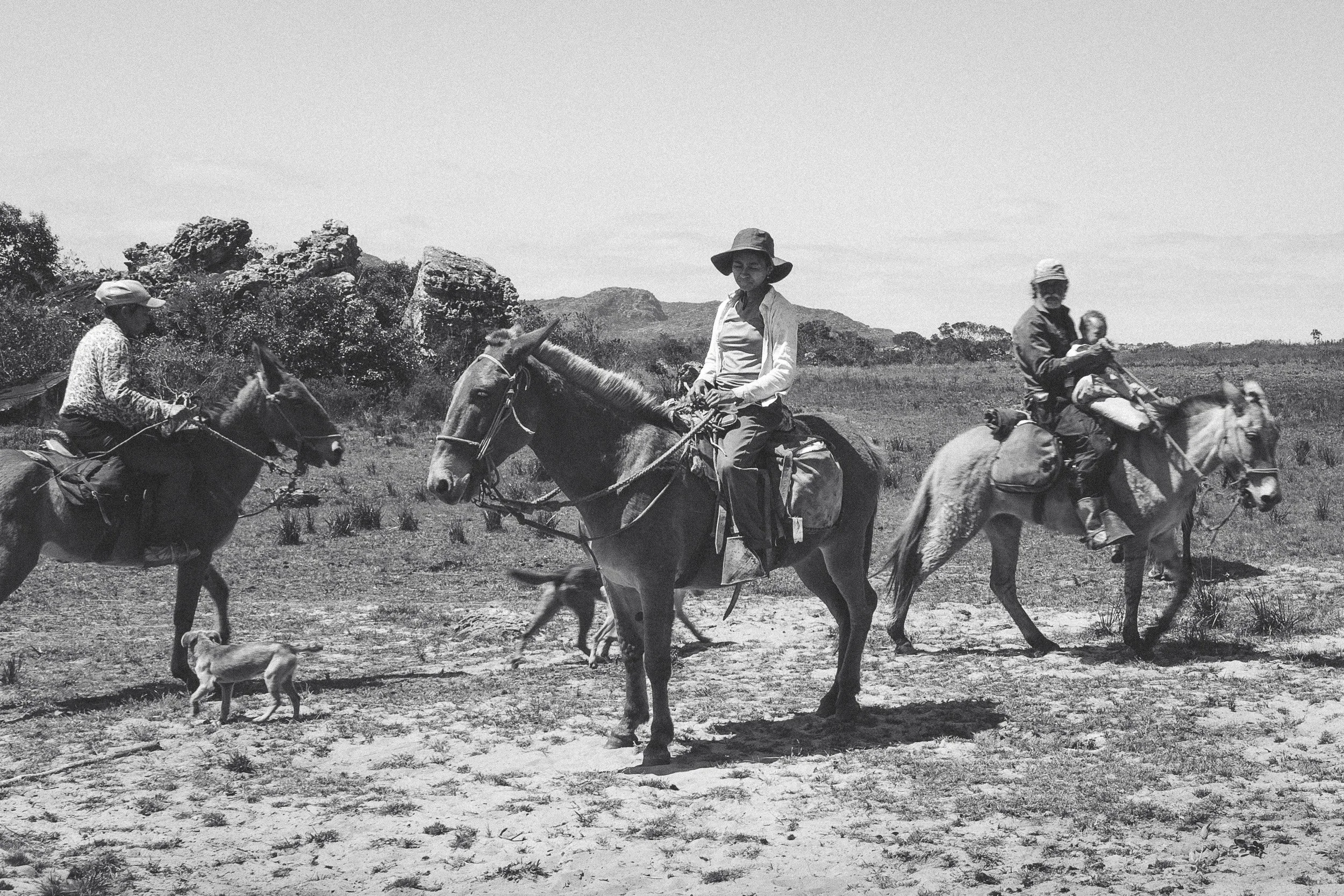
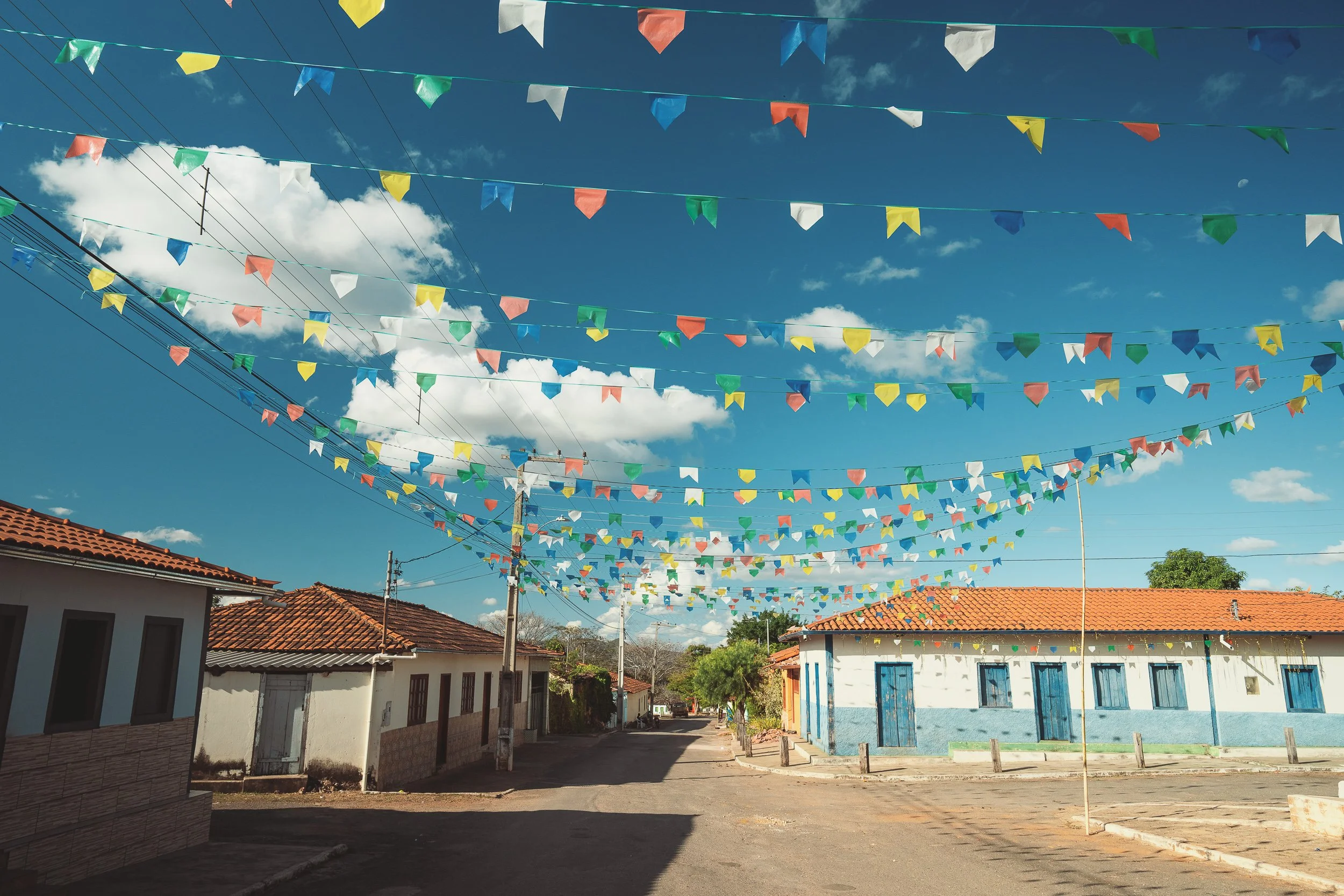
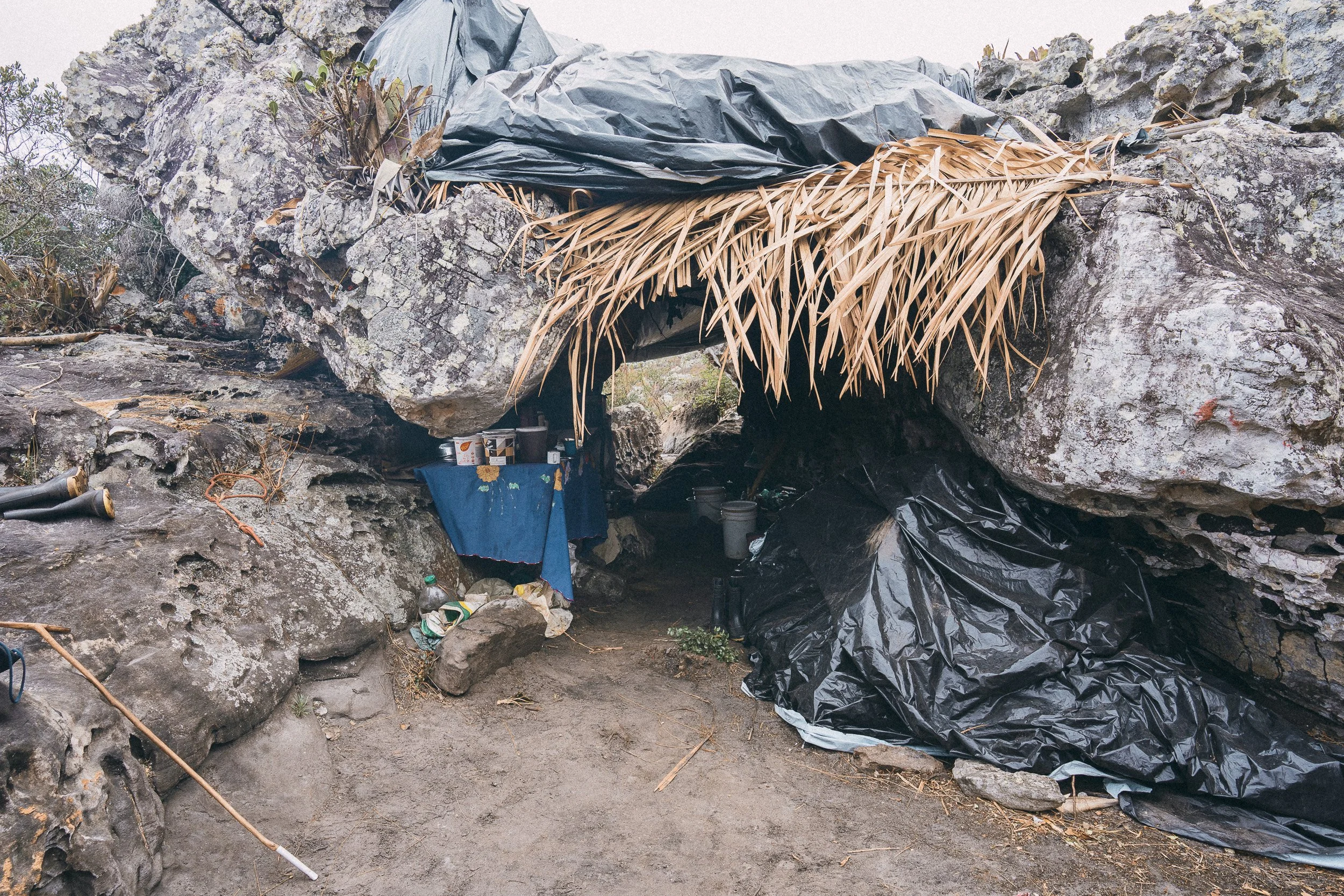
Proofs of Life →











FAQs
-
We’ve walked long stretches of this route with enthusiastic first-timers who did remarkably well—and with experienced mountaineers who struggled. A lot comes down to mindset, resilience, and how your body responds to day after day on the move.
That said, this is a sustained trek of more than 350 kilometers, with roughly 22,000 meters of combined ascent and descent over 19 trail days. Several of the longer stages run to 25–30 kilometers, and even a short stretch through the high campos can keep us occupied for a good part of the morning. Our two shortest days involve about four and five kilometers, with the walk on Day 11 optional.
It’s best suited to experienced, fit walkers who are comfortable spending long days in the mountains and getting up the following morning to do it again.
If this will be your first multi-week trek, we’d be happy to talk through your experience and preparation with you.
-
No. You can carry your own overnight gear or make use of our vehicle and pack-animal support.
Our 4×4s can carry gear ahead to most overnight stops, particularly during the longer backroad stages on Days 8–10, while pack animals help move our loads through the wilderness stretches.
If you enjoy arriving at the end of a long day with everything you need for the night on your back, you’re in good company. If you’d prefer a lighter pack, we’re happy to help make that work.
Once your place is confirmed, we’ll send you a detailed packing list. Before departure, we’ll go through the packing plan together in detail, including what you’ll carry each day and when you’ll have access to your other luggage.
-
Our crew walks with us throughout, so tell us early if you’re struggling or something doesn’t feel right. Depending on where we are and what’s going on, we can adjust the pace, help with your load, or arrange vehicle support where there’s road access.
Elisa and I are certified in Wilderness Advanced First Aid, and we travel with first-aid supplies, radios, satellite communications equipment, and evacuation plans. If you need medical attention beyond what we can provide on the trail, we’ll coordinate getting you to appropriate care.
Reaching care from the more remote stretches can take time, with terrain and weather affecting the options. If you’d like to talk it through, feel free to reach out.
-
We’ll meet you at Belo Horizonte’s international airport in Confins, Tancredo Neves International Airport (CNF), on Day 1, and bring you back there on Day 21. Both transfers are included.
You’ll book your own flights, and we’re happy to help you think through routes, timing, and places to stay if you’re spending a little longer in Brazil. Get in touch before booking so we can coordinate your flights with the airport transfers.
-
They’re humble, welcoming, and often a highlight of the trip.
On this route, we’ll spend multiple nights in homes, each different in character, comfort, and setting.
These are real places, lived in by real people—and often where the pace softens and the experience deepens.
They’re not polished or curated. They’re simple and sincere, and they’ll stay with you.
-
Food is part of the story—and part of the pleasure.
Most meals during this trek are shared in local homes, pousadas, or along the trail. Expect hearty, traditional comida mineira—simple, generous, and deeply tied to the region.
If you have dietary requirements, be sure to let us know when you enquire so we can talk through what’s possible and plan with our hosts and crew.
-
Signal comes and goes throughout the trek. In the front country, 4G and 5G are quite common, even along some stretches of trail, while Wi-Fi is available at many of our accommodations. Your connection will depend partly on your carrier and plan.
Expect longer spells offline during the wilderness stretches, particularly during our nights camping in and around Sempre Vivas. Our crew carries radios and satellite communications equipment for coordination and emergencies.
If you’d like a Brazilian SIM card, let us know before you arrive and we’ll be happy to arrange one.
-
Nearly everything.
Accommodations, meals, crew, transport within the region, permits, and group trail gear are all included.
Flights, insurance, personal gear, alcohol, and discretionary spending are not.
-
Yes. All travelers on ADT must undergo a complete physical examination and provide signed clearance from their physician within the three months before the Expedition begins.
Share the itinerary and Activity Level description with your physician when discussing the trip, so they can assess the demands of long days on foot, changing terrain, and time spent in remote country.
If you or your medical provider have questions, we’re always happy to talk them through.
-
Yes. All travelers must have travel insurance covering medical treatment and emergency evacuation, and we’ll need proof of coverage before the Expedition begins.
Please confirm with your insurer that your policy covers remote trekking in Brazil and remains valid throughout the trip. Trip cancellation and other additional coverage are optional.
We’re happy to talk through the requirements as you prepare.
-
All Expeditions are booked on a first-come, first-served basis.
With small group sizes and limited departures each year, we recommend reaching out as early as you feel comfortable—especially if your dates are fixed.
-
We do. For shorter group Expeditions in 2027, take a look at The Serra Circuit (12 days) and The Highlands of Brazil (14 days).
If you’d like to go even shorter or travel on different dates, explore our Bespoke trips.